
San Antonio renames Iowa Street to Tuskegee Airmen Memorial Way, honoring local “Red Tails” and their deep roots in Denver Heights and civil rights history.
SAN ANTONIO — San Antonio marked Tuskegee Airmen Commemoration Day in Texas by honoring the legacy of the nation’s first Black military aviators with a newly designated street on the city’s east side.
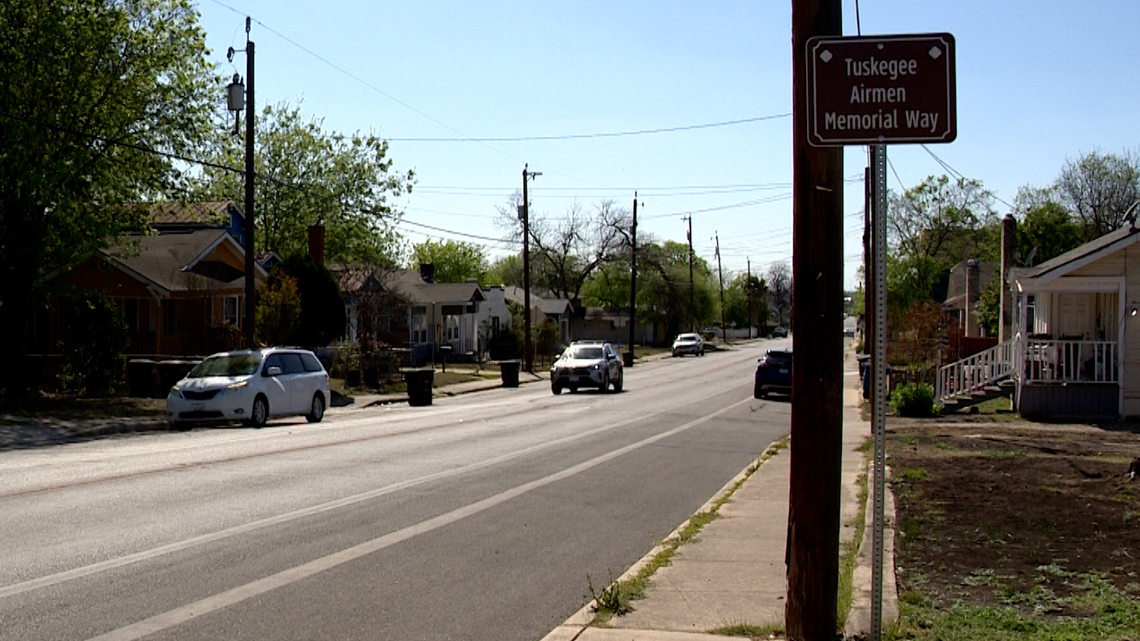
A stretch of Iowa Street, between Cherry and Palmetto streets, is now officially named Tuskegee Airmen Memorial Way, recognizing the famed “Red Tails” and the local men whose service helped shape both military and civil rights history.
The designation was unveiled Thursday in the historic Denver Heights neighborhood, where many of San Antonio’s Tuskegee Airmen once lived.
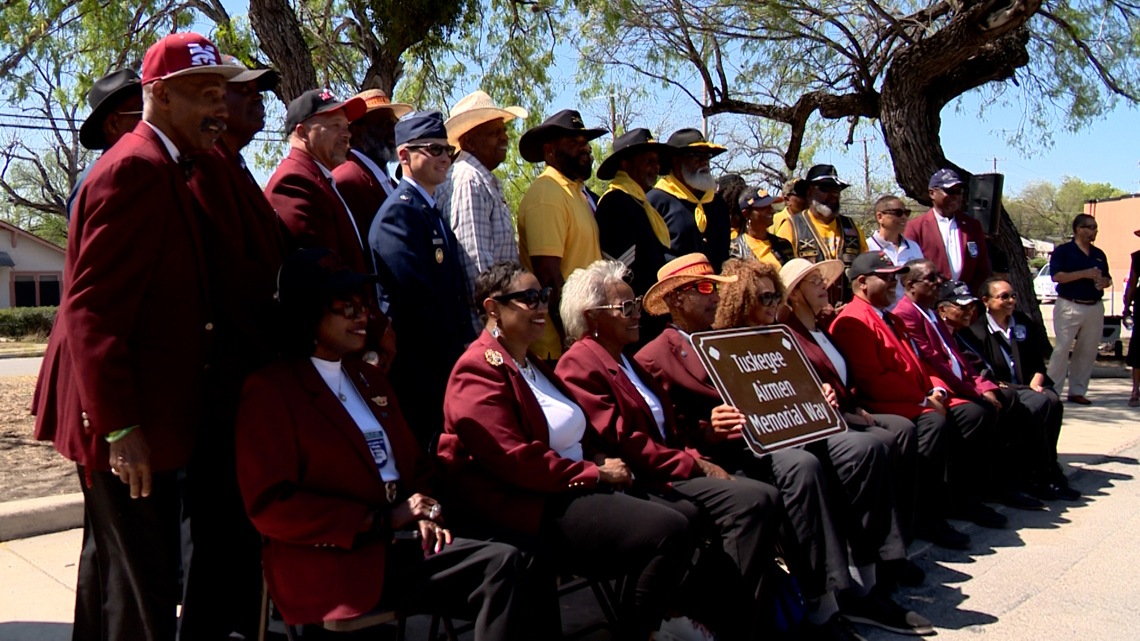
“This is just a wonderful coming together kind of party,” said Lt. Col. Rick Sinkfield, president of the San Antonio chapter of Tuskegee Airmen, Inc., calling the moment “a dream come true.” For Sinkfield, who helped spearhead this initiative, Thursday was years in the making.
Families and descendants of the airmen filled the crowd gathered at Pittman Sullivan Park, celebrating what many described as long-overdue recognition.
“My father was Dr. Granville Coggs,” said Anita Coggs Rowell, whose father served as a Tuskegee Airman and later became a physician, educator and inventor. “My heart is so full to see this happen today.”
Rowell described the men being honored as both brilliant and resilient.
“They fought for this country and had such a hard time being accepted, but they excelled in everything they did,” she said. “I know he’s watching us and he’s just beaming with pride and with joy.”
The Tuskegee Airmen, who served during a segregated era, flew combat missions overseas while challenging racism at home, contributing to the eventual desegregation of the U.S. military.
The choice of location in San Antonio carries deep historical meaning.
“Almost half of all the Tuskegee Airmen came out of this community — 24 out of the 50 or so were actually in the East Side,” said Bexar County Precinct 4 Commissioner Tommy Calvert.
Historians say San Antonio’s connection to the Tuskegee Airmen predates World War II.
“The Tuskegee Airmen planning situation far preceded World War II,” said Ernest “Coach Q” Qadimasil, a board member of Tuskegee Airmen, Inc.
Qadimasil noted that early ideas about Black pilots serving the country were already taking shape in the Alamo City.
“That was done in this sleepy city of San Antonio because things were a lot more relaxed here as opposed to the deep violence and racism of the deep South,” he said.
He also pointed to the broader historical context, including early Black aviator Eugene Bullard — known as the “Black Swallow” — who flew for France after being denied the opportunity in the United States.
Supporters say the significance of the designation extends beyond military history to the broader civil rights movement, highlighting the contributions of African Americans who fought both fascism abroad and discrimination at home.
Sinkfield said preserving that legacy for future generations is a key goal.
“Within the lives of children, they’re not even getting the information, so we want to be able to relay that kind of information to them,” he said, adding that organizers hope to inspire young people through education and outreach.
He described the designation as part of a living legacy.
“The more people, the more space that we cover — it’s their legacy in action.”
Officials say the recognition effort is ongoing. Plans include updated signage along Interstate 37 reflecting the new designation, a proposed Texas historical marker and a future effort to honor the Buffalo Soldiers with additional street naming.
For many in the community, the new street name is more than symbolic — it permanently connects San Antonio’s East Side to a legacy that helped reshape the nation.