
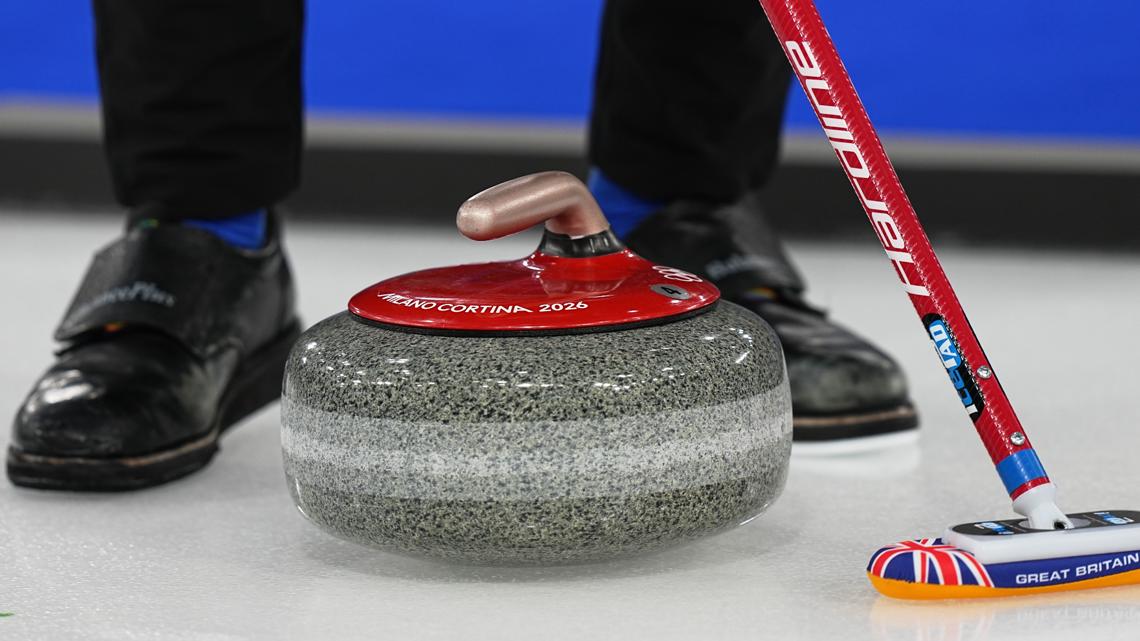
The sport originated in Scotland and still holds a piece of that history on the ice.
WASHINGTON — The curling events are underway at the Winter Olympics, bringing the uniquely captivating winter sport to the mainstream once more.
Curling in Cortina—eight teams in mixed doubles—started two full days before the Opening Ceremony. Every four years, the sport draws curious viewers who may wonder why sliding stones across ice is included among the Games.
The sport originated in Scotland and still holds a piece of that history on the ice—literally. All curling stones are made from one Scottish island.
Each stone weighs about 44 pounds and is made from a rare, dense granite quarried from Alisa Craig, a small island off the coast of Scotland. It’s apparently the only place in the world where granite with the right properties for curling stones is found.
“Every single Olympic curling stone comes from this little island off the coast of Scotland, called Ailsa Craig. And no other stone curls like an Ailsa Craig stone,” Erika Brown, the former Team USA skip, said in a 2014 article in Scientific American.
One side of the island features green granite, which forms the body of the stone, while the other side of the island provides the blue granite for the running surface, according to Olympics.com.
Why is curling an Olympic sport?
According to the Olympics, curling dates back to the 16th century, making it one of the oldest team sports in the world.
Originating in Scotland, the game evolved from a fun, recreational pastime of sliding stones across frozen ponds into a regulated, internationally governed sport with standardized rules, equipment, and elite competition after gaining popularity in the 18th century.
It became an Olympic sport at the very first Olympic Winter Games in 1924.
Katrina Morgan contributed to this report.