
Before big chains dominated, the Webb family ran three east-side stores that became hubs of opportunity, mentorship and community pride.
SAN ANTONIO — On San Antonio’s East Side, history doesn’t always come with a marker.
At the corner of North New Braunfels Avenue and East Houston Street, customers now pull into an auto parts store parking lot. Decades ago, families gathered at the same location to shop, talk and build community inside WebbWay Supermarket.
“Before my time it was Handy Andy,” said Vincent Dee Webb, president of the Joe Webb Foundation, standing on the corner where his family once operated one of the city’s most significant Black-owned businesses.
For Black History Month, Webb retraced the sites where his father, Joe Webb Sr., built a legacy that blended business ownership, mentorship and public service on San Antonio’s East Side.
A trailblazer in business and politics
Joe Webb Sr. first made history in 1969 when he became San Antonio’s first Black manager of an H-E-B grocery store. Known for his ability to connect with customers, Webb built relationships that would later shape his career as both a businessman and civic leader.
He eventually served as a San Antonio city councilman, advocating for the same East Side neighborhood he once served behind a checkout counter.
“It’s always been a pleasure to understand what my dad was all about — a man for all the people,” Vincent Dee Webb said.
The Webb family’s entry into business began unexpectedly.
According to Webb, his older brother saved the life of the owner of an IGA grocery store who had been shot during a robbery while the brothers were returning from baseball practice.
“My brother stuffed him with a handkerchief to keep him from bleeding to death,” Webb said.
Years later, when the owner of IGA was ready to sell his store, he called Joe Webb Sr., offering the opportunity that launched the family’s business journey.

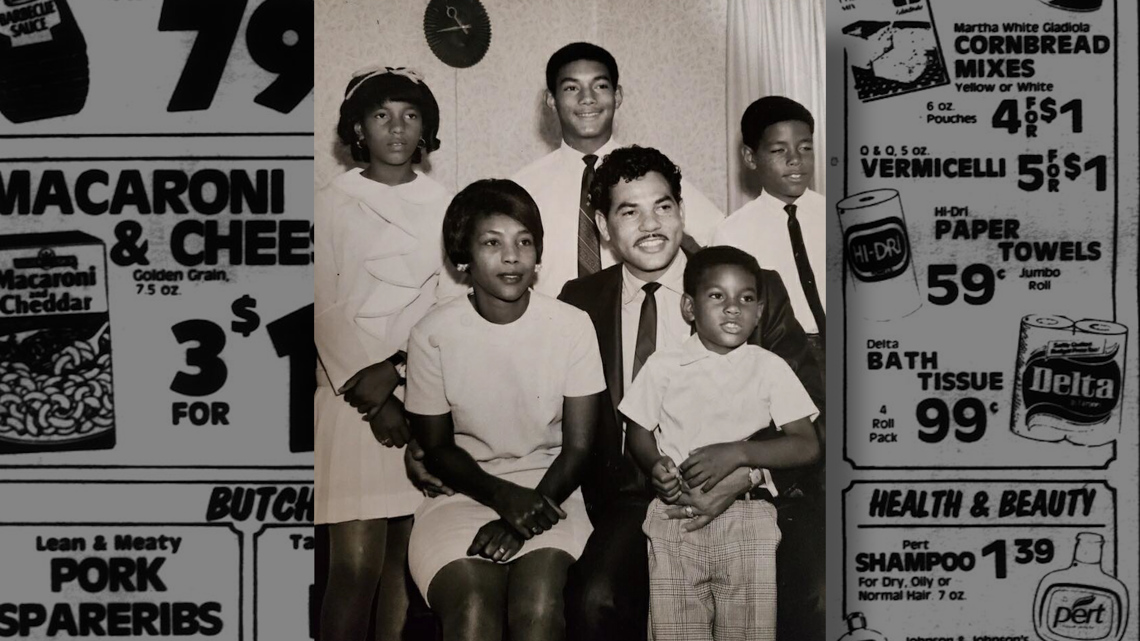
Eastlawn Food Center: Where it started
In 1980, the Webb family opened Webb’s Eastlawn Food Center at Gorman and Grimes streets.
Today, the location is an empty lot marked only by a concrete slab.
“This was my starting point right here,” Webb said.
Before becoming Eastlawn Food Center, the building operated as an IGA grocery store. Under the Webb family, it evolved into a neighborhood hub featuring a fresh meat market, arcade games and gathering space where residents often came simply to talk.
“People would come here just to conversate with him,” Webb said of his father. “Probably wouldn’t buy nothing — just come to talk.”
Webb began mentoring neighborhood youth there at age 17, teaching job skills such as stocking shelves and preparing meat.
“Educate the youth, teach them to work and teach them to make the world a better place,” he said.
Webb remembers growing up nearby on Burnett Street and buying his first car across from the store — a sign of how closely family life and business were intertwined.
Expanding to WebbWay Supermarket
Success at Eastlawn inspired a larger vision.
“We already had the neighborhood grocery store, so he thought it was a good idea to make it a little bit bigger,” Webb said.
In 1983, the family opened WebbWay Supermarket at North New Braunfels and East Houston. The store operated until 1985 and became one of the first Black family-owned supermarkets in Texas.
“Shop and save the WebbWay,” Webb recalled, repeating the store’s slogan.
At one point, the Webb family simultaneously owned three businesses: Eastlawn Food Center, WebbWay Supermarket and the Handy Stop convenience store. The Webbs co-owned the Handy Stop, located off North New Braunfels and Norman, with two other business partners.

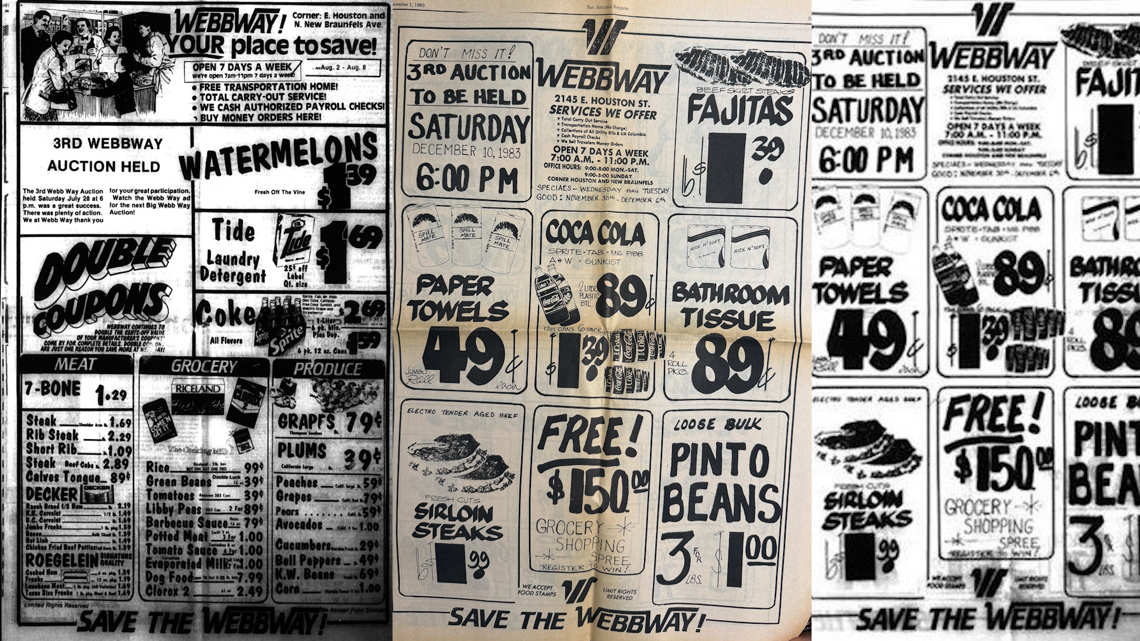
A corner of history
The intersection surrounding WebbWay became a focal point for community life.
“You had Kroger’s across the street. You had H-E-B on that side. The corner was popping,” Webb said. “This corner has always been significant.”
The area also holds a key place in San Antonio’s civil rights history. The city’s first Martin Luther King Jr. march in 1987 concluded at the intersection of New Braunfels and Houston, where civil rights icon Rosa Parks addressed the crowd — cementing the corner as a gathering place for activism and community leadership. A statue of the late Dr. Martin Luther King, Jr. stands tall at the intersection today.
In 1985, presidential candidate Rev. Jesse Jackson held a campaign rally in the WebbWay parking lot.
“These were more than stores,” Webb said. “They were places where people came together.”
The third business, Handy Stop convenience store at New Braunfels Avenue and Nolan Street, opened in 1985 and remained under Webb family co-ownership for about a decade.
“This was store number three,” Webb said.
The convenience store brought constant foot traffic and reflected the fast pace of neighborhood commerce.
“From the beer to the cigarettes to the gas, it was constant daily business,” he said.
The store also reflected the realities of operating businesses in changing neighborhoods, including difficult moments and economic hardship.
“We had a young man working in here, somebody just came in one day and shot him,” Webb recalled. “Didn’t rob or nothing, came in there and shot a little youngster in the stomach.”

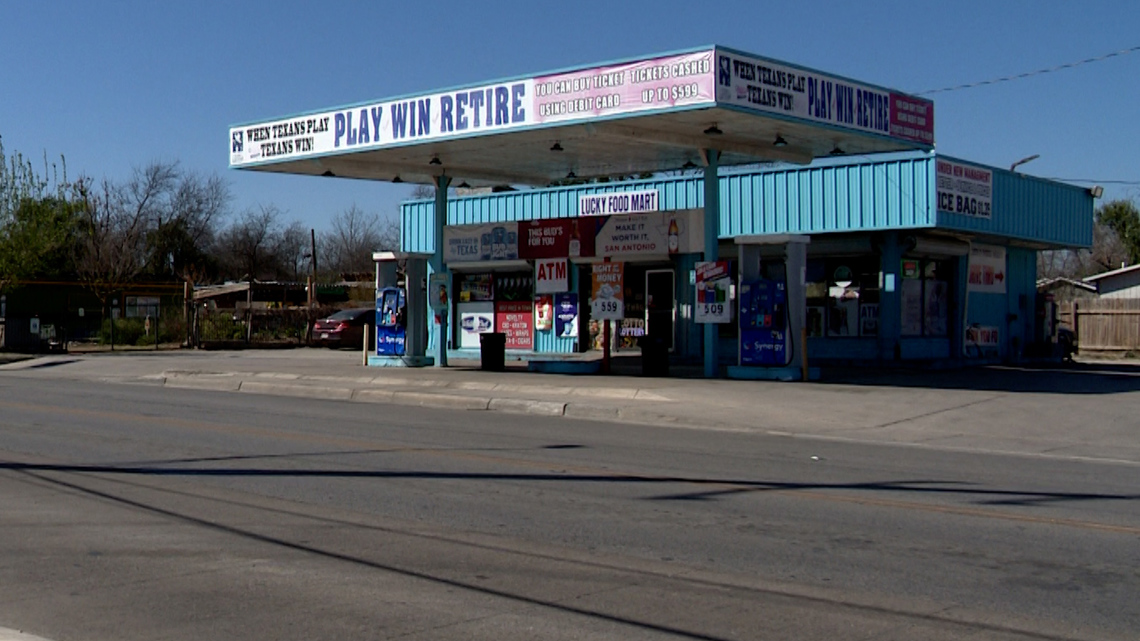
Financial challenges and closure
Like many independent grocers, the Webb family eventually struggled to compete with larger chains and rising operating costs.
“You’re trying to keep up with prices … and you’re not really making no money,” Webb said.
By the late 1980s, Eastlawn Food Center closed. WebbWay had already shut down, and ownership of the properties changed.
- WebbWay’s former site is an O’Reilly Auto Parts store.
- Eastlawn Food Center remains a vacant lot.
- Handy Stop still operates as a convenience store.
Despite the closures, Webb says the lessons learned inside those businesses never disappeared.
“Those are my people, my neighborhood, my community,” he said.
Carrying the legacy forward
Webb once dreamed of reopening Eastlawn Food Center but says demographic changes and vacant housing made it difficult.
Instead, he now hopes to continue his father’s mission through education.
His long-term goal is to build a technical training school focused on trades such as auto mechanics and welding — teaching young people practical skills and creating opportunity on the East Side.
“History is made to be respected and teach others and help others,” Webb said. “I’m the history of the East Side.”
Though the storefronts have changed, Webb believes the impact of his father’s work remains embedded in the neighborhood.
The buildings may be gone, he said, but the legacy of WebbWay — and the community it served — still stands.