
Only two Super Bowls have gone to overtime. Here’s what the NFL’s postseason rules say if the game is tied after regulation.
WASHINGTON — The Super Bowl is almost here, and with two teams set to battle for the Lombardi Trophy, fans are already wondering how close this game might get.
One common question pops up every year: Can the Super Bowl go into overtime? And if it does, what happens next?
Here is a simple breakdown of how overtime works in the NFL postseason and whether it has ever happened in the Super Bowl.
Can the Super Bowl go into overtime?
Yes. If the score is tied at the end of regulation, the Super Bowl goes to overtime.
Unlike regular-season games, playoff games cannot end in a tie, so overtime will continue until a winner is decided, no matter how long it takes.
Postseason overtime rules are designed to give both teams a fair chance. First, a coin toss decides which team gets the ball first or which direction to defend. Both teams are guaranteed at least one possession, even if the first team scores a touchdown.
Each overtime period is 15 minutes long. If the score is still tied after one overtime, the teams play another period, which they continue until someone wins.
There are two-minute breaks between overtime periods, but no halftime, and each team gets three timeouts per half.
The game ends only when one team finishes an overtime period with more points than the other.
Has a Super Bowl ever gone into overtime?
It’s rare, but it has happened before. Only two of the first 58 Super Bowls have gone into overtime, and both happened in the past decade.
The first time was during Super Bowl 51 in 2017, when the New England Patriots defeated the Atlanta Falcons, 34-28.
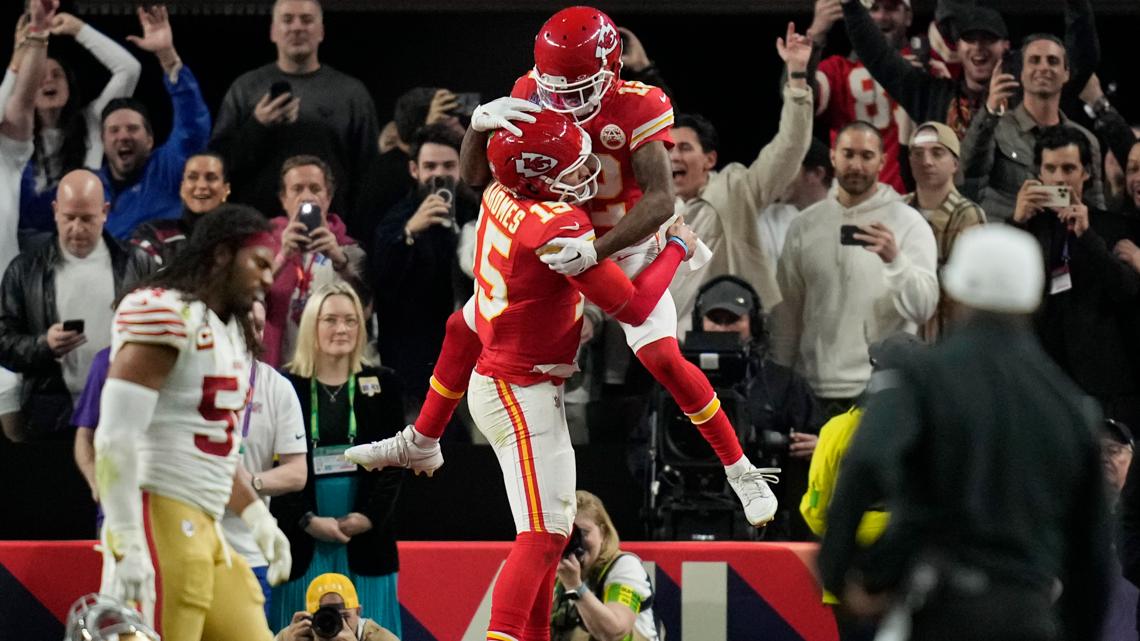
The second time happened was two years ago in Super Bowl 58. In that game, the Kansas City Chiefs defeated the San Francisco 49ers, 25-22, narrowly missing the chance of going into double-overtime by just 3 seconds.