
Retailers claim state health department’s new hemp regulations and higher licensing fees threaten their businesses.
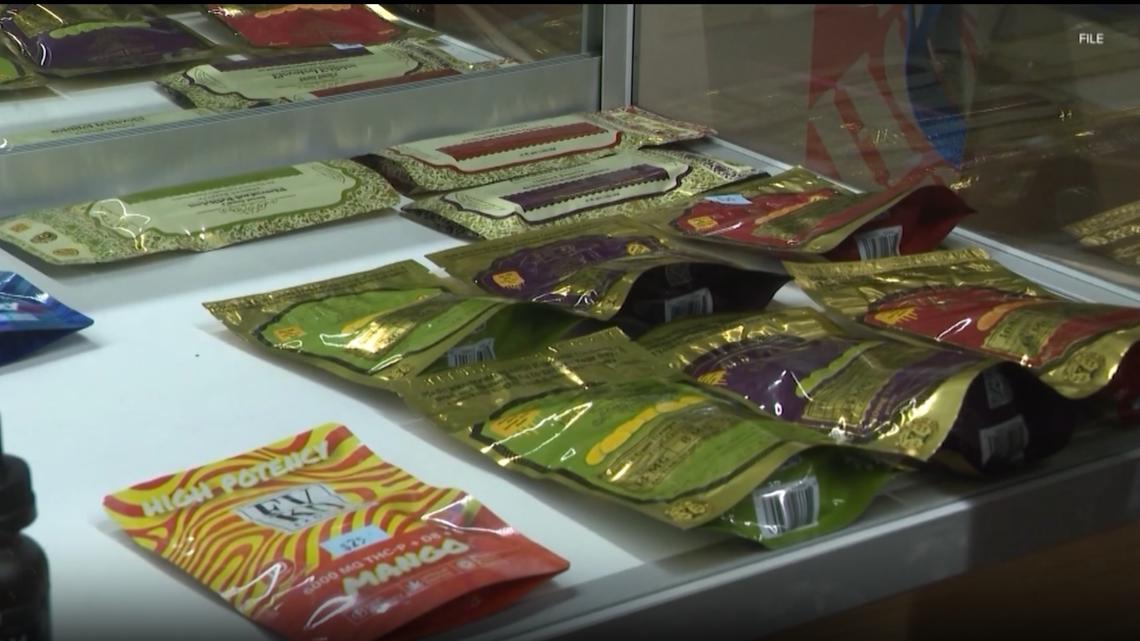
AUSTIN, Texas — New regulations from the Texas Department of State Health Services (DSHS) went into effect on Tuesday, and is reshaping the hemp industry, forcing many retailers to pull smokeable products that make up most of their sales from shelves.
Effective this week, DSHS adopted new standards for testing, packaging, and record-keeping, along with higher licensing fees for hemp retailers and manufacturers. Supporters of the rules say they’re designed to protect consumers from products that may contain excessive levels of THC.
At TerpHaus, a hemp dispensary in South Austin, co-owner Rees Newlain spent the day reorganizing his shop — not to celebrate a grand opening, but to fill the gaps left by products he can no longer sell. “I saw it empty like this when we first started,” he said.
Newlain, who opened his business only five months ago, said the store’s bestsellers, including pre-rolls, concentrates, and hemp flower, now fall under the new restrictions. “That’s a good 80% of the business,” he said.
With smokeable products removed, the shelves at TerpHaus are sparse. “I didn’t want people to see empty right when they walk in, so we’re moving the edibles right over here. And that side will be empty,” Newlain said, pointing to the second half of their store.
The updated regulations follow an order from Gov. Greg Abbott after lawmakers failed last year to reach an agreement on how to handle hemp products containing THC. The rules are intended to address ongoing concerns that some hemp products are unregulated or marketed to children.
The financial impact is another challenge for small businesses. Licensing fees for retailers have increased from $155 per year to $5,000, while manufacturers will now pay $10,000, up from $258.
“So our fees are actually gonna go up from a couple $100 to $15,000. If we had more locations, it’d be another $5000 per location. It’s, I think it’s designed to kill the industry,” Newlain said.
Losing the ability to sell most products has taken a toll. Newlain said TerpHaus could lose around $4,000 a day, jeopardizing payroll and rent. He added that the effects of the new rules are hitting other businesses like his harder.
“I’ve already been talking to several business owners that are already like, ‘I guess we’re gonna have to shut our doors,’ because they’re not gonna come up with rent with just edibles,” he said. “And then we’re just talking about rent, much less, you know, your own personal bills.”
He added that he worries that customers may also feel the effects.
Customer Eleni Lambradis, who uses hemp to manage PTSD symptoms, said affordability is a major reason she prefers it. “It was very expensive so this was a better option and cheaper,” she said.
By Tuesday afternoon, several customers had already come into TerpHaus asking for smokeable hemp. “I feel like a lot of them are going to use some kind of alternative product that’s not as safe,” Newlain said.
He said he feels heartbroken that everything he’s invested into the business might have been for nothing. “It’s not just a couple 100 bucks I spent on the license, it’s the three months’ rent we had to pay to open our store,” he said. “I had four months where we were working for free and just running up our credit cards and that’s all gone to waste.”
Newlain said he’s hoping legal action will halt or delay the rules. In Beaumont, another hemp retailer has filed a lawsuit challenging DSHS’s new regulations. The case remains active in Travis County, but a judge has yet to issue a ruling.
DSHS told KVUE in a statement that the agency does not comment on pending litigation.