
The wave of legal challenges is in response to the Trump administration’s intensified immigration enforcement.
AUSTIN, Texas — Lawsuits challenging immigration detention have recently flooded federal courts in Texas, which has the country’s highest number of migrant detainees.
They are part of a national wave of habeas corpus petitions that attorneys have launched over the past few months to counter the Trump administration’s efforts to keep migrants locked up and push them toward deportation.
And in some cases, attorneys have referenced the Laken Riley Act, the first bill President Donald Trump signed into law this year that requires the detention of undocumented migrants accused of committing even minor crimes, to help argue for their clients’ release.
This shift in legal strategy is a response to the federal government’s intensified immigration enforcement in the country’s interior — which followed Trump’s promises of mass deportations during his presidential campaign — and its directive in July expanding mandatory detention.
As of mid-November, more than 65,100 people were in ICE detention nationwide. Texas facilities held over 25% of them.
Typically, detained migrants seeking release from ICE custody would request bond hearings in immigration courts, which are under the Department of Justice and separate from state and federal courts.
But in July, Immigration and Customs Enforcement re-interpreted federal law and said that anyone who entered the U.S. without legal authorization is ineligible for bond if they’re detained. Previously, ICE mostly had denied bond only to those who had recently arrived at the border.
The Board of Immigration Appeals affirmed this change in September, ending bond hearings in immigration courts for potentially millions of people — including those who have lived in the country for decades.
As a result, attorneys have turned to federal courts, where they have filed more than 675 immigration-related habeas petitions in Texas alone between January and November, according to a Texas Tribune analysis of federal court records. That’s already more than the number of such petitions filed in the state during Trump’s entire first four-year term. Over 70% of these lawsuits were filed in just the last three months.
“I’ve been following quite closely the expanded habeas litigation, and it is absolutely a real phenomenon,” said Denise Gilman, director of the Immigration Clinic at the University of Texas at Austin. “I have not in the past ever seen this much habeas activity.”
Gilman also said the strategy is working to challenge mandatory detention.
Nationally, more than 200 judges overseeing more than 700 cases have ruled in favor of migrants who filed habeas petitions, Politico reported last week, while only eight judges have denied the petitions. The first group includes at least 12 judges in Texas, according to a tracker by the American Immigration Council and Kate Melloy Goettel, director of the University of Iowa’s Federal Impact Litigation Clinic.
But winning a habeas petition doesn’t guarantee immediate release for migrants in detention. Many would then go before an immigration judge for bond hearings, where the judge would consider factors such as whether they pose a flight or public safety risk.
Department of Homeland Security Assistant Secretary Tricia McLaughlin said in a statement that the federal government is applying the law as written.
She also said the Trump administration is “fulfilling the American people’s mandate to deport dangerous illegal aliens at historic rates,” and called the habeas petitions “nothing more than a desperate Hail Mary attempt to keep illegal aliens in our community, even though they have no legal right to be here.”
Meanwhile, a federal judge in California ruled against the Trump administration late last month in a case involving four people who were denied bond hearings after being detained in Los Angeles, despite having lived in the country for a long time. And in a move hailed as a major win by immigration advocates, she certified a nationwide class of similarly affected individuals, expanding her decision against the new detention policy across the country.
But detained migrants — most of whom can’t find or afford a lawyer — may still have difficulty benefiting from the judge’s decision, Goettel said.
“Unfortunately, those people who don’t have counsel aren’t going to have someone to advocate with the judge about why the class action applies to him or her, and so there’s a chance that the judge won’t apply the class action,” she said.
“Why would they come and get him?”
Shahrokh Rahimi, 53, is one of the immigrants turning to the federal court for help getting out of ICE detention.
Rahimi has lived in San Antonio for over two decades after fleeing political persecution in Iran and entering the country illegally from Canada in 2003, according to his habeas petition. At the urging of his wife, who he met and married in the U.S., Rahimi sought to obtain legal immigration status. In 2010, an immigration judge ordered him removed from the U.S. to any country but Iran — which would require the government to find a third country that would agree to receive him.
Instead, for the past 15 years, the petition says Rahimi has had regular check-ins at the local ICE office. He has also become an active member of his church, doted on his 12-year-old daughter and worked as a professional caretaker, most recently helping a retired woman with transportation, cleaning and shopping.
But on June 22, ICE agents detained Rahimi at his home and eventually took him to the South Texas ICE Processing Center in Pearsall, where he remains more than five months later.
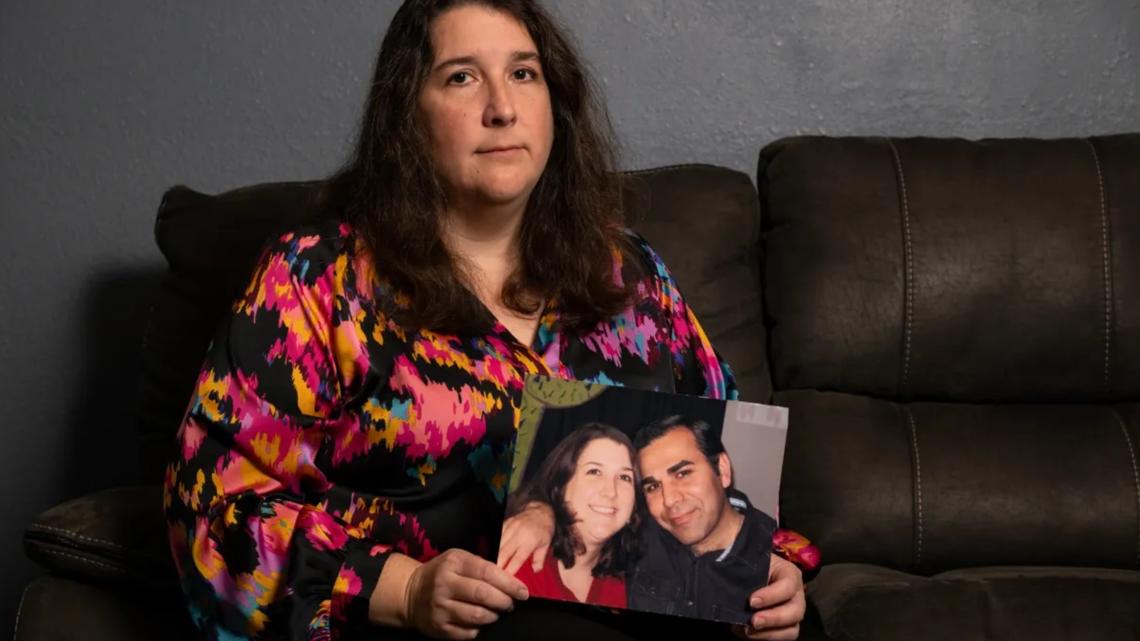
“My daughter’s in the background, crying and walking around and saying, ‘What’s happening, what’s happening?’” said his wife, Brandi Rahimi, 50. “What we heard was they’re going after criminals … My husband has [no criminal history], so why would they come and get him?”
A search of Bexar County and federal court cases found no criminal records for Rahimi, beyond a 2023 speeding ticket that was dismissed after he completed a driver safety course.
DHS didn’t respond to the Tribune’s questions about why he was detained then.
While in custody, Rahimi in late August sought to cancel his removal order in immigration court. He also requested a bond hearing but it was denied in September, prompting the Texas Civil Rights Project to file the habeas petition for him a month later.
According to his wife, it took three months before Rahimi wasn’t crying every other time he called his family. At home, she said it has also been challenging without his income and help with child care. And their daughter has particularly struggled to cope.
“If she doesn’t get a call from him in the morning, then she’s just a mess,” Brandi Rahimi said.
On Monday, an immigration judge again ordered Rahimi’s removal, but his wife said the block on deportation to Iran is still intact and his lawyers have appealed the judge’s decision.
Meanwhile, a federal judge has scheduled a hearing on his habeas petition for Dec. 10, according to Danny Woodward, an attorney with the TCRP. Brandi Rahimi is still hoping her husband will be home for Christmas.
“Please keep praying,” she wrote in her Gofundme campaign Monday.
Using the Laken Riley Act to defend migrants
To bolster Rahimi’s legal argument in the petition, Woodward is partly relying on an unexpected tool: the Laken Riley Act.
Passed in January, the federal law requires the detention of anyone who is an undocumented immigrant and has been arrested for or charged with even minor crimes, such as shoplifting. The act was named for a Georgia nursing student killed by an undocumented immigrant from Venezuela, who had previously been arrested for shoplifting.
While the legislation received some bipartisan support, immigration advocates said it threatens due process rights.
But some attorneys are now using the Laken Riley Act to help challenge the expansion of mandatory detention for migrants.
Their argument: Under its new detention policy, the Trump administration re-interpreted longstanding immigration law to make anyone who illegally entered the U.S. ineligible for bond. But if ICE’s interpretation is correct, why would Congress need to pass new legislation in order to require detention for a smaller group of undocumented immigrants who have also been accused of committing crimes?
“ICE’s whole theory cannot be right if we assume that Congress passed the Laken Riley Act for a reason,” said Dan Gividen, an immigration attorney who previously worked in ICE’s Dallas office as deputy chief counsel. “Because without [undocumented immigrants] having a right to bond, there was no need for the Laken Riley Act.”
DHS’s McLaughlin didn’t respond to the Tribune’s specific question about this argument.
Gividen has in recent months filed more than 25 habeas petitions for detained migrants — including many who are represented by immigration lawyers who aren’t as familiar with this type of maneuver in federal courts.
While many of those petitions remain pending, court records show that judges — both Democratic and Republican appointees — have so far recommended or ordered that migrants be released or provided bond hearings in eight lawsuits. And in another case, ICE released the individual prior to the judge’s ruling.
Winning these petitions has now become easier in Texas following the federal government’s policy change, Gividen said.
“ICE flew too close to the sun,” he said.
This article first appeared on The Texas Tribune.