
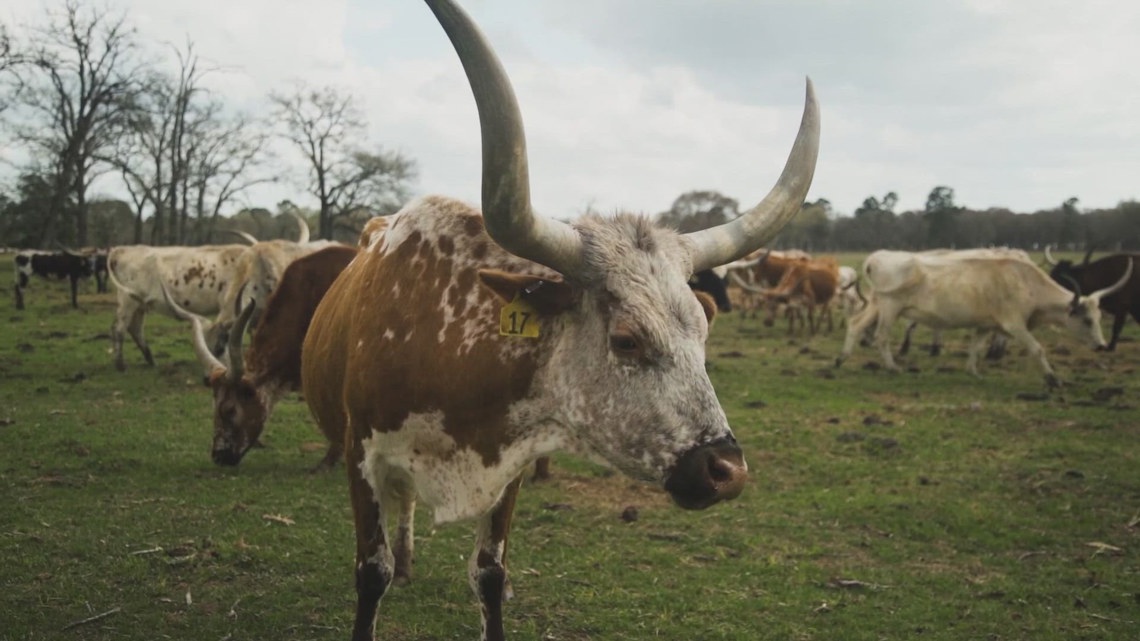
The Texas longhorn, a symbol of the state’s identity, is being preserved by dedicated ranchers like Malcolm and Connie Goodman in Waller.
WALLER, Texas — Texas wouldn’t be Texas without the longhorn.
From the lore of trail rides to the image of the American cowboy, the Texas longhorn has long been a symbol of the state’s identity — and an animal that helped shape the nation’s early economy.
The breed’s origins trace back centuries, with cattle brought from Spain to Mexico and eventually driven north into Texas. Built for endurance, longhorns became essential to the 19th-century cattle industry, as ranchers relied on them to walk hundreds — sometimes thousands — of miles to market.
“Longhorns were really made for walking long distances,” said Malcolm Goodman, who, along with his wife Connie, has spent the past 30 years breeding the cattle on their ranch in Waller. “Before railroads and refrigeration … that’s how you got meat to market.”
The Goodmans now manage a herd of more than 120 Texas longhorns, ranging from calves just days old to animals that have lived for decades. Their focus is not beef production but preservation — specifically raising Butler Texas longhorns, a historic bloodline.
“Longhorns don’t have a domed head. The horn goes smooth right from one side to the other,” Goodman said, describing one of the breed’s defining features.
After the Civil War, longhorns were central to Texas’ economy. Massive trail drives in the late 1800s moved millions of cattle from Texas pastures to railroad stockyards across the country. But as railroads expanded and fencing spread, the need for long-distance cattle drives faded. With it, the demand for longhorns declined.
“They almost went extinct because European breeds are just beefier animals — more meat per dollar of feed,” Goodman said.
Modern cattle breeding shifted toward maximizing weight gain and feed efficiency, sidelining longhorns, which are typically smaller and slower to fatten. While they are often considered less aggressive despite their large horns, ranchers still advise caution — especially around bulls.
Today, efforts to preserve the breed continue through ranchers and institutions dedicated to its history.
At the Butler Longhorn Museum in Kemah, visitors can learn about Milby Butler and other Houston-area ranchers who played a key role in saving the breed from extinction.
“To know the cattle, you know the man,” said Monica Hughes, the museum’s executive director.
Hughes says the Butler family herds once roamed across what are now communities stretching from Friendswood through Pearland to Galveston.
“If it wasn’t for the Butlers or the other families … we wouldn’t have Texas longhorns today,” Hughes said.
For ranchers like the Goodmans, the mission is clear: ensure the survival of a breed as old as Texas itself.
Through careful breeding and stewardship, they are working to keep the legacy of the Texas longhorn alive — a living link to the state’s past and a symbol of its enduring culture.
Got a news tip or story idea? Email us at newstips@khou.com or call 713-521-4310 and include your name and the best way to reach you.