
Few have accomplished more in their first playoffs like The Alien has, so how does he compare to other stars early in their careers?
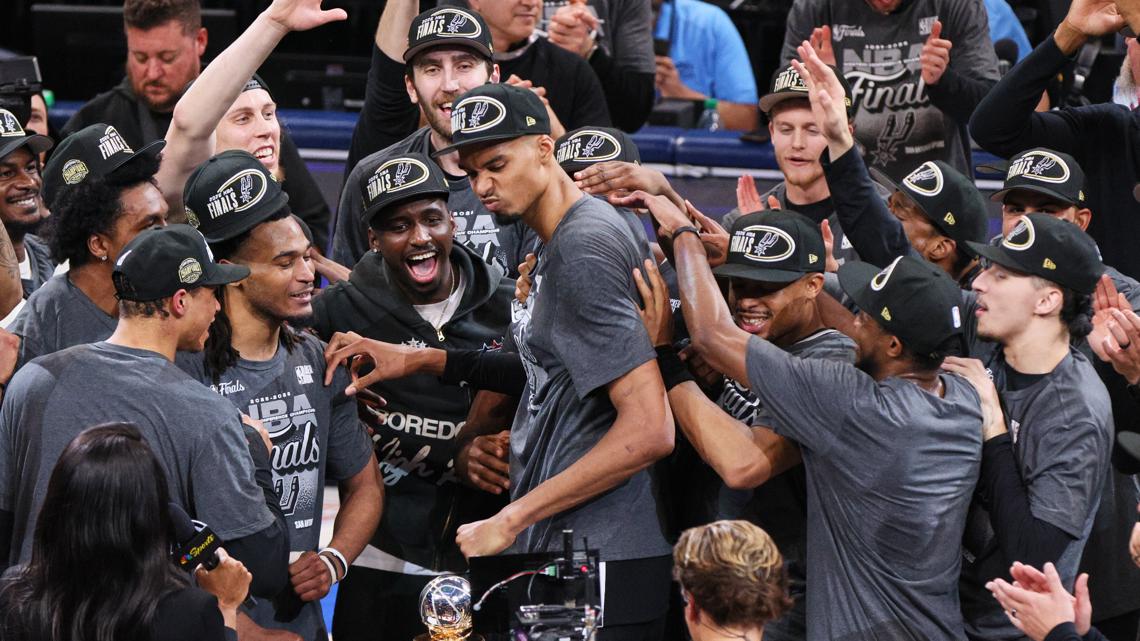
SAN ANTONIO — Victor Wembanyama has already accomplished something few players in NBA history can attest to: reaching the NBA Finals in his third season and first playoffs appearance.
The accomplishment raises three questions…
Is this the greatest third season ever?
Is it the greatest age-22 season ever?
And is it the greatest first playoff run ever?
The Spurs’ run in general has been impressive. They ousted a solid Blazers team in five games, beat a Timberwolves team that made the conference finals in consecutive years in six and triumphed over the defending champion Thunder in seven.
Not to mention this has all be done in San Antonio’s first taste of playoffs action since 2019, and by a Spurs core with young stars barely old enough to drink (or not yet, in the case of 20-year-old Dylan Harper).
That includes Wembanyama.
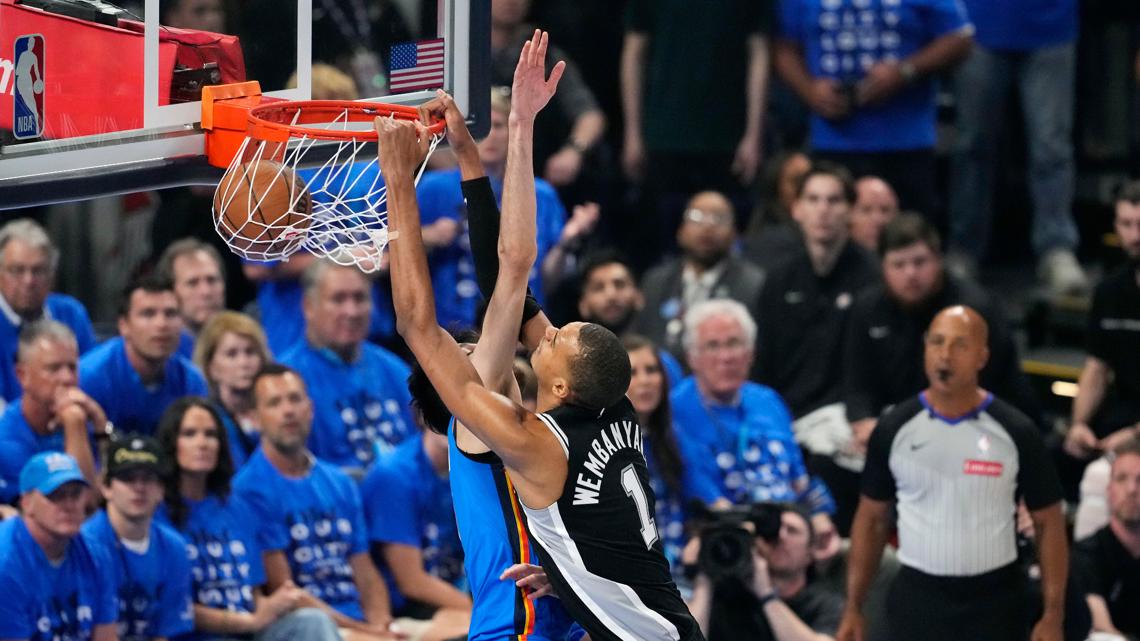
In the regular season, Wemby averaged 25 points, 11.5 rebounds, 3.1 assists and a league-leading 3.1 blocks a game en route to a unanimous Defensive Player of the Year win, an All-NBA First Team selection and a third-place finish in the MVP race. He also led a young Spurs team to 62 wins and the 2nd seed in the Western Conference.
In the playoffs, Wemby has only continued that dominance.
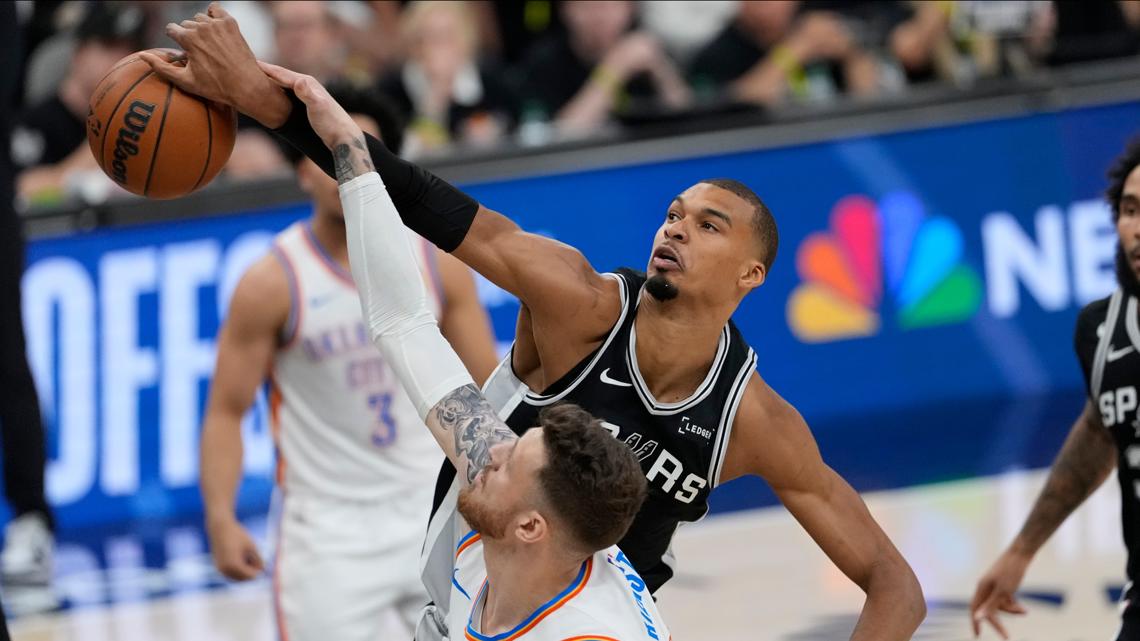
In 17 games, The Alien has averaged 23.2 points, 10.8 rebounds, 2.7 assists, and 3.5 blocks on 51% shooting and 37% shooting from 3-point range (1.8 3’s a game). He’s the only player to put up those averages in a single playoff run in NBA history.
Again, he’s only 22… and in his third season.
It starts to make you wonder just how good this run has been for the 7’4″ Frenchman.
Third season
There’s been some solid third seasons from some of the game’s best in NBA history:
- LeBron James: 2nd in MVP voting, lost in second round of playoffs
- Larry Bird: 2nd in MVP voting, lost in second round of playoffs
- Shaquille O’Neal: 2nd in MVP voting, swept in NBA Finals
However, among the strongest third-season comparisons to what Wemby has accomplished are Wilt Chamberlain, Michael Jordan, Derrick Rose, Kareem Abdul-Jabbar and Magic Johnson.
Chamberlain averaged 50.4 points while finishing second in MVP voting, but his team lost in the second round of the playoffs.
Jordan averaged 37.1 points per game and also finished second in MVP voting, but was sept in the first round. In fact, it took Jordan seven playoff runs to make the Finals in 1990-91 before he proceeded to lock down his legacy by winning the title six times in eight seasons.
Rose averaged 25.0 points and 7.7 assists while leading Chicago to 62 wins and winning MVP in the 2010-2011 season, the youngest to do so at 22. His team ran out of steam, however, losing in the Eastern Conference Finals against the LeBron James-led Miami Heat.
Abdul-Jabbar – Lew Alcindor at the time – won his second MVP award in his third season, averaging 34.8 points, 16.6 rebounds and 4.6 assists. However, he lost in the conference finals that year.
Johnson averaged 18.6 points, 9.6 rebounds, 9.5 assists, league-leading 2.7 steals in his third season. Unlike the others we’ve discussed, Magic won the NBA championship in his third campaign, the second title of his career. Johnson also won Finals MVP for the second time. He did finish eighth in MVP voting, so he doesn’t have exactly the same individual hardware as Rose and Abdul-Jabbar, but Finals MVP honors is nothing to sneeze at.
How does Wemby stack up to that trio of Abdul-Jabbar, Johnson and Rose?
Well, he doesn’t have the MVP. But he does have a Defensive Player of the Year — and the only unanimous one in history — while finishing third in MVP voting.
If he wins the title, he has a good shot at winning Finals MVP like Magic did. Wemby is also tied for the second-most wins in the regular season with 62, trailing just Larry Bird and tied with Derrick Rose.
Then it becomes a debate of which of Abdul-Jabbar, Johnson, Rose or Wemby holds the third-season crown. It could depend on what you value more between personal accomplishment and team success.
The age-22 factor
You’d be surprised how much many NBA greats accomplished while barely being able to drink.
LeBron James and Shaquille O’Neal both made it to the Finals in their age-22 season, only to get swept by the Spurs and Rockets, respectively. Shaq finished second in MVP voting that year while LeBron finished fifth.
As we’ve mentioned, Derrick Rose became the youngest MVP in NBA history at age 22 while leading Chicago to 62 wins. His season ended in the Eastern Conference Finals against Miami.
We’ve already discussed Magic Johnson’s age-22 season, ending with his second NBA Finals and Finals MVP awards. Few players in league history can match that level of team success so early in their careers.
The player I think takes the cake is a power forward many Spurs fans know and love: Tim Duncan.
In his age-22 season, Duncan averaged 21.7 points, 11.4 rebounds and 2.5 blocks while finishing third in MVP voting and fifth in Defensive Player of the Year voting. He then led the Spurs to their first NBA championship, where he captured Finals MVP.
Wembanyama’s resume is beginning to look remarkably similar.
Like Duncan, he finished third in MVP voting. Unlike Duncan, he already owns a Defensive Player of the Year award. He also led San Antonio to 62 regular-season wins, five more than Duncan’s championship team.
If Wembanyama leads the Spurs past the Knicks and wins Finals MVP, the debate becomes very real.
Would you rather have Rose’s MVP? Magic’s championship pedigree? Duncan’s title and Finals MVP?
Or Wembanyama’s combination of elite offense, elite defense and team success?
By the time the Finals end, the answer may be obvious.
Comparing first playoff runs
The thing that really makes Wemby’s run stand out is that this is his first playoff run as a star player. For many greats, it takes a few years to crack the Finals.
Here’s how a lot of players’ first runs ended:
- LeBron James: lost to Pistons in second round
- Michael Jordan: lost to Bucks in first round
- Tim Duncan: lost to Jazz in second round
- Kareem Abdul-Jabbar: lost to Knicks in second round
- Shaquille O’Neal: swept by Pacers in first round
- Larry Bird: lost to 76ers in second round
The one outlier: Magic Johnson, once again… this time in his rookie season.
We’ve talked about Magic a bunch, as he’s the poster child for early career success.
The thing about Magic’s 1980 NBA Finals run is that he had Abdul-Jabbar at his side, albeit not at the end. But to get there, Abdul-Jabbar averaged 31.9 points, 12.1 rebounds and 3.9 blocks in that playoff run to help the Lakers get to the spot to win the chip before missing Game 6 in the Finals.
And to give it to Magic, he came to play without Kareem as a rookie, starting at center and scoring 42 points and grabbing 15 rebounds to give the Lakers their seventh championship. Magic won Finals MVP (as a rookie) and averaged 18.3 points, 10.5 rebounds, 9.4 assists, 3.1 steals in 16 games that playoff run.
Wemby’s run is different because he is undisputedly the best player on this Spurs team. While Magic had Kareem’s 30-plus PPG, Wemby’s second best player is 21-year-old Stephon Castle, who is averaging 19.2 points, 4.9 rebounds and 6.7 assists.
No knock on Castle, but he’s no 1980 Kareem.
If Wemby were to pull this championship off, it could be argued that his first playoff run is more impressive than Magic’s, as Wemby has been dominating all playoffs long while Magic’s big moment came in one game.
If Wembanyama leads the Spurs past the Knicks and captures Finals MVP, the debate may no longer be whether his third season belongs among the greatest ever.
The debate may be whether any player has ever had a better one.