
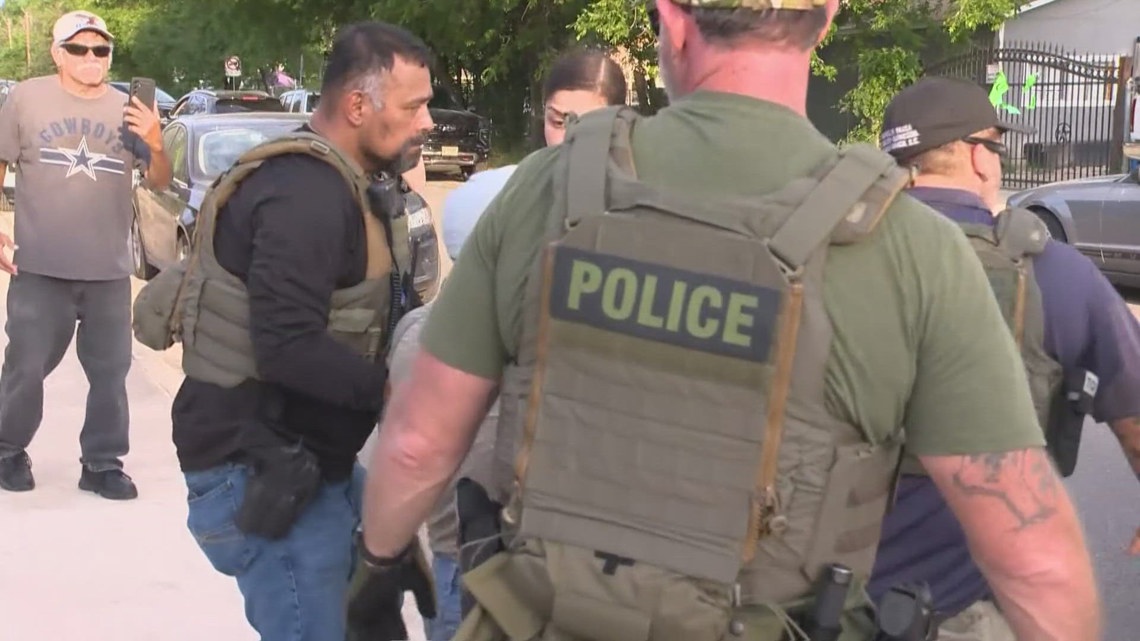
Texas counties are moving to meet a December 1 deadline under a new Texas law that forces sheriffs into formal agreements with federal immigration authorities.
HOUSTON — As immigration enforcement becomes a flashpoint across the country with ICE operations increasingly under public scrutiny, a new Texas law is reshaping how local sheriffs handle immigration matters.
Texas lawmakers passed Senate Bill 8 last year, and it took effect on January 1. The law requires sheriffs who operate county jails to enter into 287(g) agreements with U.S. Immigration and Customs Enforcement, formal partnerships that allow trained local personnel to assist with certain federal immigration enforcement functions.
Supporters, including Chambers County Sheriff Brian Hawthorne, who also serves as president of the Texas Sheriffs Association, say the law strengthens public safety by helping remove criminal illegal aliens.
But immigrant rights advocates warn that expanding these agreements could erode trust between law enforcement and Latino communities and could increase the risk of racial profiling, particularly in counties that choose more aggressive enforcement models.
A deadline and potential legal consequences
Under SB 8, counties that fail to comply by December 1 could face legal action by the Office of the Texas Attorney General. It’s why many sheriffs are moving quickly.
A KHOU 11 Investigates analysis of ICE data found roughly 73% of Texas’s 233 counties with jails and subject to the law now have 287(g) agreements in place as of February 3.
(interactive map here. embed it at height 600, width 100%)
Not all 287(g) agreements are the same
While SB 8 pushes counties toward partnerships with ICE, how a sheriff’s office participates can vary. Sheriffs can choose among different program approaches, including:
-
Jail-Enforcement Model: trained personnel screen people already for their immigration status once booked into a county jail and hold them for ICE once criminal charges are adjudicated
-
Task Force Model: local officers take on an immigration role that can extend into the community and street policing
-
Warrant-Service Officer Program: deputies assist with serving ICE warrants inside jails
Hawthorne says Chambers County has used a jail-based model for six years and prefers handling immigration-related issues in the jail rather than during street policing. He also says he has not seen the trust issues critics warn about, arguing that residents still call 911 and support having serious offenders deported.
Advocates: “a mistake” that could deepen distrust
Cesar Espinoza with FIEL Houston says expanding 287(g), especially beyond jail settings, could make communities more vulnerable by discouraging people from reporting crime or cooperating with police.
He also points to concerns raised in prior civil rights reviews of 287(g), including a 2022 report by the American Civil Liberties Union that criticized how some agreements were implemented and warned of racial profiling risks.
Where Harris County stands
Some of the state’s biggest counties have not yet finalized agreements. That includes Harris County.
We requested an interview with Ed Gonzalez, but he declined. A spokesperson said the county intends to meet the December 1 deadline and partner with ICE.
Got a news tip or story idea? Email us at newstips@khou.com or call 713-521-4310 and include your name and the best way to reach you.