
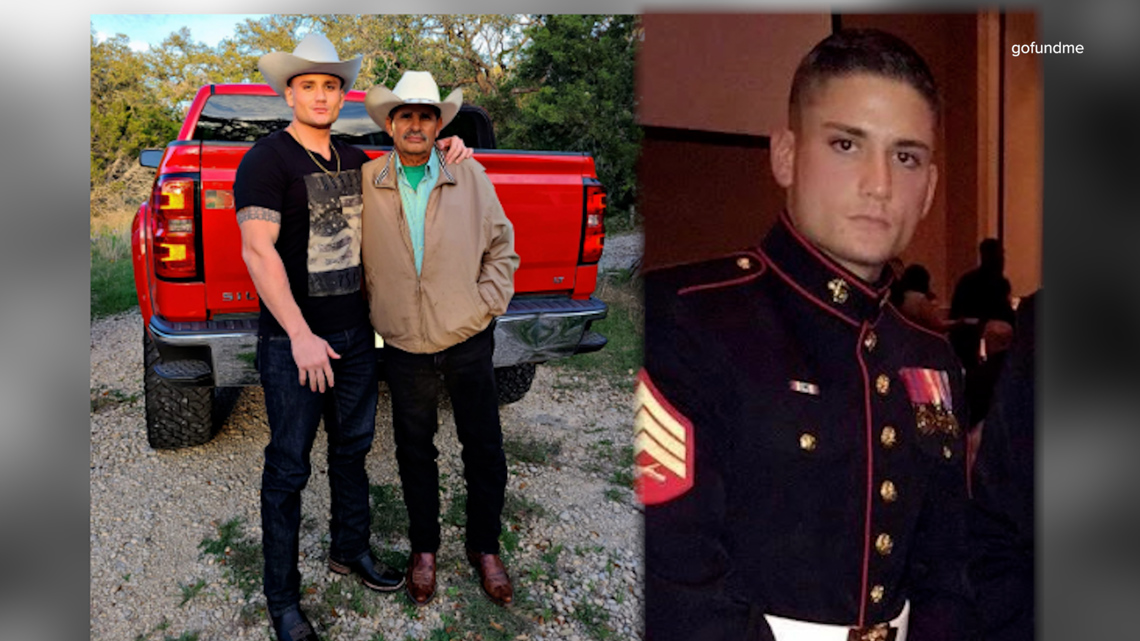
Family members, advocates and lawmakers gathered Monday outside the San Antonio VA hospital following the death of 33-year-old Marine veteran Enrique Ramos Jr.
SAN ANTONIO — A veteran’s suicide in the parking lot of the Audie L. Murphy Memorial Veterans Hospital last week — the second at the facility this year — has renewed anger, grief and demands for immediate action to improve mental health care for service members.
Family members, advocates and lawmakers gathered Monday outside the San Antonio VA hospital following the death of 33-year-old Marine veteran Enrique Ramos Jr., who died by suicide Thursday afternoon in the hospital’s parking lot.
According to a GoFundMe page created by his family, Ramos suffered from serious psychological and physical injuries that forced him into early retirement.
The loss intensified the pain for Dr. Larry Miller, whose son, U.S. Navy veteran Mark Miller, died by suicide at the same VA facility in April.
“It’s infuriating, actually. It’s senseless that we had another young Marine veteran die by suicide in the VA parking lot,” Miller said at the rally. “It renewed my pain. It brought all this back to my memory, and it made me even more determined to do something about it.”
Miller said that after his son’s death he traveled to Washington, D.C., to push for reforms and vowed Monday to keep fighting.
U.S. Rep. Tony Gonzales on Monday introduced the VA Zero Suicide Demonstration Project Act, a bipartisan bill aimed at strengthening suicide prevention efforts within the Department of Veterans Affairs.
The measure would establish a pilot program at five VA medical centers using the Zero Suicide Initiative, a model developed by the Henry Ford Health System that is based on the belief that all suicides are preventable with proper, coordinated care.
Legislators say the bill is intended to expand access to care, standardize suicide prevention practices and improve safety for veterans seeking mental health services.
“The problem is the system is broken,” Miller said. “They go in for mental health and instead of addressing the issues, they just give a bunch of pills. The pills make them zombies. The best thing we can do is get rid of those pills and start treating our people like human beings — like the veterans they are — instead of lab rats.”
The proposal has already received support from national veterans’ organizations, including the Veterans of Foreign Wars and Disabled American Veterans.
If you or someone you know is struggling with thoughts of suicide or a mental health crisis, help is available. Call or text the 988 Suicide & Crisis Lifeline for free, confidential support 24/7.