
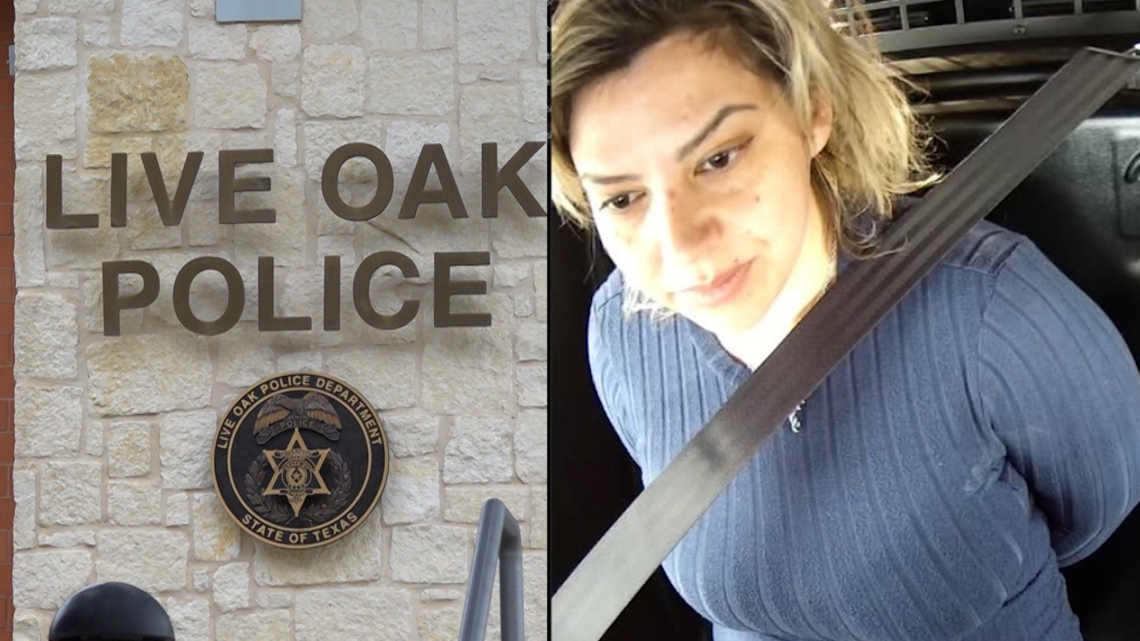
Live Oak police arrested a woman accused of “doxxing” a man during a political dispute online. She denies wrongdoing as attorneys weigh free speech vs. intent.
SAN ANTONIO — A heated political dispute on social media has escalated into a criminal case in Live Oak, where police arrested a woman accused of publicly posting a man’s name and home address after months of online clashes over city politics.
Live Oak police arrested Christina Lichtenberg on Friday. Investigators say she posted the man’s full name and apartment address publicly on Facebook and later on TikTok, after the two repeatedly argued online about Live Oak city government.
The case is being investigated as Unlawful Disclosure of Address or Telephone Number, a Class B misdemeanor under Texas law. The situation is raising questions about doxxing, online harassment and the legal line between protected speech and criminal threats.
Lichtenberg, a veteran, runs the political watchdog page “Texas Watchdogs,” where she has posted extensively about Live Oak city operations, her interactions with city staff and complaints involving city officials.
According to the arrest document, investigators allege Lichtenberg posted an image of a “cease and desist” letter that included the man’s name and apartment address. Police say the information was made public in a Facebook post and later appeared again on TikTok. Investigators also say she posted claims about the man that were not true, including an allegation that he had been cited for harassment.
Police say the man told investigators he feared for his safety, especially because both he and Lichtenberg live in the same apartment complex.
In a phone interview with KENS 5 Thursday, Lichtenberg denied threatening anyone and said she believes the case is being used against her for political reasons.
“Nobody was ever threatened,” she said.
Lichtenberg claimed the man has harassed her for months and said the conflict escalated after she expressed interest in running for mayor in Live Oak’s upcoming election in May. She said she issued the man a cease-and-desist letter in December and said the man has also accused her of stolen valor — an allegation she denies.
Lichtenberg said she plans to continue pursuing a mayoral bid and has until the 15th to submit documents to officially enter the race. She said her campaign slogan is: “We politely knocked and now we are demanding keys to the house.”
Joe Hoelscher, managing attorney with HGC Law Firm PLLC, said Texas law does not automatically prohibit sharing personal information online unless prosecutors can prove it was posted with the intent to threaten or harass.
“In Texas, unless they can prove that there’s some intent to threaten someone, then it’s legal to post their information,” Hoelscher said. “The problem is, a lot of things can be taken as intent to threaten someone.”
Hoelscher said Texas anti-doxxing laws were written to withstand constitutional challenges by requiring proof of intent.
“Right now, doxing laws are very controversial legally,” Hoelscher said. “However, these laws haven’t really been tested. So, we don’t know the full constitutionality of these laws right now.”
Hoelscher said penalties can increase depending on the victim and the consequences. Under Texas law, unlawfully disclosing an address or phone number is generally a misdemeanor but can become a felony if the victim is a juror, witness or law enforcement officer — punishable by two to 20 years in prison.
“If somebody is actually harmed as a result of a person posting their address or phone number, then the penalties go up,” he said.
Hoelscher said context can also matter when determining whether an act could be perceived as threatening.
He added that even if a person does not intend harm, online posts can be interpreted differently depending on the setting and surrounding conversation.
“We can’t control what someone considers to be threatening,” he said.
Hoelscher said doxxing has become increasingly common and believes prosecutions are increasing, many of them politically motivated.
“Doxing is getting more prevalent every day,” he said.
Hoelscher said many people assume doxxing laws don’t apply if an address or phone number can already be found online, but he said Texas statutes do not carve out broad exceptions for “publicly available” information.
“If the law had an exception for information that’s already public, the statute would basically be meaningless,” Hoelscher said, noting that phone numbers and addresses are often easy to locate through public records searches.
He said the key issue is not whether the information can be found elsewhere, but whether it was posted with the intent to threaten or harass.
Hoelscher said there are limited exceptions under Texas law, including when a public servant posts information online as part of their official duties. He also noted that in certain felony retaliation cases, a person may avoid prosecution if they remove the information within a limited time after receiving a demand letter and do not repost it.
Hoelscher added that because these laws are relatively new, they have not been widely interpreted through appeals, and prosecutors are being advised not to aggressively test the outer limits of the statute too early, because doing so could invite constitutional challenges.
Lichtenberg also raised concerns about the police investigation itself. She claimed Live Oak police sought a warrant to seize data from her phone before pursuing an arrest warrant, which she believes violated her rights. She said the city should be concerned.
“This could happen to anyone looking to petition their government,” she said.
Hoelscher said for victims of doxxing, getting law enforcement response can be difficult.
“It’s very difficult to get law enforcement to respond unless it’s a high profile or political case,” he said.
Still, he advises victims to document the incident by taking screenshots, filing a police report and contacting an attorney.
“In Texas right now, you really shouldn’t post anybody’s phone number or address without their permission,” Hoelscher said.
KENS 5 will continue to follow this case and post updates as soon as they’re available.