
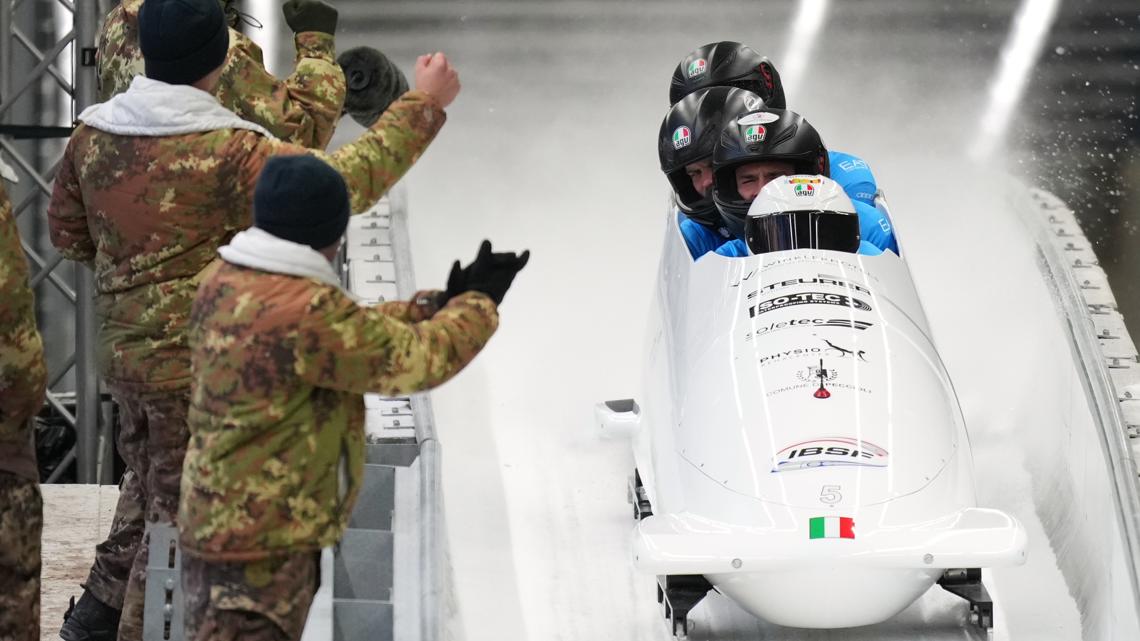
Bobsled, skeleton and luge events showcase athletes racing at speeds up to 90 mph.
ITALY, — Three sliding sports—bobsled, skeleton and luge—will take center stage at the Winter Games, with athletes reaching speeds approaching 90 mph on icy tracks.
Bobsled combines elements of Formula One and NASCAR racing on ice, with torpedo-shaped sleds accelerating to about 90 mph. Each sled requires a team for design, fabrication and maintenance. Competitions include two-person events for men and women, a four-person event for men and a monobob event for women, where a single athlete handles all responsibilities.
Skeleton features athletes racing headfirst on flat sleds at speeds between 80 and 87 mph. Both men’s and women’s individual events will be held, along with a mixed team competition debuting this year.
Luge is the fastest of the sliding sports, with competitors lying on their backs and steering with reflexes and body balance. Speeds can reach 90 mph, and the sled’s sharp blades make control more challenging than in bobsled or skeleton. Men and women will compete in singles and doubles, as well as a team relay.
Sliding Sports Background:
Sliding sports trace their origins to Europe in the late 19th century. Bobsledding began in Switzerland as a pastime for adventurous tourists, evolving into organized races by the early 1900s. Skeleton also originated in Switzerland, with riders using simple sleds on the famed Cresta Run. Luge developed in Austria and Germany, where natural ice tracks were first used for competitions. All three sports became part of the Olympic program in the 20th century, showcasing speed, engineering and athletic skill.