
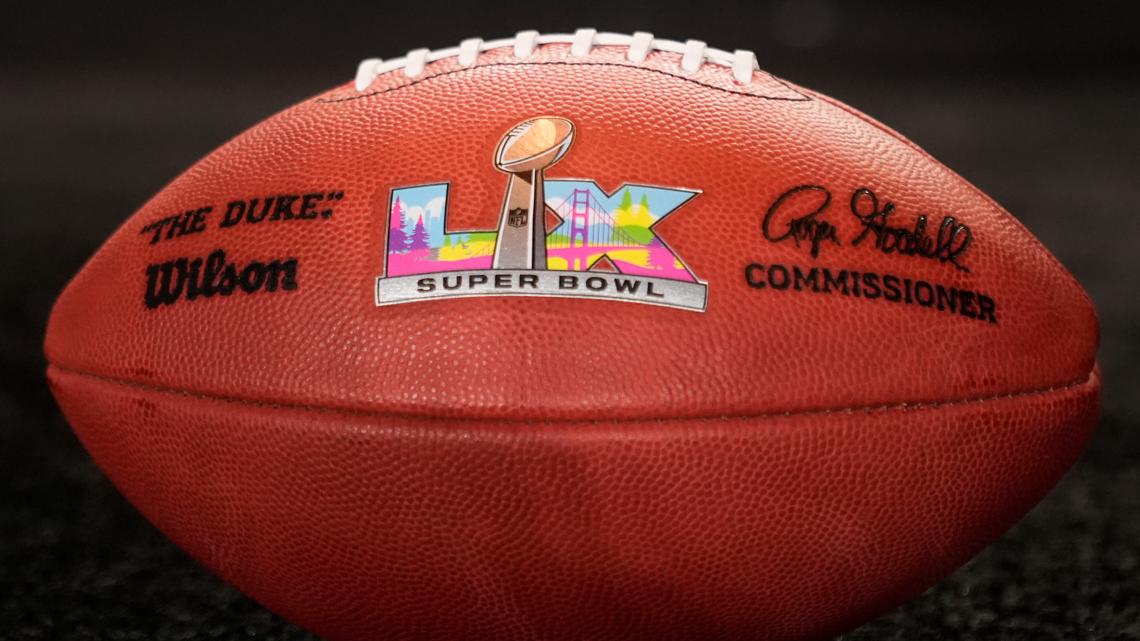
If there is one constant in life, it’s that the Super Bowl will always be on a Sunday, and people will always talk about how they wish it was on a Saturday.
WASHINGTON — The Super Bowl isn’t just a football game—it’s America’s biggest party.
The broadcast draws massive audiences globally, attracting even casual viewers with its electrifying halftime show performances and marquee commercial spots.
Not only is it a big day for television and sports, it’s also reportedly the second-largest day for food consumption in the U.S., behind Thanksgiving Day.
Why is the Super Bowl always on a Sunday?
Since the championship game’s inception on Jan. 15, 1967, the Super Bowl has been played on Sundays. And year after year, without fail, fans of the sporting event have wanted the event moved to Saturdays.
That’s partly because Mondays after the Super Bowl are notorious for the number of employees calling out of work. Millions of Americans call out of work or fake illnesses each year on either the day of the game or the day after.
This year, roughly 26.6 million U.S. employees said they planned to miss work the Monday after the Super Bowl. While some 13.1 million plan to use paid time off, 4.9 million workers will either call out sick or “ghost” work altogether. Additionally, 6.5 million workers said they plan to swap shifts with co-workers, according to a survey by the Workforce Institute.
The “Super Bowl Flu,” as it’s referred to in the survey, emerges each year after the big game.
Approximately 4.9 million workers plan to go into work late the Monday after the Super Bowl.
Despite fan pleas, the NFL has held to the Sunday schedule for nearly 60 years. That’s partly because of tradition, but there are also serious financial considerations that come into play for the biggest sporting event of the year.
One reason the NFL is adamant about keeping the Super Bowl on Sundays is due to TV ratings, according to past comments from NFL commissioner Roger Goodell.
“The reason we haven’t done it in the past is simply just from an audience standpoint. The audiences on Sunday night are so much larger,” Goodell said in 2018. “Fans want to have the best opportunity to be able to see the game and we want to give that to them, so Sunday night is a better night.”
What about moving the Super Bowl to a holiday weekend?
Roughly one-third of U.S. employees say they believe the day after the Super Bowl should be a national holiday.
Goodell has previously defended a Sunday Super Bowl, but the tide may be changing.
In a September 2025 interview with “TODAY,” Goodell said the Super Bowl could be played on the holiday weekend if the league expands its schedule to include 18 regular-season games.
“I think if you went to 18 weeks regular season, that would probably occur,” he said. “It is possible somewhere in the calendar, could happen before that, just because of the calendar it lays out. But I think 18 weeks would get you to that point. I think it’d be a really great move.”
“I do think it makes sense for a lot of reasons. Again, the quality of our game, and also, I think the timing works out great,” he added.
Goodell has previously expressed a desire to move to 18 regular-season games, which would roughly align the Super Bowl with Presidents Day weekend.
“That ends up on Presidents Day weekend, which is a three-day weekend, which makes the Sunday night—and then you have Monday off,” Goodell said during an appearance on “The Pat McAfee Show” in Detroit for the NFL draft. in 2024.
When is Super Bowl 60?
Kickoff for this year’s game is Sunday, Feb. 8, at 6:30 p.m. Eastern time.
Super Bowl 60 will be held at Levi’s Stadium in Santa Clara, California, home of the San Francisco 49ers.
This is the second time Levi’s Stadium has hosted the Super Bowl. The venue previously hosted the game in 2016, when the Denver Broncos defeated the Carolina Panthers 24-10 in Peyton Manning’s final NFL appearance.
The Super Bowl traditionally takes place on the second Sunday in February, a schedule the NFL has followed since expanding to a 17-game regular season in 2021.