
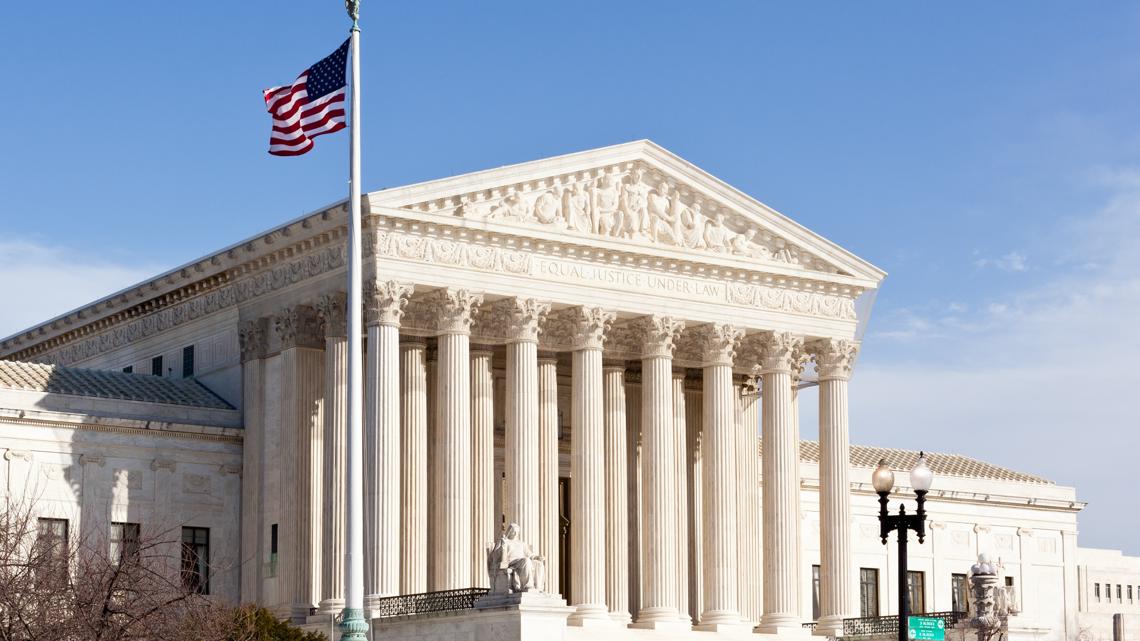
UT San Antonio Political Science Professor Jon Taylor says don’t expect a check anytime soon.
SAN ANTONIO — With Friday’s Supreme Court ruling on Trump-imposed tariffs, if you believe your wallet took a whipping, you may think money may be moving your way. But experts say don’t expect to see any dollars anytime soon.
The Federal Reserve Bank of New York found U.S. businesses and consumers paid nearly 90% of the tariffs. This has many thinking, there should be some kind of refund coming their way.
“Here’s the bad news for the average person watching. If you think somehow you’re going to get a refund, one that’s not going to happen,” said Professor Jon Taylor, from the Department of Political Science at the University of Texas at San Antonio.
Then there’s retail prices that most economists agree were driven up because of the tariffs which dramatically impacted consumer spending.
“If you think that somehow we’re going to see a decrease in prices, while going to the grocery store or to to various other businesses, the answer is you’re probably not going to see much,” said Taylor.
The Federal Reserve Bank of Richmond says The Treasury Department collected $287 billion in tariffs so far for 2025. PNC Financial Services Group says as of mid-December, $130 billion of that was collected as IEEPA tariffs. But as much as $150 billion in refunds could be on the way for businesses.
During a press conference in response to the Supreme Court ruling, President Trump said, “Wouldn’t you think they would have put one sentence in there saying, ‘Keep the money or don’t keep the money,’ right? I guess it has to get litigated for the next two years.”
“The Supreme Court really today did not touch upon that at all, which means it’s leaving it to the Trump administration and I guess to Congress as well, to figure out what kind of repayment mechanism is going to be put in place to refund these tariffs to businesses and corporations,” Taylor added.
With the Supreme Court ruling providing no guidance about refunds, Justice Kavanaugh made a point to note any refund process could be a huge mess.
The Trump administration isn’t done with tariffs and still has many options moving forward, such as using the Trade Act of 1974 to apply tariffs by specific country. The Trade Expansion Act of 1962 could also allow the president to impose duties to protect national security.
“Good luck is what I can say to the president. Because it’s going to be a much more difficult task to try to replace these tariffs that he imposed last year,” Taylor said.