
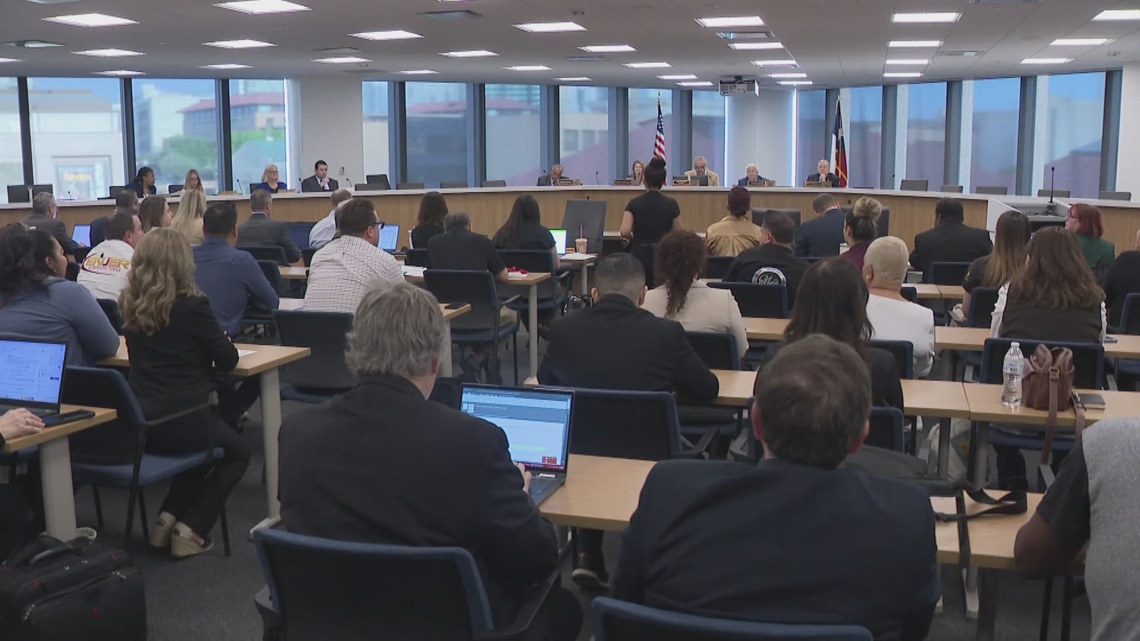
The rule, approved Tuesday, is set to take effect May 1. Many licensed professionals and school owners said it could leave countless workers in limbo.
AUSTIN, Texas — Texans who work in state‑licensed professions such as cosmetology, electrical work, and massage therapy, will soon face new requirements to obtain or renew their licenses.
The Texas Department of Licensing and Regulation (TDLR) has approved new rules requiring proof of legal authorization to work in the United States, a policy shift that has sparked concern among workers, business owners, and training programs.
The rule, approved Tuesday, is set to take effect May 1.
Many licensed professionals and school owners said the new requirement could leave countless workers in limbo. Cynthia Hernandez, owner of Sleeping Beauty Lash Institute & Salon LLC, said the decision has already created fear and uncertainty among her students.
“They lost the investment. They lost the investment in time and money. And now they’re not going to be able to obtain their license. And that’s emotionally distraught for them,” Hernandez said.
More than a dozen people spoke against the rule during TDLR’s public meeting, warning that it could worsen existing labor shortages, push skilled workers into unregulated environments, and ultimately compromise consumer safety.
“This new law, it’s just going to push them to work off the books with untaxable income,” Hernandez said. “People are just going to start working from their home. They have to survive.”
TDLR data provided to KVUE by the office of State Sen. Judith Zaffirini shows that as of last month, more than 21,000 active licenses, about 2 percent statewide, are not linked to a Social Security number.
According to TDLR, this document verification is in effect under existing federal statutory authority, which has been in place since 1996 and limits eligibility for certain public benefits, including professional and commercial licenses, based on lawful presence.
Officials said the rule approved today formalizes the verification process when an applicant is selected to provide documentation.
“This ensures consistent, secure practices across all programs and strengthens our ability to identify and deter fraud, labor exploitation, and human trafficking,” Caroline M. Espinosa, Director of Strategic Communications for TDLR told KVUE.
Hernandez told KVUE roughly 80% of her students could be impacted and worries what the new rule will mean for their futures.
“Students depend on us to guide them towards their dream,” she said. “I’ll go back to work behind the chair and that’s it and move forward. But when you look back, you’re like, what about their dreams? They wanted to have a salon. They wanted to work behind the chair.”
Despite the uncertainty, Hernandez encourages students to continue their training.
“Don’t lose hope. Do not quit. Keep going to school because no one is going to take education from you,” she said.