
Grieving families in Corpus Christi unite to combat the fentanyl crisis by sharing their personal losses to raise awareness.
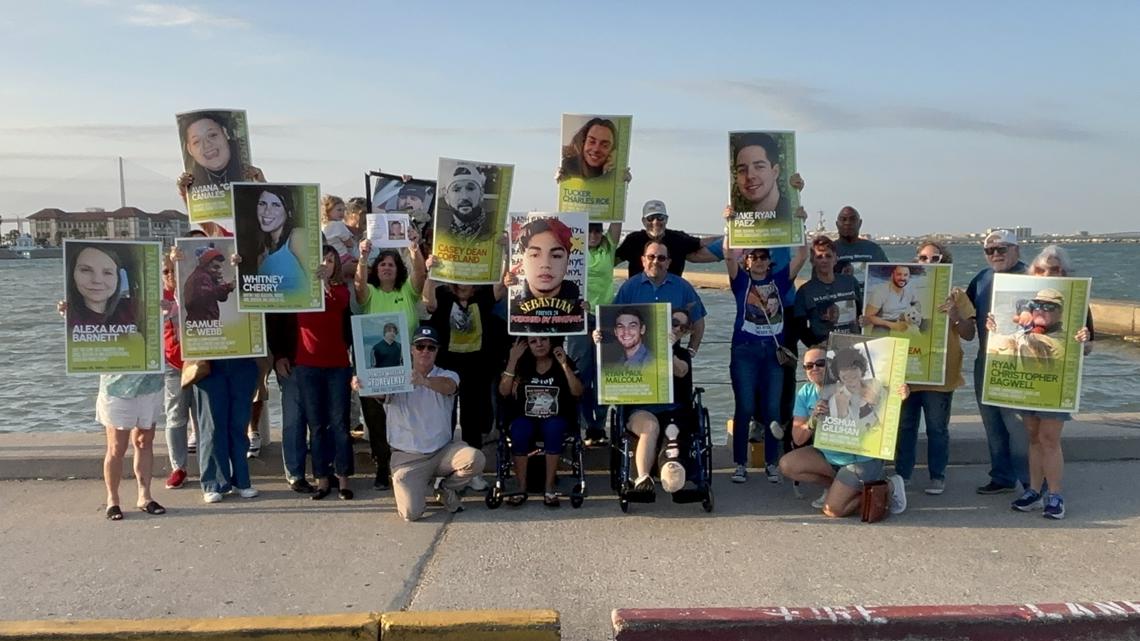
CORPUS CHRISTI, Texas — A national fentanyl awareness tour stopped in Corpus Christi, bringing grieving families together to honor their loved ones and warn others about the dangers of the drug.
After losing his 25-year-old son, Preston, to fentanyl, Michael Land started traveling the country to warn others and help families avoid the same heartbreak.
“I want people to know that we are the victims left behind, and their kids are not numbers,” Land said. “We all meant something, and they’re not forgotten.”
“Bridging the Communities Together” is Land’s third tour. At each stop, families share, grieve and honor their loved ones together.
“The Harbor Bridge is the 11th bridge, and from here I think the next stop is Taos, Colorado. I’ll do the final bridges in June in Alaska, and I’ll do the final reading at Denali National Park,” he said.
According to the Centers for Disease Control and Prevention, fentanyl-related deaths in Texas have increased more than 600% from 2019 to 2023, with more than 7,000 Texans losing their lives. Organizers hope that by raising awareness, these numbers can begin to decline.
Stefanie Roe is the founder of Texas Against Fentanyl. She started the nonprofit after her son, Tucker, died from fentanyl to raise awareness about the deadly drug.
“The fentanyl crisis is the number one cause of death for people 50 and under across our nation. It is so important to reach teens on the front end, before it’s too late,” Roe said. “It’s families coming together, sharing their heartbreak and truth, helping to drive change and save lives.”
Roe said the issue is serious nationwide.
“I want to highlight that teens have a higher chance of dying from fentanyl poisoning than from car accidents, suicide and gun violence combined. It’s intense,” Roe said. “The teen death rate in Texas from 2020 to 2024 increased by 220%. That’s 10 times higher than the national average.”
One by one, families held up photos of their loved ones, sharing their stories through tears — all connected by the same tragedy.
Kim Gillihan’s son, Joshua, died at just 14.
“He took something he thought was a Percocet, but it was fentanyl. I walked upstairs one day to wake him up, and he was gone,” Gillihan said.
Gillihan said she began advocating about fentanyl two weeks after Joshua passed.
“It just takes one time, one mistake, and fentanyl can kill in seconds to minutes,” she said. “He had a bright future. My kid could have done anything he wanted, and it was cut short because he made a poor decision to experiment. Now he’s gone.”
Libby and Frank Pender said fentanyl can take anyone, including their son, John.
“Awareness needs to be there. It doesn’t matter the age. John was 38 when he passed. He was cautious, but maybe not cautious enough,” Libby said.
Now, Gillihan and the Penders say they honor their children by talking to parents, sharing what they’ve learned, and doing everything they can to prevent fentanyl from taking another life.
“Don’t assume your child is immune to the possibility of dying from fentanyl. I never thought I’d lose my son to fentanyl poisoning — never in a million years,” the Penders said.
For Land, honoring his son means educating parents and remembering those lost too soon.
“He said, ‘You’re making me proud.’ I think he’s up there with the rest of our children, saying, ‘Look at what my dad’s doing. He’s got your back,’” Land said.