
Texas agriculture officials warn producers to inspect their fields as a newly detected invasive mealybug spreads across more than 20 counties.
HOUSTON — Texas ranchers and hay producers are being urged to take a hard look at their pastures after state officials confirmed a highly destructive new pest has arrived in the Lone Star State.
Texas Agriculture Commissioner Sid Miller on Wednesday issued an urgent alert about the pasture mealybug (Helicococcus summervillei), an invasive species never before reported in North America that is already damaging pasture acreage in multiple Texas counties.
While the species is new to the continent, researchers at the Texas A&M AgriLife Extension Service suspect that the insect may have been introduced before 2022.
New invasive pest threatens Texas pastures
The Texas Department of Agriculture is working with Texas A&M AgriLife Extension and USDA’s Animal and Plant Health Inspection Service to coordinate a rapid response and protect producers.
The pasture mealybug is a serious pest of forage grasses that causes “pasture dieback,” leaving expanding patches of yellowing, weakened and eventually dead turf. First described in Australia in 1928, it has devastated millions of acres of grazing land there and has since spread globally, causing severe financial impacts.
Its rapid reproduction, hidden soil-level feeding and broad host range make it a significant threat to pasture health and livestock operations.
“This is a completely new pest to our continent, and Texas is once again on the front lines,” Miller said. “If the pasture mealybug spreads across Texas grazing lands like it has in eastern Australia, it could cost Texas agriculture dearly in lost productivity and reduced livestock capacity. TDA is working hand-in-hand with federal and university partners to respond swiftly and protect our producers from this unprecedented threat.”

Where the pasture mealybug has been found in Texas
Officials say the estimated impact area currently covers 20 counties, including:
- Brazoria
- Galveston
- Wharton
- Matagorda
- Colorado
- Austin
- Washington
- Cameron
- Hidalgo
- Willacy
- Refugio
- Calhoun
- Victoria
- Goliad
- Dewitt
- Lavaca
- Fayette
- Jackson
- Burleson
- Brazos
- Robertson
AgriLife entomologists have submitted a formal Pest Incident Worksheet documenting significant damage to pastures and hayfields in Victoria County.
What grasses are at risk?
The pasture mealybug attacks a wide range of forage and turf grasses common in Texas. Affected plants include:
- Bermudagrass
- Bahia grass
- Johnsongrass
- Hay grazer (sorghum–sudangrass)
- St. Augustine grass
- Various bluestem species
- Other tropical or subtropical grasses
Damage can occur in leaves, stems and roots, making it harder to detect until pastures are already in decline.
There is currently no known effective labeled insecticide for pasture mealybug. Research trials are underway to determine the best integrated pest management options.
What to look for in your pastures
Producers are being asked to scout their fields closely for both plant symptoms and signs of the insect itself.
Common symptoms:
- Yellowing and discoloration of leaves within a week of infestation
- Purpling or reddening of foliage
- Stunted growth and drought stress despite rainfall
- Poorly developed root systems
- Dieback starting at leaf tips and moving downward
- Premature aging, making plants more vulnerable to pathogens
Inspection tips:
- Scout regularly for mealybugs on grass leaves, stems, soil surface, leaf litter and under cow patties
- Focus on unmanaged areas such as fence lines, ungrazed patches and roadsides
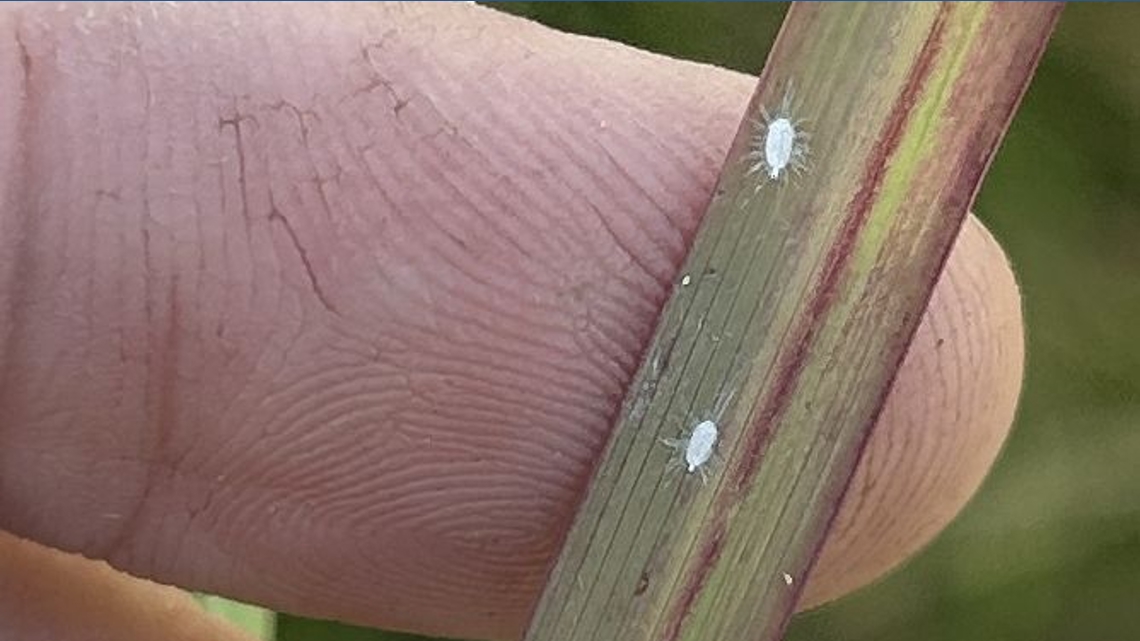
- Look for fluffy, white, waxy or “fuzzy” insects on blades and stems
- If plants look unhealthy and insects match this description, investigate further
“Early identification is critical, and we need every producer’s eyes on the ground,” Commissioner Miller added. “We are working diligently with our federal and state partners to determine how to best combat this novel threat and stop it in its tracks.”
What producers should do if they see signs of pasture mealybug
State officials are urging producers to act quickly if they suspect an infestation.
If you observe suspicious symptoms or insects matching the descriptions above, contact the Texas Department of Agriculture at:
1-(800)-TELL-TDA
TDA, Texas A&M AgriLife Extension and USDA APHIS will continue working together to study the pest and develop management strategies to help protect Texas pastures, hayfields and livestock operations.
Got a news tip or story idea? Email us at newstips@khou.com or call 713-521-4310 and include the best way to reach you.