
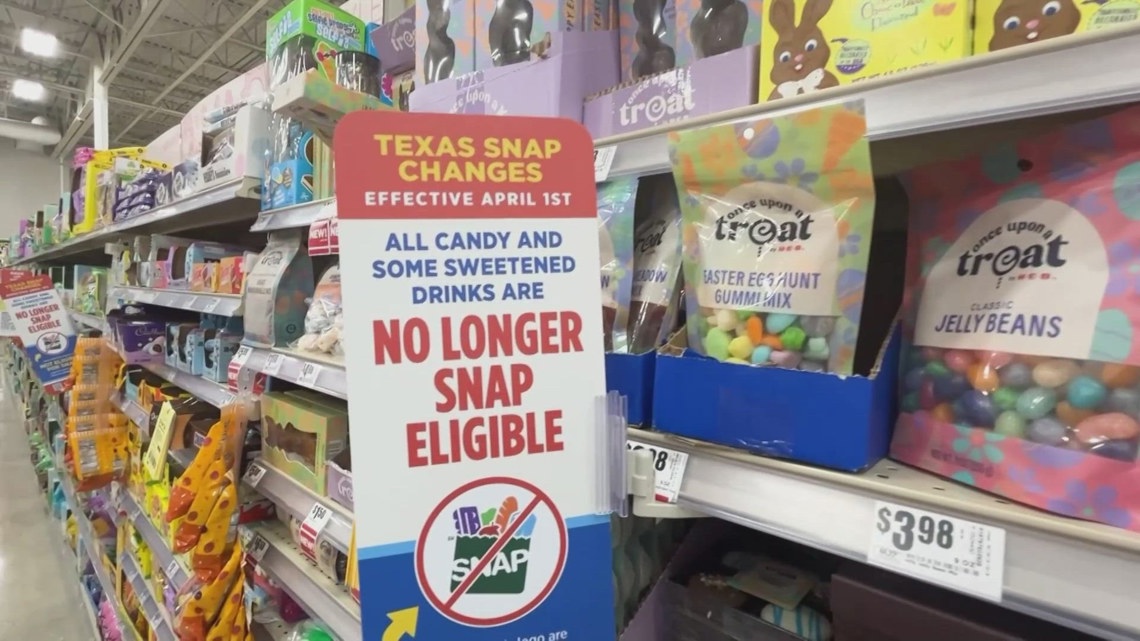
Some grocery stores have already begun posting signs to inform customers about which items will no longer qualify for SNAP purchases once the changes take effect.
SAN ANTONIO — Grocery shopping in Texas is about to change for thousands of residents who rely on federal food assistance.
Beginning April 1, recipients of Supplemental Nutrition Assistance Program (SNAP) benefits will no longer be able to use their Lone Star Cards to purchase candy or sweetened beverages under a new state law aimed at promoting healthier eating.
The policy stems from Senate Bill 379, which encourages the purchase of more nutritious foods such as fruits and vegetables.
Supporters say the change is a more effective use of taxpayer dollars.
“I do think it’s a more strategic use of the dollar,” said Eric Cooper, president and CEO of the San Antonio Food Bank. “Those sugary beverages we know are a leading cause of diabetes and heart disease.”
Still, Cooper emphasized that moderation — not restriction alone — is key to improving public health outcomes.
He noted that implementing the new rules may present challenges for retailers, who must determine which products meet the new eligibility standards.
“The challenge comes though in the application of these policies,” Cooper said. “Retailers will have to figure out which beverages are off the list and which beverages can stay on the list.”
Some grocery stores have already begun posting signs to inform customers about which items will no longer qualify for SNAP purchases once the changes take effect.
Advocates also warn the new restrictions could create confusion or embarrassment for shoppers at checkout.
“We don’t want any increased stigma or embarrassment to the participant because they don’t know, ‘Hey, I didn’t realize that I used to buy this last month, now I can’t buy it this month,’” Cooper said. “All sugary treats, desserts should be eaten in moderation.”
Cooper said the policy could also present an opportunity to expand nutrition education efforts, particularly if paired with additional federal funding.
“This is going to be a change that ultimately, hopefully, yields improvement of health and well-being,” he said. “But statistically, we know that just taking financial resources away — it won’t change the behavior.”
The new SNAP purchase restrictions take effect statewide on April 1, 2026.