
Jurors, many of whom wept at gruesome evidence, must decide whether Tanner Horner deserves to die. The defense calls his mother, experts to try to save his life.
FORT WORTH, Texas — Tanner Horner, a former FedEx driver, has admitted to the capital murder of 7-year-old Athena Strand. Now, a jury is hearing evidence to determine whether he gets life in prison, or the death penalty.
His trial began Monday, April 7, and is expected to continue for weeks. WFAA will have gavel-to-gavel coverage on our TV streaming app WFAA+.
How did we get here?
In November 2022, Athena Strand went missing from her rural home in Wise County, northwest of Fort Worth, Texas. Suspicion quickly centered on Tanner Horner, who had made a FedEx delivery to the home the afternoon she vanished. Police questioned Horner, who for two days lied about where her body was, but on Dec. 2, 2022, he finally led Texas Rangers to the spot where he had hidden her just off a rural road in a few feet of water. He was charged with capital murder, and on his first day of trial in April, he entered a surprise guilty plea.
Jurors are hearing evidence to determine if Horner gets the death penalty.
Horner’s lawyers say their client has autism and, in court documents, argue that diagnosis “reduces his moral blameworthiness, negates the retributive and deterrent purposes of capital punishment and exposes him to the unacceptable risk that he will be wrongfully sentenced to death.” Lawyers not directly involved in the case told WFAA they have mixed feelings about whether Horner’s defense will be successful.
Prosecutors rested their case April 16. The defense will begin calling witnesses April 22.
More Videos
Updates for Thursday, April 30
When Horner was about 9, he found out that he was going to be a big brother, he was excited. Grandmother described taking him to McDonald’s, where he threw up his meal in excitement. “And I just spent money on that meal.”
The defense has called Tanner Horner’s maternal grandmother to the witness stand. Like the other witnesses testifying for Horner, her image on the livestream is blurred. She is in a wheelchair.
She described `being verbally abused by her own father when she was young. She said he physically beat her brother. “He’d get that belt and just keep hitting him, keep hitting him,” she told jurors.
She was sexually abused as a child, as well. “For years,” she said. “I never told my mother. It’s just something you didn’t talk about.” She said her sister was also abused.
She said multiple members of her family had a history of alcohol/substance abuse and mental illness. Two siblings out of six killed themselves, she testified.
She said she dropped out of school in 10th grade at 15 because she got pregnant with Horner’s mother, Melissa. She wanted to have an abortion, she testified, and her mother took her to a doctor’s house to have it done. The abortion was not successful.
“I turned 16 the day after I had her.” She had a healthy baby girl.
She testified that her child was molested by the stepfather, and when she told her about it — at 4 years old — she said she didn’t believe her. She said she regrets that.
Years later, did Horner’s mother Melissa seem happy about becoming pregnant? Yes. “She seemed happy to have a baby.”
But, grandmother testified she ended up largely raising Horner, given Melissa’s frequent absences. “I loved him. He was my first grandkid.”
The defense showed pictures of a very young Horner and his grandmother.
Grandmother testified she never saw Horner’s mother use drug. But she did see her under the influence of them.
She visited her daughter in rehab several times.
Do you love your daughter? “Yes I do.”
The defense has called Dr. Kim Spence, an autism specialist. She agreed that Horner meets the criteria for autism spectrum disorder.
She did not talk to Horner about the facts of the crime. She said it wasn’t relevant to her analysis of whether he has autism.
Defense: Did any of his conditions, including autism, “cause” him to commit this crime? No. Can they influence his behavior after his arrest, and going forward when he goes to prison? Yes.
Horner has adapted well to jail, Dr. Spence told jurors.
On cross examination, prosecutor James Stainton asks whether autistic people often resort to violence. No, she said. Propensity to violence? Some. This particular person resorted to violence and sexual assault? Yes.
Horner was not truthful in this case? Yes. Did you challenge him on those lies? We didn’t ask him about the case.
Stainton asks Dr. Spence whether, in my respects, Horner had a normal life – gainful employment involving complex tasks (delivery driver following GPS and interacting with the public), able to use recreational drugs, support a child, be in a relationship. She agreed.
On re-direct by the defense, Dr. Spence pointed out that being able to do these things does not mean Horner does not have autism and therefore has behavioral deficiencies.
10:30 a.m.
The defense has called Dr. Eric Imhof, a forensic psychologist. He said that after spending a day with Horner and reviewing his records, he diagnosed Horner with autism spectrum disorder.
The reason the defense is bringing various witnesses before the jury to makes similar conclusions is because experts may disagree on degrees of impairment. Ultimately, it’s the judge who decides which experts and analysis the jury sees and hears.
On cross examination, Dr. Imhof talks about watching the interrogations videos of Horner talking with investigators, and the abduction video. He agreed with other experts that the Zero alter ego is made up, and not evidence of multiple personality disorder.
Dr. Imhof said that in his analysis, Horner did not offer any info on cocaine use on the day of the abduction, contrary to what he told another expert. Although Horner did say he occasionally did cocaine generally.
Updates for Wednesday, April 29
Court is finished for the day. The judge asked jurors to report to court by 10:30 a.m. Our live stream begins at 10 a.m. central.
The next defense witness is Dr. Steven Yount, a family physician. He is testifying about Horner’s low testosterone levels.
High testosterone can cause aggression, so low testosterone does the opposite, the doctor testified.
Dr. Davies is on cross-examination by the prosecution. He’s asked if he knows about the crime Horner committed. He said he’s been provided the video and audio from Horner’s FedEx truck, where he killed Athena.
The prosecutor also asks about Horner’s IQ score components, some of which are within the normal range. Dr. Davies says that the splits in some of Horner’s scores are still concerning in their deficiencies.
The next witness is Julian Davies, a clinical professor of pediatrics and an expert on fetal alcohol syndrome.
He said Horner’s mother’s alcohol, cigarette and marijuana use in the first few weeks of pregnancy did damage to Horner’s brain.
The defense’s next witness is a felon, with convictions for assault, engaging in organized crime, among other crimes. He met Horner in May 2025.
“This is a cool little white dude,” he told jurors. He said they talked about anime, to pass the time.
He didn’t “get what was going on around him,” the witness said.
(The judge said the defense attorney is permitted to “lead” the witness, who is not answering questions very directly.)
He said he has been in jail for 13 years, and still has seven on his sentence. “People will take advantage of Tanner,” he said when asked how Horner will fare in prison.
He had conversations with Horner, “gaming him up… giving him news you can use” on how to survive in jail. He advised him to stay to himself and stay out of people’s way because he had no clue how to read other prisoners’ social cues.
He said Horner and him “talk about the news, Donald Trump, Bible study” — anything to “keep our mind up out of jail.”
“We’re in the Book of Acts Chapter 14,” the witness told jurors. “We apply it to our own lives. It’s been beneficial to me.”
In the morning, he sees Horner “wringing his hands” and “pacing his floor” and he has to calm him down, to distract him by talking about Pokemon — anything “to get his mind off the situation.”
Every day he comes back from court, the witness asks Horner how the day went. “Thumbs up or thumbs down.” Some days, he knows not to inquire further.
The witness says Horner’s behavior reminds him of middle school. “It’s kinda goofy. I gotta answer it like this. We come from two different walks of life. If you don’t know, you’d think he’s being sarcastic. It’s him being him.”
People have a view of people in prison being bad, but there are people who “pray over people.” But, “you got sheep and you got wolves,” i.e., people who take advantage of the weak. And Horner is the weakest, he said.
“Tanner a baby lamb.”
The witness says he has stood up for Horner more than once. “Respect gets you everywhere with a grown man.”
The lawyer shows the witness a letter he wrote a few weeks ago. “You’re loved, forgiven. You’ve taught me so much. You make me grow the fuck up. When I come to the door and see you, I had to check myself and appreciate the … peace you show.”
The defense lawyer asks the witness if he knows that Horner did. He said yes. Is he still your friend? “Of course.”
On cross examination, the prosecutor asks the witness if he’s had a rough life. “Yes, sir.”
Probably some bad choices. “Yes, sir.”
Ever killed anybody? “No, sir.”
Asked whether Horner ever disclosed what he did to Athena Strand, the witness said no, Horner never did. Is he still your friend now that you have some knowledge? Yes. “He ain’t never showed me nothing different. His character good.”
The defense called another witness, Horner’s former boss at a FedEx contractor.
He talked about how trucks are loaded to maximize efficiency, and drivers follow a route per a mapping app. If drivers deviate, the app does not flag supervisors.
What happens if a driver isn’t able to complete his route? He would notify me or another manager.
Horner was not able to complete his route at least once, the witness testified.
Late November to Christmas Eve is peak delivery season. The volume almost doubles for the building, lots of extra loaders, trucks and drivers, he testified. And a lot of extra noise, he said.
Can it get overwhelming for a driver? Yes.
Do the routes change during peak season? Yes.
How often was Horner’s route changes? Not very often.
When Horner was working for you, did you get to know him? Yes. Did you get the feeling he was struggling? Financially, yes.
He said he gave Horner an $1,100 loan “to help him with his living situation.” He didn’t have anyone else, he said. “He seemed like a good enough person,” the witness said, getting emotional.
On cross examination, the witness said that in the five months or so Horner worked for him, Horner was able to manage his route, the GPS, just like the other drivers.
11:30 a.m.
The defense called one of Horner’s friends. Her face is blurred on the livestream camera, as have all of Horner’s non-expert witnesses in the trial.
She testified she talked to him about mental health, and saw him react to stressors — he would hurt himself, but wouldn’t lash out to others.
She said he was very happy to be a father to his son.
On cross examination, she said she didn’t really know what Horner did to Athena.
The defense called another witness, another friend of Horner. He said he met him at the Electric Cowboy. He said Horner had trouble telling jokes. He mostly stayed outside, smoking cigarettes. He testified that Horner wasn’t allowed in the bar because he got into an altercation possibly with a bouncer, but the details were not given.
He said he worked at a glass company with Horner, who was an installer. Retaining knowledge was difficult for Horner, although he did get along with his co workers and supervisors and showed up on time.
He said he saw Horner have an outburst over a simple matter at work. He “lost control, freaked out, couldn’t handle himself, not screaming, almost crying, slapping himself in the head,” the witness said.
He said Horner was fired from the job because of the way he acted in front of a homeowner.
Dr. Ryan agrees with the prosecutor that Horner could pose a risk to people in prison.
The prosecutor asks her to read a portion of her notes on her analysis of Horner. She reads that he told her that he may have made a deal with the devil for fame, like the plot of the movie American Satan.
On re-direct, the defense asks Dr. Ryan about Horner’s suicide attempts. “I think they were very serious attempts with an intent to die.”
Dr. Ryan defended her opinions about Horner’s mental deficiencies, and noted that some of the material in her report is detrimental to the defense.
On the issue of Horner’s ability to problem solve, she said that he did have some rudimentary abilities, but she said there’s no evidence he premeditated what he did.
Asked about her opinion of Horner’s likelihood of committing harm in prison, Dr. Ryan said he would be a “low risk of violence.”
Dr. Ryan said Horner told her that he covered up the FedEx cameras to hide cocaine use. The prosecutor asked her if she believed him, and she said she did. Stainton said there was no evidence – other than Horner’s account — that it was true.
If the story was not true, then it wouldn’t be a trigger related to his autism, Stainton told Dr. Ryan. She maintained that she believe that it was the trigger that set Horner off.
Today, defense witness Dr. Eileen Ryan resumes her testimony. James Stainton, one of the prosecutors, is cross examining and challenging her assessments of Horner and his future danger to society.
Stainton asks her about several lies that Horner told her during her assessment of him.
“People do lie, but it doesn’t mean everything they say is untruthful,” she told jurors. “I’m not making diagnoses based on their lies.” She said she uses their statements in conjunction with education and medical records, interviews with other people, etc.
Stainton asked whether Horner’s drug use could explain why his life was so bad and causing him stress.
She said, in her opinion, some of the reason he used drugs was to modulate his behavior.
Stainton: All the stressors in his life led him to kidnap and kill a child? Dr. Ryan said Horner told her that he thought Athena had seen him snorting cocaine, and that was the stressor that led to the abduction.
Dr. Ryan said Horner was “very disturbed and foolish, but that was how he problem-solved.”
Stainton pointed out all the decision making that went into abducting, killing and disposing of the body and cleaning his van showed “his problem solving was working just fine.”
I would say it’s not, she said.
It didn’t slow him down, he said.
It did not, she said.
Updates for Tuesday, April 28
Court is done for the day. Jurors were let go a little early because of the impending severe weather.
Dr. Ryan continues answering defense questions about Horner’s state of mind around the time he killed Athena — the hopelessness, anxiety and stress because of his job difficulties (changed FedEx routes) and relationships.
“The only thing that kept him from killing himself is his son,” she told jurors.
When he was a child, Horner found his mother passed out on the toilet, and he thought she was dead. That had a profound affect on Horner, Dr. Ryan testified.
Dr. Ryan testified that Horner told her that when he was 10, he and couple of young relatives set some small brush fires, and then urinated on them to put them out. One got near a neighbor’s house. His mother made him go apologize to the landlord, who raped Horner. There was no witnesses, Dr. Ryan, but she said there were signs that it was true. She said Horner told her that he was so ashamed by being sodomized that, for a time, he refused to defecate, and his family mentioned he struggled with constipation. Also when he was a teenager he had significant bleeding from hemorrhoids, which could have corroborated the past trauma.
Dr. Ryan said that Horner’s alleged alter ego “Zero” was not real, but a mechanism to confess to authorities. Did Horner believe that officers were “buying his act?” the defense asked. Yes, Dr. Ryan testified.
Dr. Ryan also said that in his suicide note to Athena’s parents when he tried to kill himself in the Wise County jail, he expressed true remorse in her opinion, she told jurors.
Dr. Ryan told jurors that Horner has adapted well to jail, and that he doesn’t pose a threat to other prisoners. She said that he was much more likely to be assaulted in prison, rather than assault other people there.
Dr. Ryan testified that Horner told her that he abducted Athena because, allegedly, he said she saw him snort cocaine. As a reminder, there’s no evidence of that happening. And he told police early on that he thought he ran over her with his FedEx van and that’s why he killed her, but that’s not true, either.
Regardless, regarding the cocaine scenario, the defense asked Dr. Ryan is it your opinion that this was one of those moments when Horner “catastrophized” due to his autism? Yes, Dr. Ryan said, adding that Horner immediately jumped to the conclusion that Athena would tell someone, he would lose his job and that he would not be able to support his son and then he would, therefore, lose his son.
Dr. Ryan said Horner eventually admitted he got Athena into his van. He at first denied assaulting Athena, but then admitted it, Dr. Ryan testified. She said she challenged Horner on his lies, and he eventually told her the truth.
In telling her about it, Dr. Ryan testified, Horner had the same demeanor when he talked about his own rape when he was a child — he was deeply ashamed and that’s why he initially lied about what had actually happened. “He appeared to be quite remorseful,” she told jurors.
He then told her how he killed Athena. He said that he did not decide to kill Athena until she was in the truck. Now I’m in even worse trouble, she said he thought. “It snowballed into an avalanche,” she testified. He “tried to make it, as he put it, as quick and painless as possible” by snapping her neck. But he couldn’t do it, so he strangled her, she said he told her.
What did you think of him making several attempts to kill her? “In my opinion, it was a combination of ambivalence and incompetence,” Dr. Ryan said. Q: Would that be consistent with sadism? “That was not my opinion, that he was deriving any pleasure from her suffering. Actually, it made him more and more dis-regulated, more distressed.”
Dr. Ryan said that the fact that Tanner didn’t cover up the camera earlier in the offense showed that “he’s not really thinking in a strategic criminal manner.”
The next witness for the defense is Dr. Eileen Ryan, a child forensic psychiatrist.
Over his lifetime, Horner has been diagnosed with autism, depression, ADHD, and bipolar disorder. He was on numerous medication over the years.
In September 2018, Horner was taken to Millwood behavioral hospital in Arlington. His ex-girlfriend found him after a suicide attempt in the shed behind his grandparents house. Police responded and Horner was admitted involuntarily to Millwood.
“He didn’t want to go voluntarily,” Dr. Ryan testified, based on medical records. “He was in the hospital for about a week.”
In May 2022, Horner saw a MHMR provider in Tarrant County. Dr. Ryan testified that he told that provider he needed treatment because he said he was increasingly depressed and suicidal. He wasn’t hospitalized at that time but was referred to a mobile crisis program, which he participated in. He was under a great deal of stress, and had difficulties with his fiancee and family. His last date of service was October 2022, just a few weeks before Athena was kidnapped and killed, she testified.
After he was arrested, he cut himself in the Wise County jail. He required a blood transfusion. She said it was a serious attempt to kill himself.
11:30 a.m.
The jury is taking a break while the lawyers and judge discuss some issues regarding future witnesses.
The next witness is a friend of Horner’s. Right off the top, the defense gets him to acknowledge that he is a felon with convictions for domestic assault, aggravated assault with a deadly weapon and assault family violence with impeding breathing/circulation.
He met Horner after hearing his music, and then just went to visit him at his house. He said he seemed serious about his music. He played several instruments, including drums. He was in the band Sacred Sound. He was a roadie for the band for a time.
When they weren’t playing music, they watched anime and played video games. They smoked weed and Horner used K2 to foil drug tests at his job at Walmart.
The defense called a former friend of Horner. They used to hang out, and sometimes would watch something called Spirit Signs on YouTube about “crystals and energy and all that stuff.”
In 2021, he reconnected with Horner, and occasionally let Horner and his girlfriend babysit his son. In 2022, he moved to another city, and he lost contact with Horner.
“Then I saw the news about what was going on,” and said he was in disbelief about the horrific crimes, adding that they were out of character for his friend.
He said he liked Horner’s grandparents, although he said Horner’s grandfather, Bill, would often yell at Horner and demean him.
The witness said he heard Horner’s mother, Melissa, yell at and demean Horner as well.
Horner would often hit his head against the wall when he was upset.
Did you ever seen Horner take out his frustrations on another human being? No.
He talked about hanging out with Horner when he was in the band Sacred Sound.
On cross examination, the witness said Horner’s grandfather was a good man who was trying to keep Horner on the right path.
Tanner Horner takes his seat on day 16 of the trial.
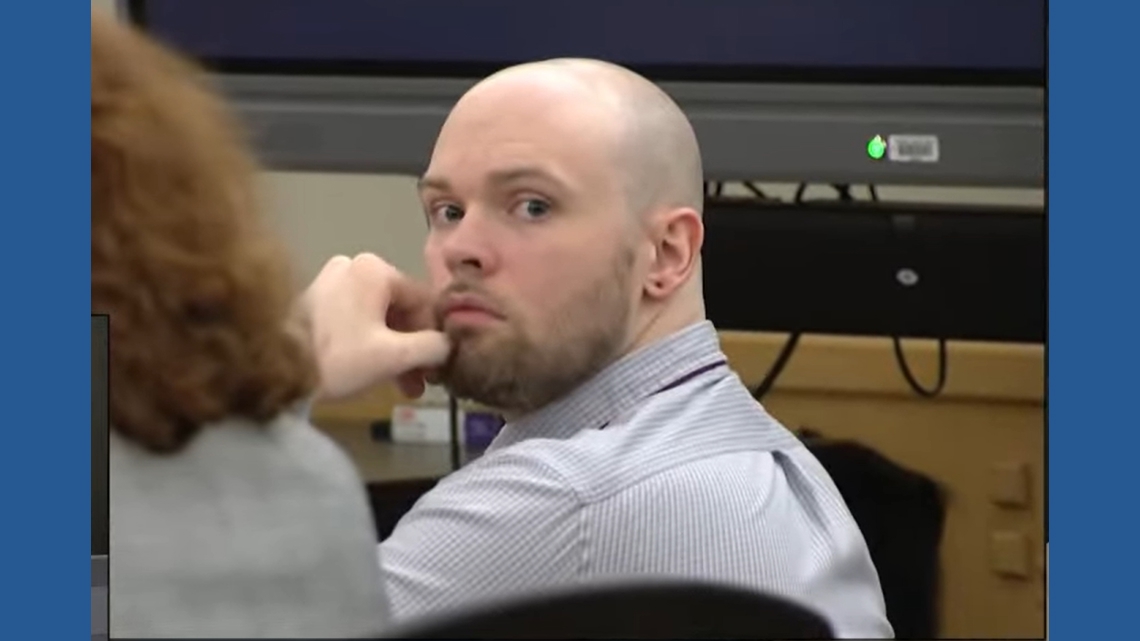
The defense called a former neighbor of Horner to the stand. Her image is blurred, as is all the non-expert witnesses testifying on behalf of Horner, most of whom appeared by subpoena.
She told jurors she had a son about Horner’s age, and she described the neighborhood bullies that targeted her son and Horner.
She also described Horner’s autism, describing him as immature.
She also testified she hasn’t had any contact with Horner in 15 years.
Updates for Monday, April 27
Testimony is done for the day. Court resumes tomorrow at 9 a.m.
Dr. Fritz is still on the stand, under questioning by a prosecutor.
Did you see any triggering event? No.
If there was evidence of covering up cameras ahead of time, etc., would that change your opinion in this case? It would make it harder to explain Horner’s actions.
On re-direct by the defense, Dr. Fritz said that Horner’s FedEx route being changed could be considered a trigger for Horner. But, she said that his autism was not a cause of any of his violent behavior, and that he understands right from wrong.
Dr. Fritz is now on cross examination by the prosecution.
Just because you have level one autism doesn’t mean you can’t be a functioning member of society, Dr. Fritz acknowledged.
Did you review any of his social media posts, the prosecution asked. Some, the witness answered. Not all.
She also did not review all the FedEx video before and after he killed Athena.
His autism didn’t mean he couldn’t hold a job, the prosecutor said. “I think Mr. Horner has a strong history of losing jobs.”
As a counter to the defense notion that Horner is language and mentally deficient, prosecutors pointed out that Horner was able to lead investigators very clearly to where he had hidden Athena’s body hours after lying about it.
Dr. Fritz testified that she was not given the actual full video of the murder of Athena (which includes audio of the horrendous act after he covered up the interior camera with a sticky note), but she saw clips. Were you surprised by what you saw? Yes. “I was most surprised by the violence. The violence of it was incongruent with the gentleman I met. It was shocking. it was horrific.”
She expected to see an autism meltdown, and it was not there, she testified.
Did you see how calm he was when he put her in the truck and spoke to her in the beginning? Yes.
When did his language change? After his attempt to strangle her, she testified. He became hostile at that point. “He called her a bitch,” the witness testified.
“His language changed when she wouldn’t die,” the prosecutor said. Yes.
Dr. Fritz testified that she saw the FedEx van video after the murder in which Horner takes his truck to the gas station to clean up Athena’s vomit, and lies to his boss on the phone that it’s his vomit. She testified he was calm in that clip.
When the defense mentioned Zero, Horner’s alleged alter ego, Dr. Fritz chuckles. She said Horner made it up as a coping mechanism, and that he does not have multiple personalities.
Horner would be able to follow rules in prison, she testified.
In his suicide note he wrote to Athena’s family in jail after he was arrested, Horner expressed remorse for what he had done, Dr. Fritz testified. She said his note was genuine, based on her knowledge of the case and her assessment of Horner.
Dr. Fritz is back on the witness stand to offer her assessment of how Horner’s autism affected his behavior.
The jury is now in the courtroom.
She met with Horner over two days, for a total of seven hours.
She analyzed how he communicates, and how much he understands, among other things. She interviewed Horner’s grandmother also.
She introduces the jury to the concept of “alexithymia,” or the lack of awareness of emotional states.
In testing, Horner showed “significant difficulty with social appropriateness” including inappropriate use of humor.
She also confirmed that he was diagnosed with Asperger’s syndrome years ago.
She said that Horner’s autism is not a defense to this crime. She said he knows right from wrong. She said the autism can be a mitigating factor when assessing if someone is eligible for the death penalty.
Dr. Amy Fritz is now on the witness stand for the defense. She’s a speech pathologist and analyzed Horner’s writings and his statements to investigators and the recorded jail calls with relatives.
Outside the presence of the jury, she talked about how his autism factored into his behavior.
“If you look at the words he said, his demeanor, how he says things, in the interrogation, and following in his letters and in his calls, he would seem completely heartless and very inappropriate at times.” She said his autism is the reason for those things.
“He has significant difficulty being able to express any sort of emotion. I believe that Mr. Horner has alexithymia.” She said it’s common for those on the autism spectrum, and means a lack of awareness of emotional state and inability to express remorse and empathy in a traditional way.
10:30 a.m.
The defense has called a childhood friend of Horner’s to the stand. Like all of the non-expert witnesses for Horner, her image is blurred on the livestream.
She said she met him in 5th grade, and dated him briefly in high school. She went to church with Horner every week.
She hung out with him at the mall and ate meals with him and his grandparents.
“He was always really sweet, gentlemanly,” she said. “I enjoyed spending time with him back then.”
She said Horner told her he liked her, and they dated. “He was sweet. He was very supportive and seemed protective of me when things were bad.”
“On occasion, I had issues at home sometimes and the kids at school liked to tease and make fun of me. When he was around it didn’t happen as much.”
She said they broke up when she began dating someone else. She said Horner was upset. “He had every right to be upset. He chased me and the other guy after school across the street.” He later walked about 20 miles to her house to ask why she broke up with him. “I was just shocked that the walked that far. I was more afraid of him getting hit by a car.”
She said she wasn’t worried he would harm her. After a while, they still remained friends. She later developed a “friends with benefits” relationship with Horner after she separated from her husband.
Did he pressure you for sex? No.
On cross examination, the prosecutor asked her about when Horner chased her and the new boyfriend. “He chased us asking us why.” She ran to her mother and the incident ended, she told jurors.
The defense called Horner’s former pastor to the stand.
“He was like any other kid,” he told jurors. He was in youth ministry.
“We were aware that he had a former of autism, so there were moments we dealt with that. But as far as being loved by our church family, he was.”
He said Horner was a loner in high school, and he told jurors he counseled him at times.
He said Horner and his brother attended church sometimes. The church gave Horner a Bible when he was a senior in high school.
The pastor said that at one point, Horner’s grandfather brought a bag of knives to church, which had to be taken away. He didn’t elaborate on what happened.
After he killed Athena in 2022, Horner contacted the pastor and said he wanted to talk.
The pastor said he told Horner that his physical life is never going to be the same, and that he had to develop spiritually. “I talked to him. We prayed the Sinner’s prayer together.”
The pastor, on cross examination, said, at the time, he thought that Horner’s story about hitting Athena with his FedEx truck and that he panicked and killed her, was the truth. He said he now knows that’s not true, although he said he had not been following the testimony (which he’s not supposed to do because he was sworn in as a witness at the beginning of trial).
Testimony resumes this morning as the defense calls more witnesses in an attempt to save Horner from the death penalty.
One of Tanner Horner’s former special ed teachers in Azle is now testifying.
She talks about Horner’s autism, and how if affected his judgment. “Maybe once or twice” she said Horner got aggressive in school, and she had to help calm him down. She didn’t elaborate what happened, and the school records she’s reviewing on the stand don’t get into the details. It also doesn’t state whether he started trouble or was defending himself.
She said, day to day, Horner had typical interactions with his peers. “Most of the time he was accepted” by his peers.
She said Horner was able to graduate from high school because of the structured special ed environments the school build for him.
“He was always pleasant to interact with,” she testified.
“He worked hard to achieve,” she told jurors.
Updates for Friday, April 24
Court is done for the day. Testimony resumes Monday.
Dr. Erin Bigler, a neuropsychologist, is the next defense witness.
On cross examination, he testified that he had not personally evaluated Horner, and that having autism doesn’t excuse any crimes Horner committed.
11:15 a.m.
The next defense witness is Dr. Jeffery David Lewine, a neuroscientist.
He tells jurors that growing up with stress and violence and want causes physical changes in the brain as one grows into adulthood.
He said he reviewed, medical, school and jail records of Horner. “He potentially had some toxic exposures” including fetal alcohol, lead, toxic stress from growing up in a volatile environment.
There are indications that Horner may have been some head traumas, but the record is unclear on this, he testified.
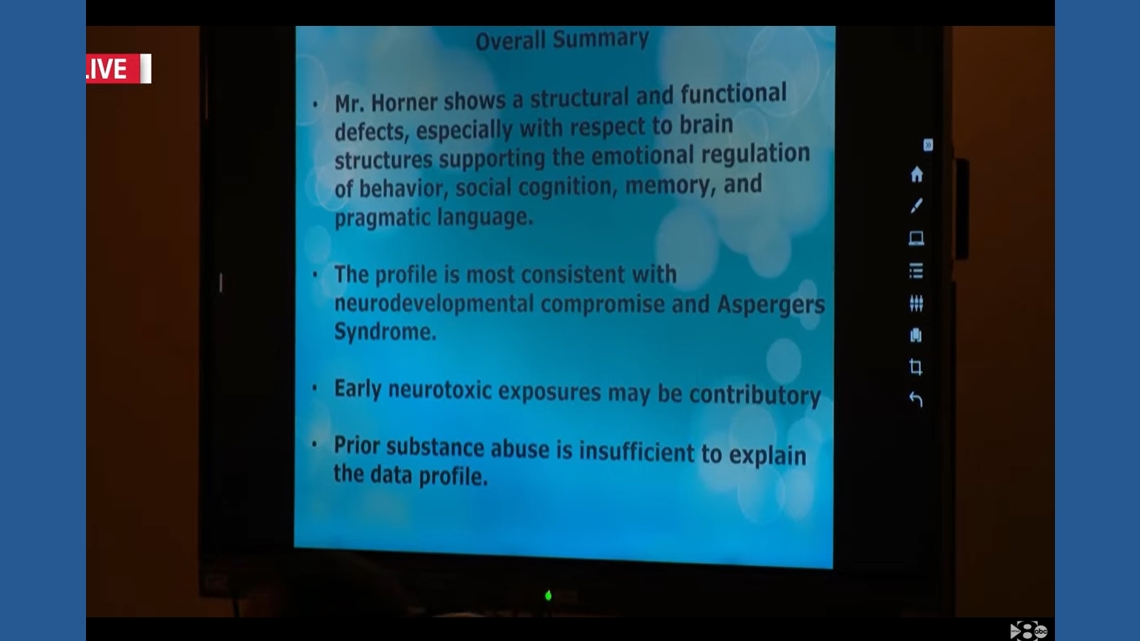
He went over Horner’s brain scan results for jurors. “Significant abnormalities” on some tests, Dr. Lewine said.
“There’s some general brain dysfunction,” he said.
When you put everything together, he said, Horner’s brain shows “evidence of either structural or either functional disruption in many may areas of the brain.”
On cross examination, the prosecutor asked the speech pathologist what her understanding was about the crime involving Athena.
She said that she, from early public accounts, thought that Horner hit Athena with his truck and that he panicked and killer her.
He did not hit her with that truck, the prosecutor tells her.
“It makes me wonder what the whole thing was about,” the witness said. “Why?”
Did his autism cause him to kidnap and murder this child?
“No, it did not.”
The defense called Horner’s former 5th grade teacher to the stand. Like the other witnesses for Horner, the judge has asked that her image be blurred on the livestream.
She testified that he was on the autism spectrum. She also testified that other kids thought he was “odd.”
She shared details about Horner’s time as her student – including how he loved Mad Libs, and that how he came to school one time with dried bubbles in his hair from shampoo he forgot to wash out.
She told jurors that she tried to do for him what she did for all her students. “I enjoyed being Tanner’s teacher,” she said, getting emotional. “I hope all of my kids know that I love them.”
The defense also called a speech pathologist — also blurred on the livestream. She testified outside the presence of the jury at first. She said she interacted with Horner at Azle junior high school. She helped formulate a plan for him in special education.
“Tanner was a great kid. We enjoyed each others company. He behaved.”
But, she said, his autism impacted his abilities. If you throw something out of the ordinary into his daily schedule, he “can’t adjust to it,” she said.
In front of the jury, she spoke about her impressions working with Horner as a student.
“His cognitive abilities stopped at a certain point for him to be able to understand jokes, teasing, bullying – he was definitely bulled through school. Those were aggravating to him and he had anger.”
Did he understand boundaries? No.
Did Horner exhibit concrete thinking, taking things too literal? Yes. He couldn’t “deal with” teasing.
“His anger would be pretty bad, at times.” She said she never saw him lash out, though.
“Autistic students have difficulty with change in general. That will set them off,” and Horner was like that, she said. She said she tried to work on coping techniques to help him with this.
She described meeting with Horner and his family at their home.
“I didn’t see any display of mothering,” she said after meeting Horner’s mother. “She didn’t have the motherly instinct. Tanner was put on the back burner.”
The court showed jurors notes from the home visit.
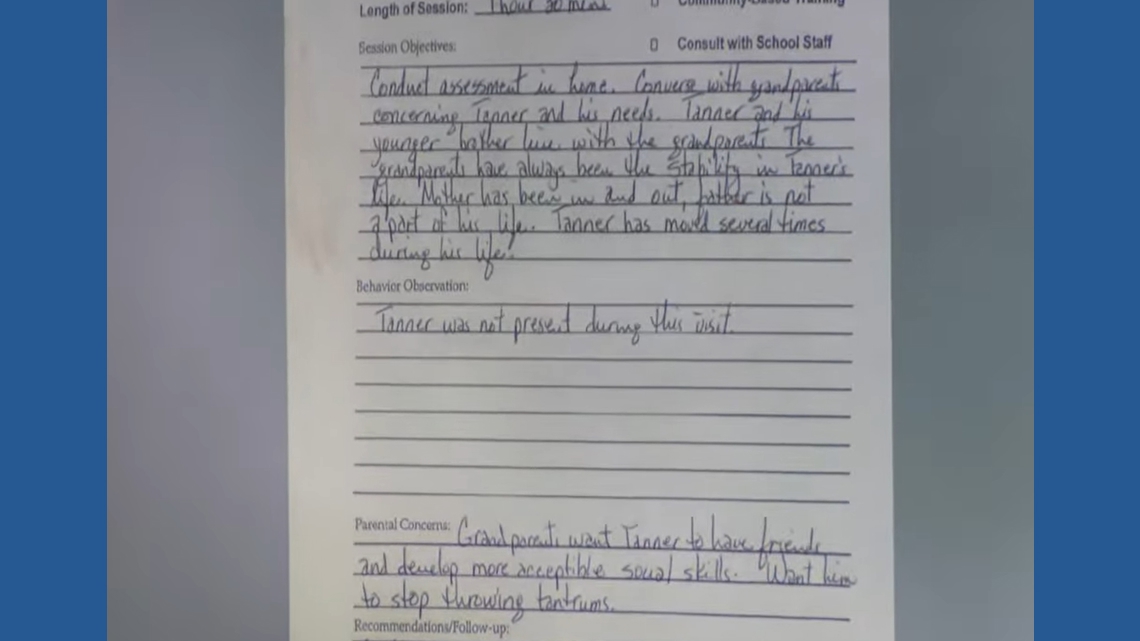
Horner and his brother actually lived with his grandmother, who said Horner’s mother’s presence created problems because of her erratic behavior.
She said she also went on “community outings” with her students, including Horner. They went to restaurants and other places to socialize him better.
She noted that Horner would only talk about things that interested him.
The defense asked the witness about the crimes that Horner pleaded guilty to. Did she think Horner’s autism was the reason why he killed? “No.” Is it an excuse? “No.” Justifies? “No.” Is it a defense to what he did. “No. This young man should have never been in that truck by himself.”
Updates for Thursday, April 23
The school psychologist is still testifying. She notes that some people with autism are sensitive to lights and sounds.
The prosecutor notes, on cross examination, that this witness did not diagnose Horner. He asked her whether someone screaming would have been a sensory overload for Horner. She said she could only speak to the educational setting.
He questions her about other paperwork showing Horner had anger issues in his youth.
The judge told jurors they were free to go home while he spoke with lawyers about evidentiary issues.
After lunch, the defense called a remote witness to talk about Horner’s background. They then called a retired school psychologist. Both these witnesses are testifying with their faces blurred on the livestream, presumably because of threats made to witnesses testifying on behalf of Horner.
The retired psychologist evaluated Horner at Azle ISD. She is testifying about Horner’s autism and what kind of treatment plan he operated under while he was a student.
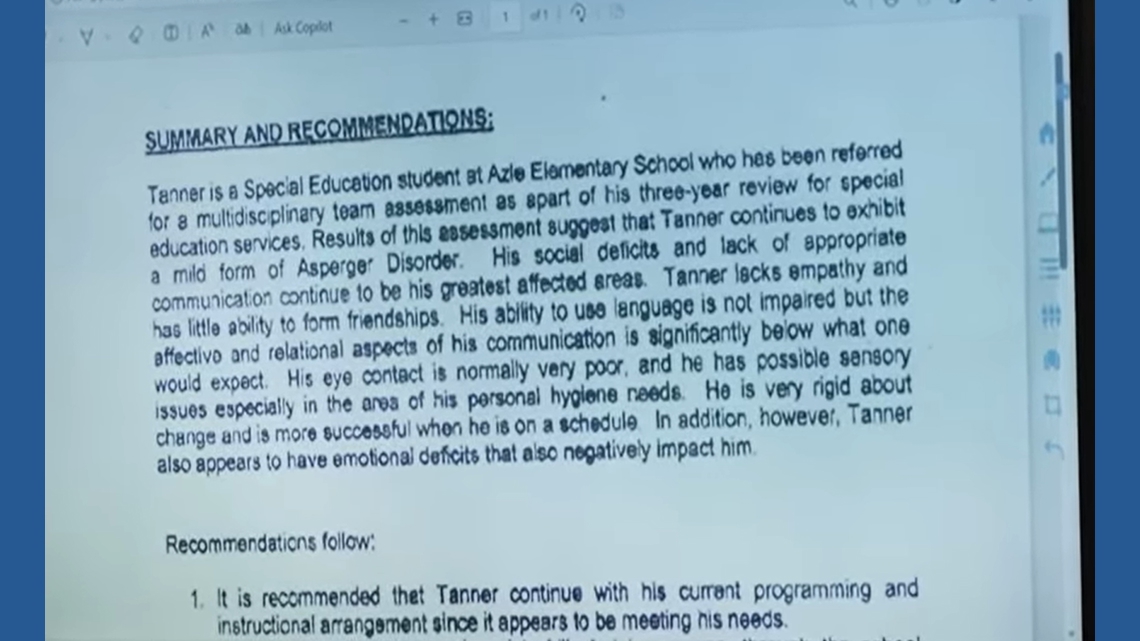
She testified about her assessment of him, and defense lawyers showed jurors a report she wrote. He had “mild” Asperger Disorder, she wrote. She noted he “lacks empathy” and has “emotional deficits.”
The defense has called Dr. Aaron Specht, a metals exposure expert. He is talking to jurors about how lead levels are measured in the body.
Lead in the blood is fleeting, but levels in bone are measurable for decades.
Effects of lead on the brain are cumulative, and irreversible, he told jurors.
Dr. Specht said eating coins is “problematic” for lead exposure. A growing child eating coins would absorb much more than if an adult did it, he testified.
The test on Horner showed he had been exposed to lead at high levels. His level was 24 times higher than someone his age should have.
Horner experienced a “significant amount of lead exposure” that impacted his neurological health, Dr. Specht testified.
On cross examination, the prosecutor asks, if Horner has such high lead levels, how is he still alive? Dr. Specht said because it’s cumulative exposure starting in childhood.
Tanner Horner’s aunt — his father’s sister — is now on the witness stand.
She, like his other family members, is blurred on the courtroom livestream.
She talks about Horner’s dad, Terry. He left home at 13, and was already doing drugs. He spent 90% of his adult life in prison, she testified.
“He threatened to kill me three different times. He was not a very nice person.”
Because he was a drug addict, he couldn’t hold a job, so he was a thief, she told jurors. Several other family members were also addicts, she said.
She said Horner’s grandmother was an alcoholic, with mental illnesses. She was also emotionally abusive.
The aunt testified that Horner’s maternal grandmother had a huge role in raising him.
The defense has called a new witness, Horner’s second cousin. She, too, is blurred.
She used to babysit Horner when he was an infant. Horner’s mother left Tanner alone with her all weekend. She was 10 at the time.
Initially, Horner’s mother paid her cash to babysit. When she was 11, she paid her with marijuana.
“She was struggling. She did her best. She tried,” she testified about Horner’s mother’s abilities as a caregiver.
As a toddler, Horner used to eat coins. “And then he’d poop them out. I remember a bunch being in the toilet,” his babysitter testified.
How often did this happen. “It was a regular basis. I thought it was odd, but I also thought it was funny. I was a kid.”
Horner’s behavior was erratic, she said. Sometimes, he would be aggressive and “throw fits.” Other times, he would sit in a corner of the room and remain still.
She would try to engage with him, but it was difficult, she testified.
He was not verbal with her through the two or three years she babysat him.
Updates for Wednesday, April 22
Court is done for the day.
Under questioning from prosecutors, Horner’s mother was asked if she understood what her son did. She said yes, then divulged she had been watching the trial live stream — which as a witness she is not supposed to do (she also said she didn’t want to go to jail for violating the judge’s order). She then broke down crying, apologizing to Athena’s family for what her son did. “I don’t know what to say. I’m so sorry,” she said. The judge excused her and she left the witness stand.
The next witness was Horner’s great aunt. Her face was also blurred on the livestream, on order of the judge.
She recalled that Horner was a “ring-tailed tooter” when he was young, rambunctious.
She, too, said that Horner’s father was kind to him.
Horner’s mother has resumed her testimony.
She said her son had “meltdowns,” and that he was bullied in school and by his grandfather.
Tanner had a good relationship with his father. “He loved his dad and his dad loved him.” Tanner’s father went to prison twice.
She told jurors that she got into physical altercations with her stepfather when Tanner and his brother were small. Her stepfather tackled her in the yard and tried to gouge her eyes out, and Tanner intervened.
Were you around when Tanner learned he was going to be a dad? Yes. “He was excited,” she said.
The defense played a video of Tanner watching his son taking his first steps.
Around the time Athena was abducted and killed, Tanner told his mother that Kassi, his girlfriend, was spending too much money. Did that cause Tanner distress? Yes.
Are you angry at your son? “I want to just tear his ass up,” she “She was just a baby,” referring to Athena.
Do you still love your son? “Of course I still love my son. I don’t love who did that. I don’t know who that was.”
She begins crying and the judge calls for a break.
11:15 a.m.
Tanner Horner’s mother is now on the witness stand.
The judge ordered that her face be blurred over the livestream.
She described being sexually abused when she was a child by her stepfather, and having to go to rehab when she was a teen for substance abuse.
She dropped out of school and became a stripper.
“It seems to fit in with my life,” she told jurors. “When you’re abused at such a young age, it becomes a self concept – ‘this is what I’m here for.’ I wish I hadn’t, but I did.” She said her mother never discouraged her from stripping. She worked for 12 years, until she was 30.
She said she drank heavily, and took methamphetamines, in order to build up the nerve to take her clothes off on stage. She later progressed to heroin, which she used for 25 years. She is currently on methadone.
She said drugs dull her painful memories.
“I have a movie that plays in my head everyday, without fail. It gets rid of it,” she told jurors. “It’s my past, my abuse, that plays in my head every day.”
She said she has been diagnosed with bipolar disorder and post traumatic stress disorder. She began seeing doctors because she “wanted to die.”
She said she met Tanner’s father in a strip club. She was 17. He was 29. “The first night we met, he raped me.”
Did you continue to see him? Yes, she said. “It wasn’t love. But yeah, I married him. It goes back to what I thought I was about.” She was 19 when they married. When he died two years ago, the couple was still married.
She said when she became pregnant with Tanner, she was still stripping. For the first 8 weeks of being pregnant, she drank “pretty heavily” and “did everything I could get my hands on” drug-wise. Once she learned she was pregnant, she stopped. “I wanted my baby to be healthy.”
She continued to smoke cigarettes and marijuana throughout the pregnancy, to help with morning sickness.
She carried Tanner three weeks past term. “He looks like his dad. I was happy to have my kids. It just changed everything. It wasn’t about just me anymore.”
When Tanner was born, she was living in White Settlement with Tanner’s father Terry, who was jobless. She left Terry when Tanner was about two years old.
She began using drugs again after Tanner was born – meth, cocaine and marijuana with alcohol. “I’ve never been able to stay sober,” she said. “I could never keep a job.”
She went to several rehab facilities when Tanner was a child. He went with her.
Sometimes he stayed with her mother. “She spoiled him.”
The defense showed pictures of Tanner when he was a child.
When you were clean, sporadically, did you enjoy being a mom? “Yeah. Absolutely. I’d go to the park with my kids. Hacky sack. Frisbee.”
She said Tanner had a difficult time getting along with other kids when he was a child. When he started school, “it was so sad to watch.” 0
“He didn’t talk the way they did. He didn’t know how to talk to them.”
She told jurors he was diagnosed with Asperger syndrome, which is now part of Autism Spectrum Disorder. She said at one point, she was able to get him benefits.
The defense has called Dr. John Edens to the witness stand. He’s a psychologist and professor at Texas A&M University. One of his areas of research is analyzing the future dangerousness of people convicted of crimes.
He testified about how researchers determine whether someone is a future risk – including a risk to people in prison, where Horner will spend the rest of his life if he’s not put to death. He explained how uncertain those assessments can be. He appears to be laying a foundation for other defense witnesses to offer their thoughts on whether letting Horner live poses a threat to society.
There are a lot of “false positives” in making predictions about future violence, he testified. “You’re fighting an uphill battle if you’re trying to predict something that’s rare.”
He said having antisocial personality disorder is not a predictor of future violent tendencies.
Good morning. We’re back live streaming the trial today. Jurors are assembling at the courthouse, and the defense will begin calling witnesses shortly.
Senior Crime and Justice Reporter is in the courtroom and will provide updates all day long.
Updates for Tuesday, April 21
A report from Rebecca Lopez:
But the jurors are back tomorrow and they will begin hearing from defense experts about why they should spare Taner Horner’s life instead of sentencing him to die for the murder of 7 year old Athena strand.
Today, there was no jury again in the courtroom.
But the judge has held hearings for the past three days to listen to what the jury will hear from the defense teams’ experts. Horner’s lawyer’s laid out a portrait of a man they say is deeply impaired… but still responsible for what he did.
A forensic psychiatrist, questioned outside the presence of the jury, told the court Horner has several diagnoses, including ADHD, depression, substance abuse, and is on the autism spectrum. She said those conditions affect how he processes situations, and why he is not emphatic about what he did. She also testified his mental health issues are not an excuse for what he did to Athena, but explained how mental health causes him to make bad decisions.
Horner told multiple defense experts about how he killed Athena and tried multiple times to strangle and smother her. After his arrest, Horner told detectives his alter ego, named ZERO, killed Athena — not him.
But the defenses’ own experts say he lied about that and made up the alter ego, and testified that Horner does not have multiple personality disorder.
Tomorrow the jury is back and will hear from experts as well as people who know Horner, including his mother.
Updates for Monday, April 20
Today, court is in session, but without the jury, and without the live stream. Defense lawyers are questioning some of their experts in front of the judge who will determine how much jurors will hear about Horner’s mental status. Rebecca Lopez is in the courtroom and reports that experts are talking about Horner’s high lead levels, low testosterone, being exposed to fetal alcohol, and autism spectrum disorder.
Here’s an update from Lopez:
With the prosecution already resting its case, a judge on Monday heard testimony from several defense experts outside the presence of the jury in the capital murder trial of Tanner Horner.
The hearing was held to allow the judge to evaluate the scope and admissibility of expert testimony before jurors return Wednesday, when the sentencing phase resumes. The jury will ultimately decide whether Horner is sentenced to death or life in prison without parole.
During the hearing, a defense medical expert outlined a history of childhood lead exposure, low testosterone and mental health concerns, explaining how those factors can affect brain development and behavior.
The expert testified that lead exposure — especially in children — can impact the brain’s frontal lobe, which plays a key role in decision-making and impulse control. However, the doctor did not say he identified specific damage in Horner’s brain, only that such exposure is known to affect how the brain functions. He also told the court that any damage from lead poisoning is permanent.
The doctor said he reviewed Horner’s medical, educational and jail records, including documents from MHMR in Azle and the Wise County Jail. He noted a history of learning disabilities, an autism diagnosis and other mental health issues, along with a prior suicide attempt and head trauma, all of which could affect brain function.
Still, the expert acknowledged it is difficult to directly connect those conditions to the crime and said he could not say they caused Horner’s actions.
Prosecutors challenged the testimony, arguing the expert’s conclusions rely on limited research and are not widely accepted.
The judge also heard from pediatric specialist Dr. Julian Davis, who testified Horner has Fetal Alcohol Spectrum Disorder (FASD). Davis said he evaluated Horner in October 2025 and diagnosed a neuropsychological disorder caused by prenatal alcohol exposure, resulting in moderate impairment.
Another defense expert, psychologist Dr. Jolie Brams, testified about Horner’s autism and developmental limitations, describing him as socially immature with difficulty expressing emotions and understanding consequences.
Brams told the court those conditions are not an excuse for the crime, but said they help explain how Horner’s brain functions. She also testified that an alter ego Horner referred to as “Zero” is a coping mechanism, not evidence of multiple personalities.
She diagnosed Horner with major depressive disorder, but said there was not enough evidence to support a bipolar diagnosis.
Defense testimony also addressed Horner’s early life, including allegations he was sexually assaulted at age 9.
Despite the testimony about neurological and psychological issues, experts agreed Horner is capable of understanding right from wrong, meaning the case does not meet the legal standard for an insanity defense.
Prosecutors have pointed to Horner’s own admissions, in which he told investigators he killed 7-year-old Athena Strand.
The judge is expected to continue hearing from expert witnesses before the jury returns Wednesday for the next phase of testimony.
Updates for Friday, April 17
Good morning. No live stream from the courtroom today, but there is definitely activity in the case.
Jurors aren’t present, but the lawyers showed this morning to argue over which witnesses will be called for the duration of the trial.
Senior Crime and Justice Reporter Rebecca Lopez was in the courtroom this morning and filed this report for us:
This morning, the judge heard from a rebuttal witness for the prosecution, Dr. Michael Rambula, who will be called after the defense is done presenting their side. Rambula testified on Friday outside the presence of the jury that after reviewing Tanner Horner’s records and interviewing him, he does not believe Horner is autistic – a key claim the defense is making as they try to spare Horner from Texas’s notorious death row.
Rambula also told the court Horner’s use of marijuana and cocaine did not play a role in his actions when he killed 7-year-old Athena Strand. But he did testify that Horner shows signs of being a sexual deviant. When asked if Horner would be a future danger to society, Rambula said he is concerned about Horner’s violent temper and inability to control it.
The defense is pushing back, saying they plan to call their own experts who will testify Horner does have mental health disorders. They also told the judge Friday they intend to call Horner’s mother as their first witness when testimony resumes in front of the jury Wednesday, but said they’ve had trouble reaching her. They told the judge she struggles with substance abuse and mental health issues and has been difficult to locate.
The defense also told the judge that they are concerned about some of their witnesses who they claim have gotten threats, but they didn’t specify who, or the nature of the threats.
Hearings outside the presence of the jury will resume Monday morning in Fort Worth.
Updates for Thursday, April 16
The prosecution rested its case at the conclusion of the video. The court stream will resume on Wednesday morning, which is when jurors will return to the courthouse to resume the trial. On Friday, Monday and Tuesday, the lawyers will argue over which of the defense witnesses will testify next week.
Jurors watched the last 30 minutes of the video depicting the violent murder of Athena. We’ll have a report soon from Rebecca Lopez and legal expert Terry Bentley Hill, who are inside the courtroom.
The courtroom feed is back on, apparently documenting the aftermath of the attack. The video playing for jurors right now is Just after 1 a.m. on Dec. 1, 2022, the day after the attack. This may be when Horner is taking the truck back to the warehouse.
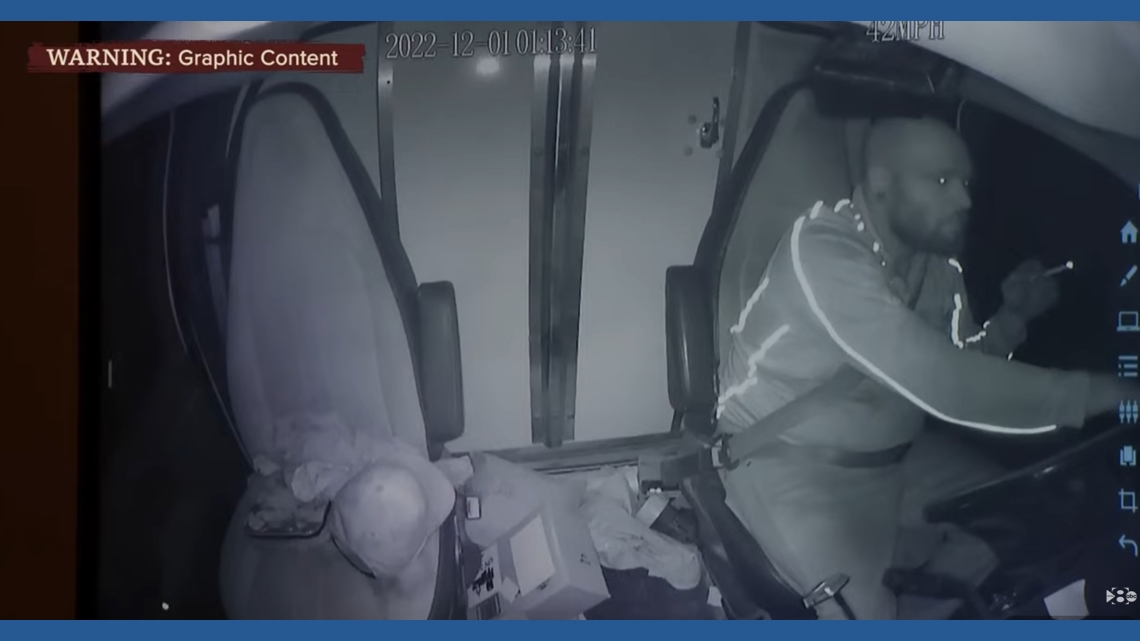
The video shows Horner, still in his FedEx shirt, stopping at a gas station, getting out, and returning to the truck with a spray bottle and roll of paper towels. He then goes into the rear of the van and begins scrubbing the floor. Testimony earlier in the trial revealed that Horner later told police Athena threw up in the van during the attack and soiled herself.
He talks on the phone with someone as he leaves the gas station. He appears to make another phone call, asking to have the same van tomorrow for work.
“It kind of smells like barf in here,” Horner says to the person on the phone. He lies and says he threw up in the truck after eating something that didn’t agree with him. “It smells bad,” Horner says.
His boss tells him he hopes Horner is feeling better. Horner assures them he will be at work tomorrow.
“Take care,” he tells Horner.
He then makes another call and again lies about throwing up in the van. He claims he had a truck stop hamburger that was “pink in the middle.”
“I actually feel a lot better,” he says.
He hangs up and smokes a cigarette as he drives. He parks the van at FedEx.
He puts what appears to be Athena’s clothes, which had been laying on top of his lunch box on the passenger seat of his van, into his backpack.
He then gets out of the van, and the video goes dark.
Court has recessed for lunch. We’re about to get a report on what the video showed from our Senior Crime and Justice Reporter Rebecca Lopez, who was inside the courtroom this morning. Terry Bentley Hill, one of our legal experts, is with her.
Here are some notes from Rebecca Lopez:
Before prosecutors played the video from the FedEx van, Athena Strand’s mom and dad left the courtroom.
In the video, from Nov. 30, 2022, Horner is seen at Athena’s house, getting the package containing her Barbie dolls out of his truck. Several minutes later, you see Horner walking towards the truck — with Athena following him. She had been playing outside after school.
They are standing at the back of the van, and he lifts her inside, and shuts the door and gets in the truck with her.
“Don’t scream or I will hurt you,” he tells her.
“Where are you taking me?” Athena asks.
She stands up and he makes her sit back down.
She look scared. She asks again: “Where are you taking me?”
Horner then covers the camera lens. The audio is still recording.
Horner mumbles something and calls Athena “sweetie.”
“I have school tomorrow,” Athena tells him.
How old are you, he asks her.
She tells him that she is 7.
“Why do you have a lunch box?” she asks.
For my lunch, he tells her. Where do you go to school?
Athena says she is in elementary school. Horner asks her if her teacher is nice, and she says yes. Horner asks her if she has a horse, and Athena again says yes.
Horner starts slowing down the van. Athena asks, is this your house? Horner says no. Athena asks where he lives. Far away, he answers.
Where are we going? What are you doing?
We are going to hang out for awhile, Horner tells her.
Take off your shirt, he orders her.
Athena: Why? What are you doing?
Horner: ssshhhhhh
Athena starts crying. She asks what he is doing, and if he is a kidnapper.
My mom said you can’t do that, Athena tells him. And she continues crying.
I’m not going to hurt you, Horner tells her.
The radio comes on.
Athena cries no, no no, and asks for her mother. She asks to go home and asks, again, if he is a kidnapper.
Then: “Why are you doing this?” she asks.
“Because you are pretty. You know that?” is Horner’s reply.
“My mom says I can’t do that to somebody. And you can’t do that to me either.”
She asks, again, to go home.
Then you can hear her choking, and a slamming noise.
At this point, some jurors are crying. They hear Athena gasp for air, whimpering and moaning in pain. Horner is breathing hard.
He apparently stops the van, and Athena is screaming. Then you hear what sounds like stomping or slamming her against the floor. She continues to scream in pain.
By now, 30 minutes have elapsed in the recording.
Then, you hear Jingle Bell Rock come on the radio. As Athena continues screaming and moaning in pain, Horner begins to sing along to the song.
“Shut up,” he tells her. “If you don’t shut up, I will hurt you worse.”
11:30 a.m.
Jurors are still watching video, and listening to audio, depicting the killing of Athena. The courtroom feed is still disabled, per the judge.
10:30 a.m.
We’re told that jurors are now watching about 2.5 hours of video that includes the abduction and killing of Athena. The judge has ordered the video feed cut. We will have a live report from our reporter and legal expert, both of whom are in the courtroom viewing what the jurors are seeing, later this morning.
After a break, prosecutors and Espinoza continue walking jurors through videos from inside Horner’s FedEx delivery van, including for Dec. 1, 2022, the day after he abducted and killed her.
As he approaches a roadblock related to the search for Athena, he asks out an open window what’s going on. He then drives along a roadway lined with police and searchers.
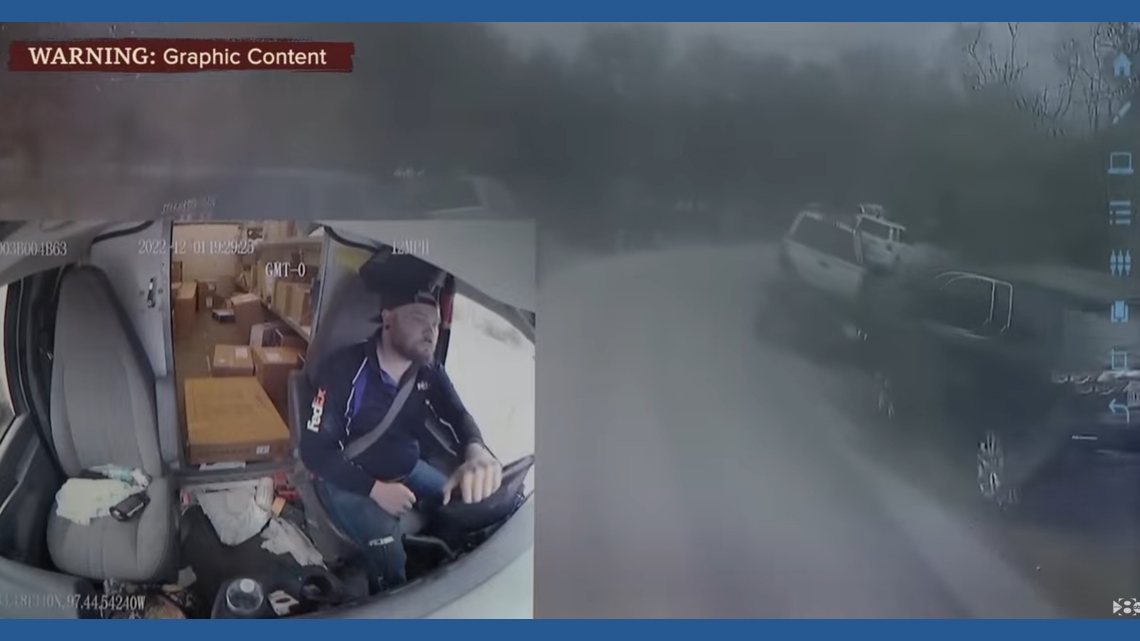
At one point, he honks at the search party, which is blocking the road and yells at them to move out of the way because he needs to make his deliveries
There’s been a kidnapping, a woman tells him through his open driver side window.
“Are you serious?”
Then he drives away and smokes a cigarette.
Ranger Job Espinoza is called back to the witness stand to walk jurors through videos from Horner’s FedEx delivery van, both before and after Athena’s disappearance and murder.
He said that at times, while making deliveries, Horner periodically covered up the camera recording the inside of his van with a sticky note.
Athena’s father Jacob Strand has taken the witness stand. He describes how devastated was by his daughter’s death.
He begins by describing how on the evening of Nov. 30, 2022, he was leaving for a hunting trip when Athena came up to give him a hug.
“I gave her a hug and told her I love her.” That was the last time he saw his daughter alive.
When he was told she was missing, initially he thought she was playing hide and seek. He returned and helped search for her. He had lived on the 10-acre property since he was 8 years old.
“It made me feel horrible,” he testified. “I wasn’t there to protect them.”
He said he held his emotions in and drank to deal with the loss. He lost his marriage. He said he couldn’t sleep, and only ate once a week, losing 50 pounds.
He said he will most miss “her laugh and her spirit,” he said. “She loved everybody.”
“I just hope that the jury and the justice system make the right decision.”
As they did with Athena’s mother, defense attorneys did not cross examine him and expressed condolences.
Updates for Wednesday, April 15
Athena’s mother Maitlyn Gandy is now on the witness stand.
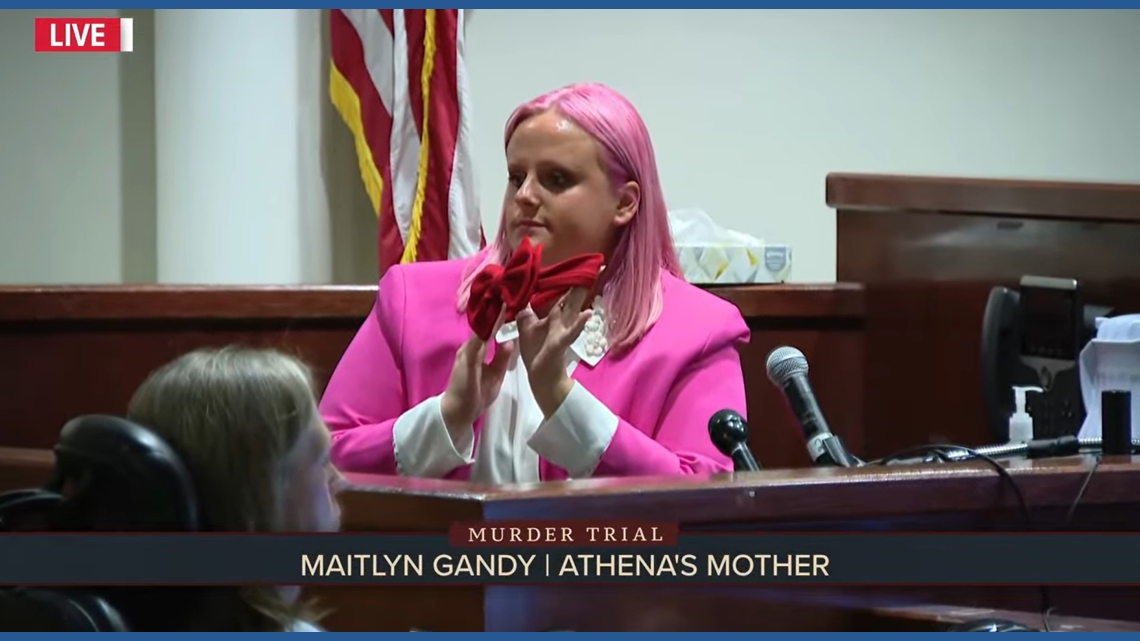
She describes the evening she was told Athena was missing on Nov. 30, 2022.
She drove from her home in Oklahoma to Wise County. The drive normally takes two hours. She made it in 45 minutes, she testified.
“It felt like I was dying” during the drive, she told jurors. “I couldn’t breathe. But I knew i had to keep going. I almost tapped the brakes because I thought I was having a heart attack. But I just told myself that if I kept going, it would be OK and I would find her.”
She described going to identify her daughter’s body. Her dad accompanied her. She wept at the recollection of seeing her daughter nude and cold. She put a hospital gown on her, but later that night, she couldn’t sleep, so she went to Walmart to get her new clothes.
“I got her some bows,” her mom told jurors.
Athena would be 10 years old today, her mother testified.
The prosecutor asked why she makes it a point to attend every hearing that’s occurred in the case.
“Because I had to cover up handprint bruises around my daughter’s neck. And because she no longer has a voice. I want people to know that she’s not just some story. She’s not just some number. She’s not just some picture you see in a headline. She was loved, she is loved. She is missed and she was real. And she had a life. And she wanted to live,” and at this point, she turns to Horner and stares at him. “And no one can take that from her.”
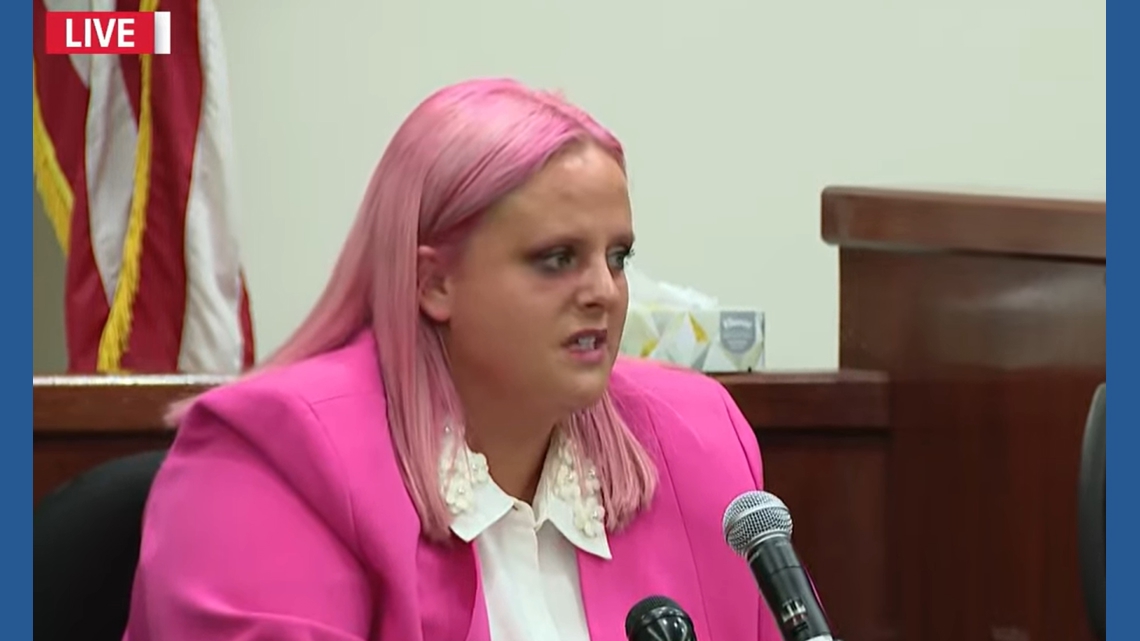
She said she still talks to Athena, reassuring her that she will get justice.
Crying, she says she’s sorry she couldn’t protect Athena.
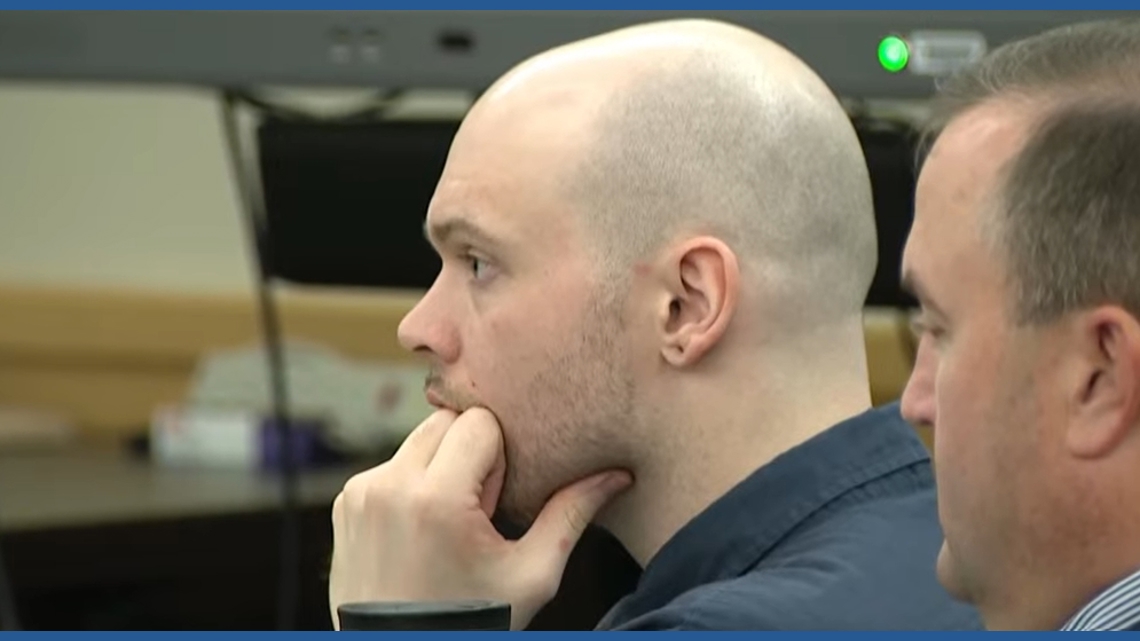
Horner is staring at the witness box wide-eyed, blinking slowly.
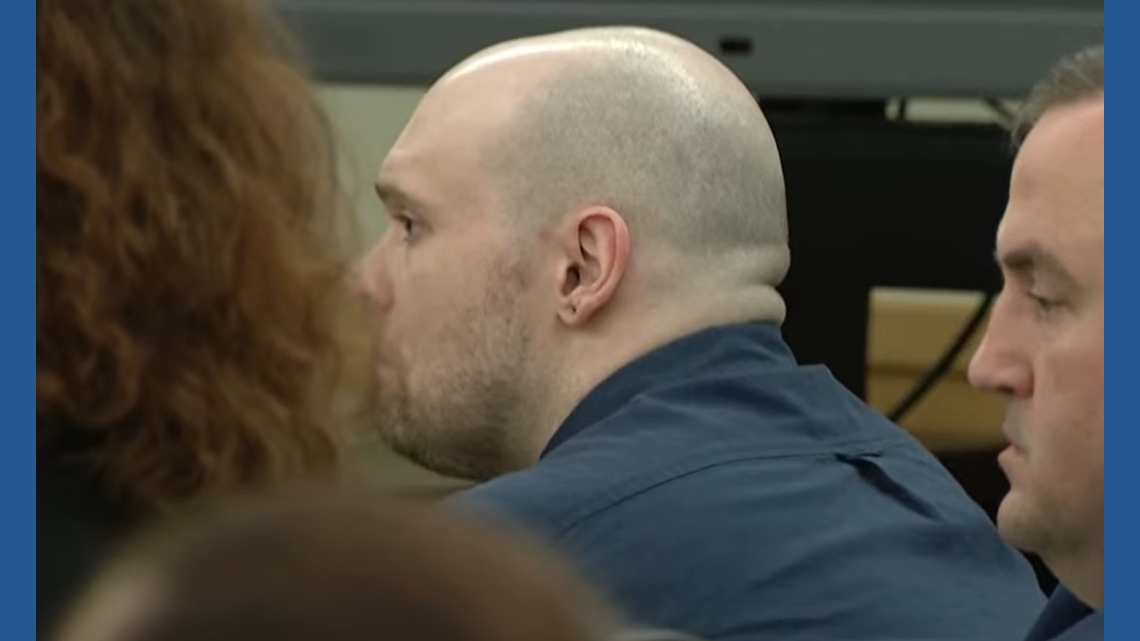
On cross examination, a defense lawyer simply says: “We’re very sorry for your loss.” No questions.
The judge recessed court for the day.
Kristen Cossota, a Texas DPS crime lab forensic scientist, is now on the witness stand. She is testifying about the DNA evidence. This should be the last witness in the chain of custody.
Cossota said that Horner’s DNA could not be excluded as a contributor to the profiles found on swabs taken from Athena’s vaginal and anal regions and mouth.
11:40 a.m.
The court has recessed for lunch. Testimony will resume at 1 p.m.
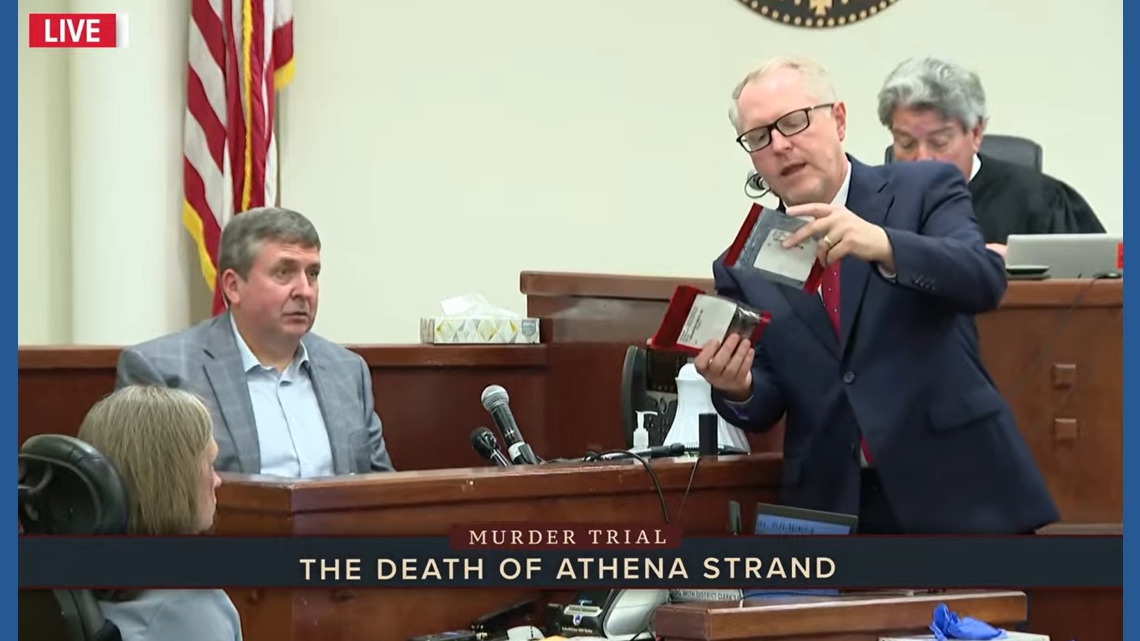
James Becker, a vice president at Velocitor Solutions, is testifying about the camera systems that they provide to FedEx.
He told jurors about how he helped Texas Ranger Job Espinoza get his company’s video from the FedEx van camera from Nov. 30, 2022, the day Athena was abducted.
This is the type of witness we’d expect to see before the jury is shown the video of Horner abducting and killing Athena. As a reminder, the judge has said that video won’t be shown over the live stream.
Becker said that the camera is programmed to stay on for 15 minutes after the delivery van is powered off.
10:30 a.m.
Ruby Kelly, a Texas DPS forensic scientist, is now on the witness stand. More chain of custody-building.
Prosecutors are building toward revealing whether Horner’s DNA was found on Athena’s body.
Amber Moss is now on the witness stand. She’s also a forensic scientist for the Texas DPS lab in Garland.
Elizabeth Seastrunk, another DPS analyst, also testified.
All three witnesses this morning appear to be building a chain of custody for how the DNA was analyzed in this case.
Erica Reynaga, a forensic scientist with the Texas Department of Public safety crime lab in Garland, is now on the witness stand.
It appears that some of her results were inconclusive.
Updates for Tuesday, April 14
Testimony is done for the day. Tomorrow, jurors are expected to hear more DNA evidence.
The next witness is testifying remotely. Her name is Jacqueline Ferrara, a DNA analyst.
She told jurors that the lab detected male DNA in Athena’s vaginal and anal regions. A test was inconclusive for male DNA in her mouth, she testified.
Athena’s sweatshirt found on Horner’s property tested positive for semen, she testified.
Ferrara testified that Horner’s jeans tested positive for blood and semen. They also found semen in his underwear.
Tests revealed male DNA on Athena’s fingernail clippings.
The second sexual assault victim resumed her testimony after lunch. She said that when she went public in 2018 and told people Horner had raped her, he accused her of slander.
She also testified that Horner told her he had rape fantasies, specifically about tying people up during sex.
“I lost my sense of self for years,” she told jurors when asked about how the attack impacted her life. “I felt guilt for not coming forward. I felt shame for not speaking up sooner, legally speaking. I felt a lot of pain reliving those memories over and over again.”
11:30 a.m.
A defense lawyer questioned the sexual assault survivor about drug use, and consent. Specifically, the lawyer asked her about statements she made to police that at least one of her encounters with Horner was consensual — even though she was underage and not legally able to consent.
She also testified that, at one point, Horner tried to hang himself on Facebook Live.
Prosecutors called the next witness, another woman who said she was raped by Horner in 2014. She was 14 when she met him and she was 16 when the assault occurred. At the time, Horner was in a band.
Like the previous witness, she testified Horner told her to tell his mother she was 18, as well as his bandmates. She said they had been drinking at a house, and eventually they went to bed together. She said she told him not to touch her. She woke up to him raping her, she testified.
10:30 a.m.
After a mid-morning break, the trial resumes.
Prosecutors call a woman to the stand, and the judge orders the courtroom feed blurred to protect her identity because she is a sexual assault survivor.
She is testifying about Facebook messages she traded with Horner. Horner messaged her about images of her cosplaying as an anime character from Death Note. “I just creamed in my panties,” Horner wrote to her. They continued to chat online, and eventually they began dating for about a week. She was 16 and he was 22. Horner told her that if his grandmother asked about her age, to say she was 18.
She said Horner sexually assaulted her twice in 2013.
She said she reported the incident after Horner was arrested for killing Athena. “I’ve been struggling mentally since the news was announced,” she testified, her voice wavering. “I have felt guilt due to the fact that if I had reported, things may not have happened to other people.”
The next witness for the state is Kevin Huffman. He’s the Wise County Precinct 4 constable. He lives on County Road 3573 in Wise County. On Nov. 29, about 5:45 p.m., Horner delivered a package to his home, which is about 10 miles south of where Athena was abducted.
Huffman’s two daughters, 7 and 10, were home at the time of the delivery and both were playing outside. Prosecutors show Huffman pictures apparently from that day, but it’s unclear their source. And the pictures were not shown on the live stream.
The jury is now watching video from inside Horner’s FedEx van making a delivery to Huffman’s house. He parks, and Horner leans out the window and he asks to speak to an adult. He gets out of the van, and through the open door, and we can see a child walking in the yard. As Horner gets into the back of his van to get the package, Huffman comes out of the house and watches as Horner get the large box off the back of the van and sets it down next to the front door of their home.
As Horner’s about to drive away, Huffman appears at the rear of the van and reminds Horner to close the back of his van. Horner gets out, secures the door, and gets back in the truck.
Huffman testifies that Horner was cordial and did nothing out of the ordinary.
A day later, Horner abducted and killed Athena.
Scott Morris, digital forensic examiner for the FBI, is now testifying. He goes over Horner’s internet search history.
Horner abducted Athena on Nov. 30, 2022. At 1:30 a.m., on Dec. 2, he apparently searched “my fiance’s family makes me out to be a demon.”
At 1 p.m. on Dec. 1, he looked up several pictures of Athena on Facebook. About an hour later, he searched “do fedex cameras constantly record.”
He also looked up Facebook photos of the search for Athena before she was found, including media coverage, missing photos and alerts.
The court feed kicked on and a witness was on the stand. We didn’t catch his name and now and the lawyers are debating — presumably outside the presence of the jury — whether to call him as a witness.
It appears he is a relative of another young girl who lived on the same road as Athena and who Horner allegedly targeted in some way a day before Athena’s abduction. The court feed is not working well so we’re having trouble hearing what’s being said.
The lawyers are now in a sidebar conference with the judge.
Updates for Monday, April 13
Prosecutors continue with the jail phone call recordings after defense lawyers asked that they be played in their entirety.
Horner notes that Athena’s killing and his arrest are “national news.” “I feel bad for the family,” he says matter-of-factly.
The judge has recessed for the day. Testimony resumes tomorrow at 9 a.m.
Prosecutors called Wise County jailer administrator Joseph Thomas to the witness stand. Outside the presence of the jury, he testified about phone calls that Horner made while in custody. Jail calls are routinely recorded in every jurisdiction.
The calls are between Horner and his mother, grandmother and girlfriend.
The calls are difficult to hear over the live stream. On the first recording, he tells his mother that he backed into Athena and panicked.
“My thoughts were, ‘Oh my God, I’m going to lose my job,” Horner said on the recording.
“She died on her own?”
“Oh my God,” his mother whispers.
Throughout the call, an automated voice blares “this call may be monitored or recorded.”
He said the FedEx truck’s backup camera hasn’t worked in two months.
“Don’t hurt yourself,” his mother tells him. “Be strong, OK?”
The defense objects that only excerpts of the calls are being played. The judge asks that the entire 26-minute recording be played.
In this recording, Horner is upbeat, laughing, lamenting the fact that he doesn’t remember people phone numbers and can’t call as many people as he’d like.
The conversation shifts to how Athena’s death is being talked about in public.
“I guarantee they’re making it worse than it is,” Horner says on the recording at one point.
He’s asked if he raped Athena.
“No! Are you kidding? On my medication, I can’t even get it up for Kassi. I know that’s a little too much information, but still.”
“I need to put my head in a good fantasy book,” Horner says at one point.
Dr. Dwyer has resumed her testimony on the autopsy findings. On cross examination, defense lawyers noted that her sex organs had no injury.
Just because there’s no injury doesn’t mean a sexual assault did not occur, Dwyer testified on prosecution re-direct.
The court has recessed for lunch.
10:40 a.m.
Prosecutors have called Dr. Jessica Dwyer the witness stand. She’s the Dallas County Medical Examiner, and she performed the autopsy exam on Athena. Dallas County handles autopsies for several surrounding counties that don’t have their own medical examiner’s office.
The autopsy was performed on Dec. 3, 2022. According to Dr. Dwyer, Athena had various injuries, but did not have any visible trauma to her sexual organs. She died from strangulation, Dwyer said. She also had a “zig-zag, tread-like pattern on the right side of her forehead” and face, according to Dwyer’s autopsy report. She had various injuries throughout her head, neck and chest. She also had bite marks on the surface of her tongue, caused by her own teeth, Dwyer testified.
All these injuries happened while Athena was still alive, Dwyer testified.
She had no fractures on her face or skull, she said, and agreed with the prosecution assertion that she was not “stomped.”
On her back, she had a mix of injuries that occurred before, and after, death, she told jurors. Dragging a body may cause some of these injuries, she said.
Dwyer concluded that Athena died from a combination of blunt force injuries to the scalp with smothering and strangulation.
Prosecutors call FBI Special Agent David Rogers to the witness stand. He and prosecutors go over a series of photographs in the case, beginning with the FedEx delivery van Horner was driving when he abducted Athena.
Jurors are now being shown photos of the area where Athena’s body was found just off County Road 4668 where it crosses the West Fork of the Trinity River in Wise County just south of Boyd.
In one photo, only Athena’s hand is faintly visible under the murky water. Her body was in a few feet of water about five feet from the water’s edge, Rogers testified. He was one of the people who went into the water to get her out.
It appears that the rest of the photos, showing Athena’s body when it was taken from the water, will only be shown to jurors by hard copy after Agent Rogers describes them.
“Her skin appeared to be glistening, angel-like,” Agent Rogers testified as he looked at the photos on the witness stand before they were handed to jurors. Athena’s mother has her head in her hands.
Agent Rogers is finished testifying.
Sgt. Brett Yaro with the Wise County Sheriff’s Department crime scene unit is resuming his testimony today.
Under questioning by prosecutors, Yaro talks about how Horner attempted suicide in his cell. Yaro told jurors he was summoned to take photographs and collect evidence. He said he found letters. They were laid out on a bench, Yaro said, and contained in envelopes, one labeled “For Athena’s Family.”
“I want to start out saying how sorry I am about Athena,” it begins. Horner then blames his autism, tough times at work and in his home life, for what he did.
“I pray that my death eases your suffering.” He laments that his son will now have to grow up without a father.
“Just know I have found God through all of this,” he wrote. “I love you all and I’m sorry.”
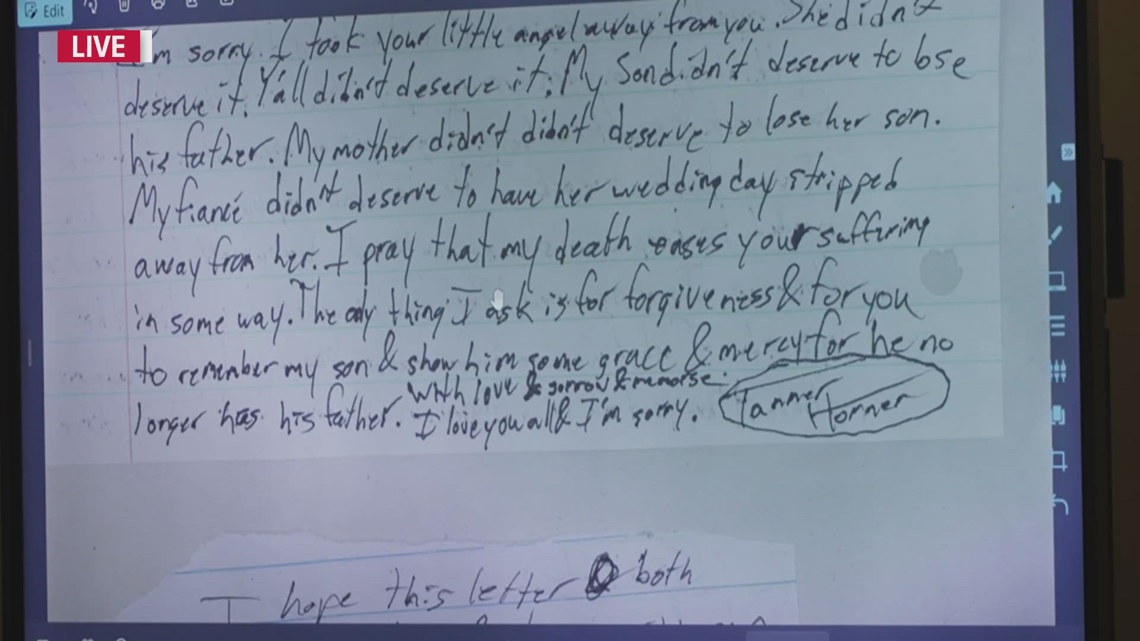
In another letter, in an envelope labeled “Detectives ONLY!!!” Horner writes that his family is in danger from an unknown man who Horner claims held him at gunpoint and forced him to take Athena from her home. “He told me to take the girl,” he writes, in a rambling narrative defecting blame.
Prosecutors do not show the jury other letters written to a church and Horner’s girlfriend.
Yaro and the prosecutor then take Horner’s clothing from evidence bags as it is entered into evidence.
It appears that Yaro is finished with his testimony.
Updates for Friday, April 10
Re-watch the livestream coverage for Day 4 of the trial here.
Throughout the afternoon, prosecutors showed additional evidence photos, some of which the defense objected to. So far, the state has not shown jurors pictures of Athena’s body, which won’t be shown over the public live stream.
Court has ended for the week, and will resume Monday.
12:45 p.m.
Sgt. Brett Yaro with the Wise County Sheriff’s Department has taken the witness stand. He works in the crime scene unit.
Prosecutors showed jurors a pair of black shoes apparently belonging to Horner, and asked why these photos were taken.
“We were looking for a pattern to match the pattern on the little girl’s face,” Sgt. Yaro testified.
He said they also took photos of floor patterns of the inside of the FedEx van for the same reason.
Prosecutors showed a picture that Sgt. Yaro took of Horner’s underwear, and asked him what is shown. Yaro said that the underwear has a stain of “seminal fluid.” The defense objected and had a conference with the judge.
10:30 a.m.
Alise Amey is a former crime scene investigator the Wise County Sheriff’s Department is now testifying. She testified about helping process evidence in 2022, including at the scene where Athena’s body was recovered from the West Fork of the Trinity River in rural Wise County.
She also helped remove the floor of the FedEx van and bagged it as evidence because a pattern on the panels matched an injury on Athena, she told jurors.
She also helped remove the “black box” from the van showing its speed and presumably location and other data.
The prosecutor then asks Amey about why she left the Wise County Sheriff’s Department. She testified that in 2023, she let an intern take some crime scene photos in an unrelated case, and then lied about it. She later told the truth, and then resigned.
On cross examination, defense attorney Susan Anderson asked Amey about her work in the case. Anderson pointed to evidence photos of tie-downs on a table an in office and suggested that they could be contaminated.
Anderson asked Amey about her departure from Wise County, where Amey admitted initially being untruthful in that incident, but then admitting to it. She doesn’t ask Amey to elaborate on that incident and passes the witness.
FBI Special Agent Kurt Duross is back on the stand this morning, walking through the collection of evidence in the case with prosecutor Michelle Deuell. Yesterday, the focus was processing Tanner Horner’s home in Fort Worth. Today, Duross is going over evidence photos taken of the FedEx delivery van where Horner kidnapped and killed Athena Strand.
Photos of the van show cameras inside and outside. Images and video from both angles, presumably showing the entire abduction and brutal murder, will ultimately be shown to the jury. In particular, the outside cameras should show that Horner did not hit and injure Athena with his van, which is what he has repeatedly told authorities throughout the case.
Prosecutors showed jurors pictures of tie-downs and bungee cords found inside the van. Defense lawyers objected to them coming into evidence, presumably because the may have been used in the attack on Athena.
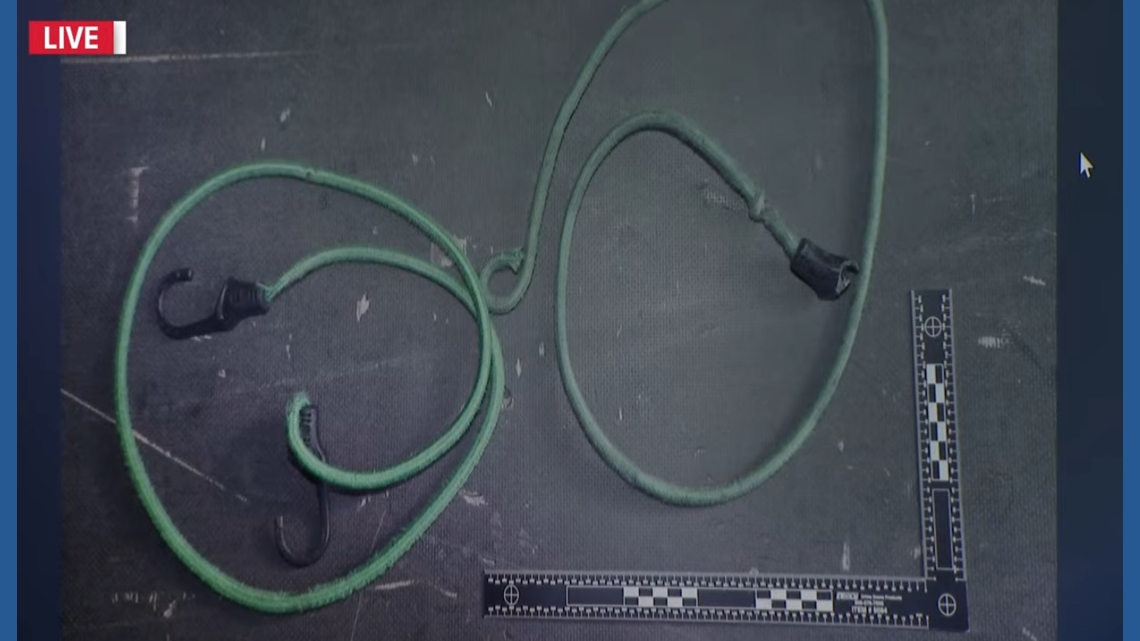
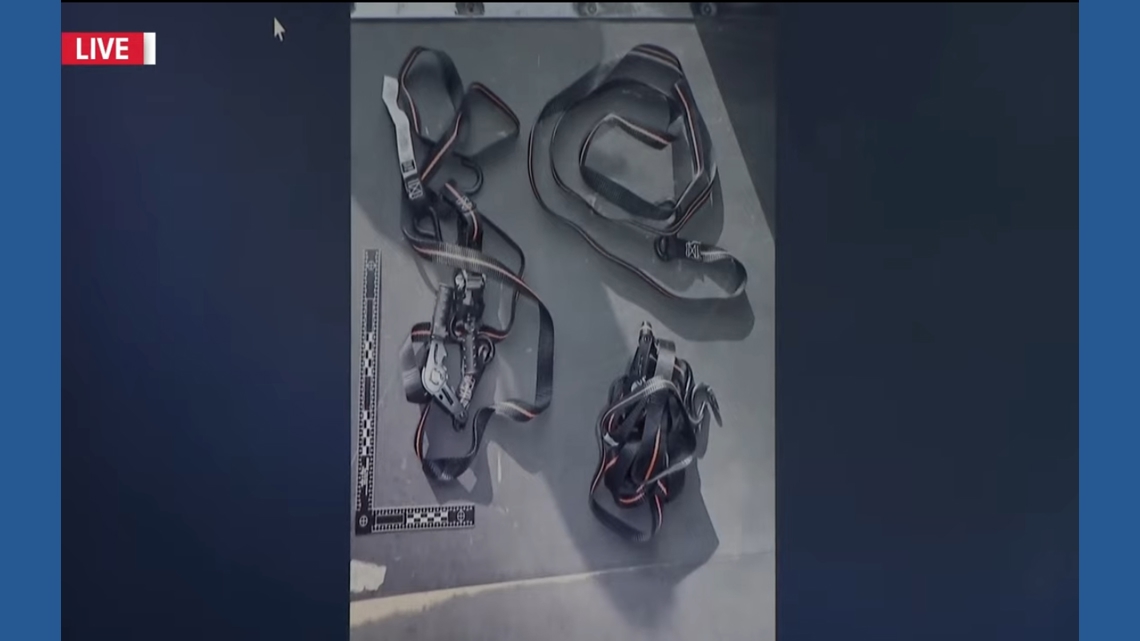
Updates for Thursday, April 9
Re-watch the livestream coverage for Day 3 of the trial here.
Court has recessed for the day.
After an extended break, prosecutors have called FBI Special Agent Kurt Duross, who handled the crime scene processing at Horner’s house on Sommerville Place Road in northwest Fort Worth. He testified he found children’s clothes behind a shed in the grass.
Prosecutor Michelle Deuell walked Agent Duross through photos of the property where Horner lived.
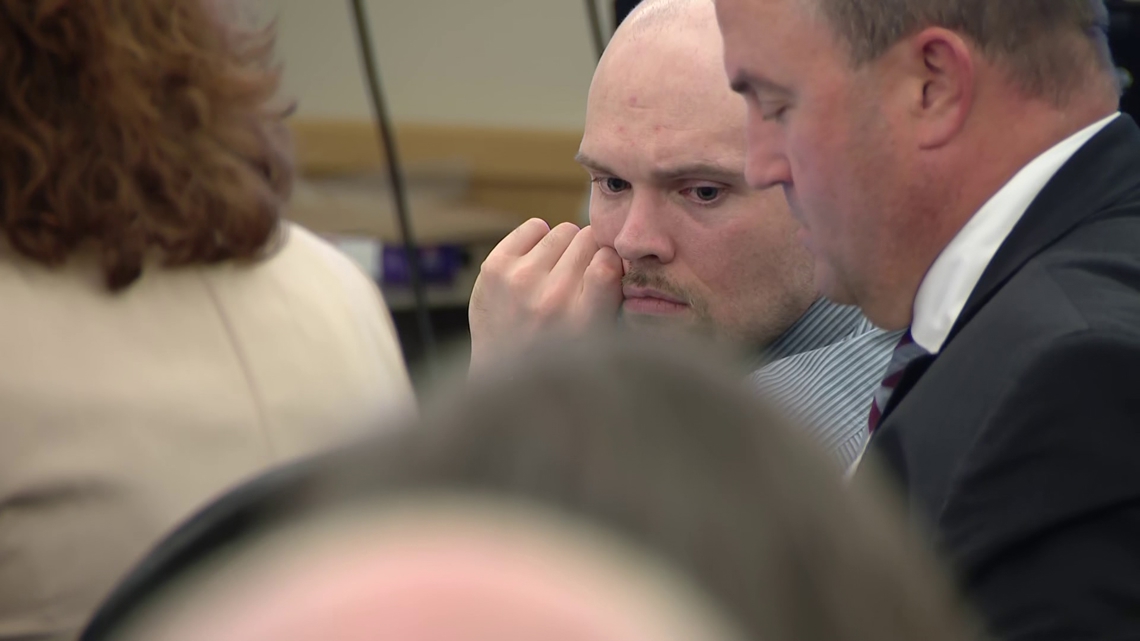
Horner lived in a shed behind the main house. The outside, and inside, were strewn with trash. A sign that read “DREAM” was over the front door.
“It smelled like old garbage,” Duross said of the inside.
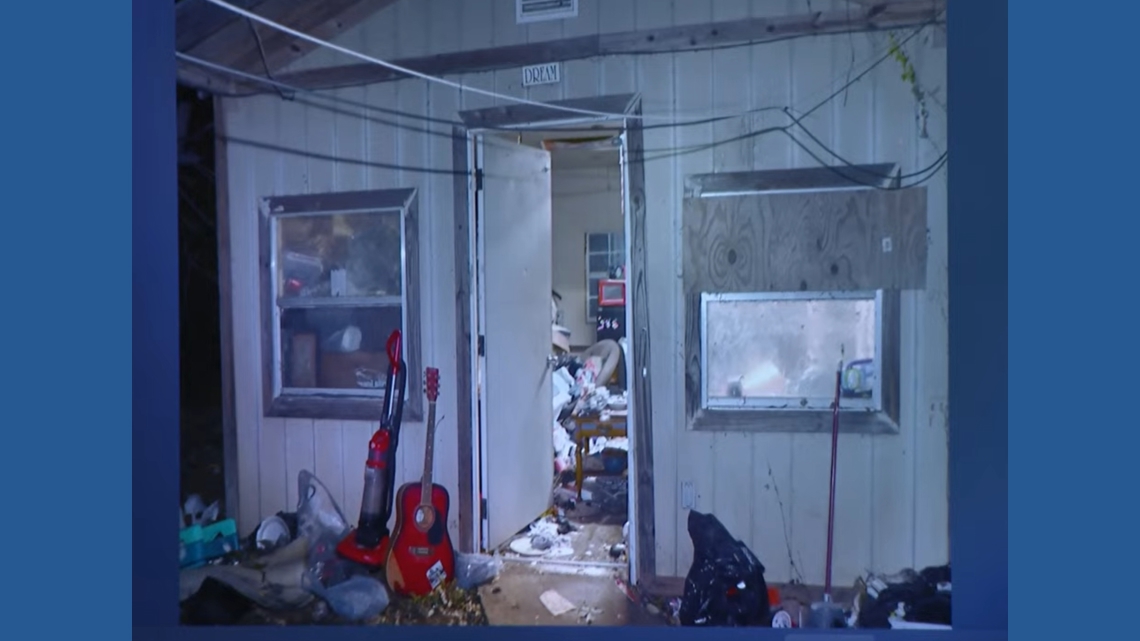
Here’s Tanner’s bedroom in the shed.
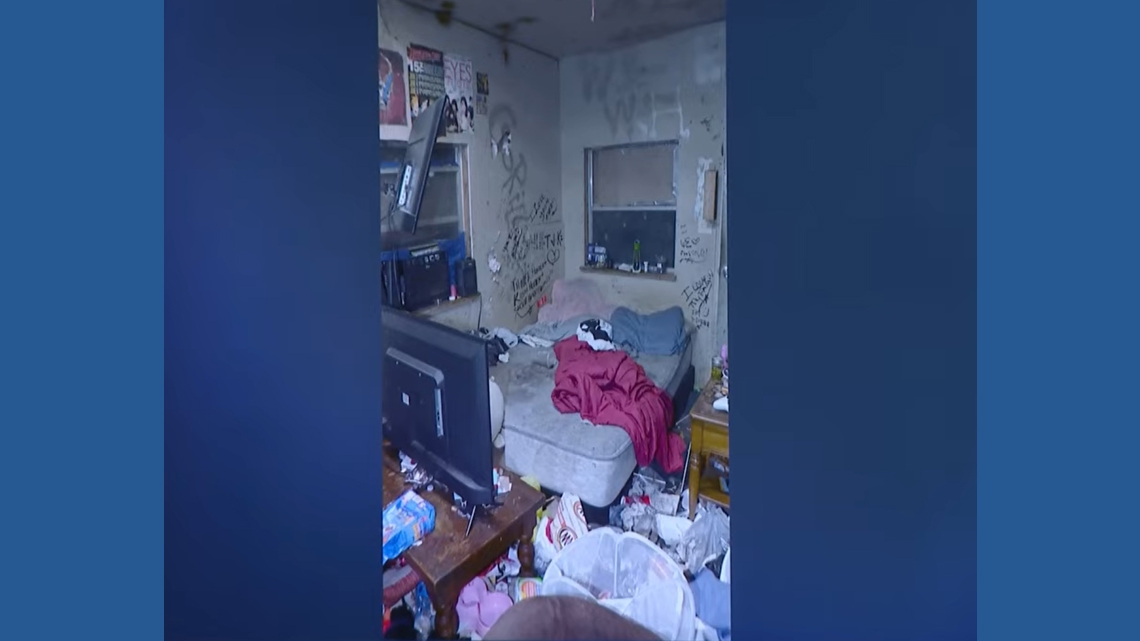
In a trash pile behind the shed, investigators found a child’s sock, which they collected as evidence.
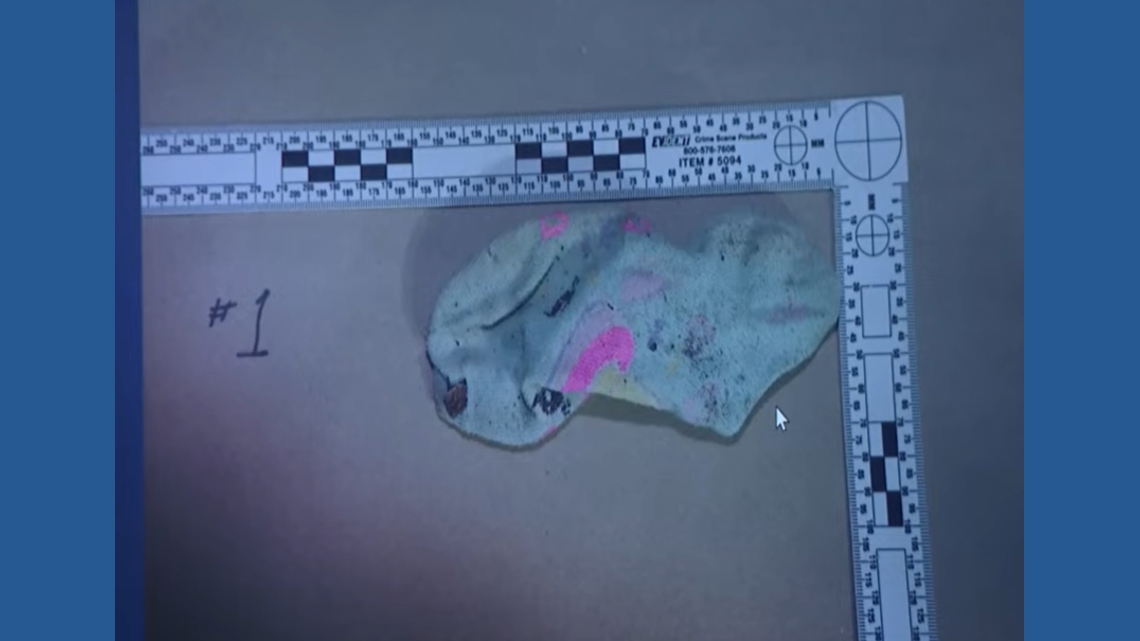
Bruce Sherman is the next witness. He’s a lieutenant with the Texas Department of Public Safety. Back in 2022, he was a Texas Ranger. He searched for Athena at Horner’s house. He also downloaded Horner’s family member’s phones, with their consent.
FBI Special Agent Taylor Page is the next witness to take the stand. He is a specialist in gathering and analyzing cell phone evidence. His testimony was brief and technical.
Ranger Espinoza is still on cross examination by defense lawyer Susan Anderson. She is trying to establish that her client was cooperative during the investigation, was cordial in the interrogations, expressed concern for his own children, didn’t resist arrest and was respectful of authority.
“You have a Bible verse on your handcuffs, is that correct?”
“Yes, ma’am, I do.”
“That’s Roman’s 13:4?”
“Yes, ma’am.”
“And you would agree with me that Romans 13:4 says, ‘For he is the servant of God, an avenger who carries out God’s wrath on the wrongdoer?'”
“It depends on which version of the Bible you read, but yes ma’am, that’s correct.”
She passed the witness.
On re-direct, prosecutor James Stainton pointed out that Horner did not volunteer any remorseful statements.
“He didn’t say, ‘I kidnapped her, I killed her, I’m sorry’,” the prosecutor asked. “No, he did not say that,” Espinoza said.
Ranger Espinoza is finished with his testimony.
Ranger Job Espinoza is back on the witness stand, recapping the interrogation that jurors just watched before lunch.
He also talked about processing the crime scene evidence in the case, specifically, the video made of the inside of the FedEx delivery van by its on-board dash camera. It ran on proprietary software that law enforcement was able to use to open and view it.
On cross examination, Susan Anderson, representing Horner, asked Espinoza about all the times that Horner asked about an attorney while they were talking to him. She also questioned the ranger about her client’s past suicide attempts, and medications he was taking, his mental health hospitalization, and how Horner claimed he had Asperger’s syndrome, which is part of the spectrum of autism disorders.
Anderson highlighted statements Horner made while under questioning appearing to sound remorseful, including that Athena’s death “broke his heart.”
Anderson recalled that Espinoza told Horner that he saw remorse in him. “That is to build rapport,” Espinoza told her.
“Tanner confessed to the murder?” Anderson asked. “Yes ma’am.” “Doing the right thing is helping law enforcement recover the body?” “Yes ma’am.”
Anderson claimed that during the interrogation, Espinoza promised Horner he could see his son. Espinoza said that was not right, he didn’t agree to that.
The court has recessed for lunch until 1:15.
11:45 a.m.
On the video being played for jurors, investigators asked Horner specifically whether he sexually assaulted Athena. He claims he can’t recall that happening. Investigators say they will conduct forensic testing to determine that.
Espinoza, on the recording, then begins going back over the details of what Horner previously told them about strangling Athena. Horner interrupts to say that his alter-ego did those things. Right, the investigators tell him. But your body did it, Espinoza says.
“You physically tried to break her neck, but that didn’t happen, facing away. Obviously, it’s not like a movie. I think that’s a misconception, impression. Obviously, maybe there are some people that can do that,” Espinoza tells Horner.
“Maybe like Mike Tyson,” Horner says, feigning a lisp, and then laughing. “I’m sorry. Every time I say Mike Tyson’s name, I do that. It’s just a joke that me and my cousin have.”
The investigators do not react and continue to press him for more details on how she got her injuries. “I dragged her across the road” to “the bamboo,” he said. Investigators keyed in on that as being a spot where Horner initially told them he hid her body, but she wasn’t there. Horner claims he originally put her there, but moved her to where she was found on Dec. 2, 2022, just off County Road 4668 at Bobo’s Crossing in rural Wise County.
Investigators asked Horner again why he told the FBI that a green van was the vehicle they should be looking for. He said that he “was in the backseat” and “Zero” was driving, claiming that his alter-ego was then in control of heis psyche.
Was Athena nude when she was put in the creek? I believe so, Horner said.
“Everybody looks at me like a monster,” Horner later says. “Understandably so.”
Horner, still oversharing details of his personal life with investigators on an interrogation video, talks about meeting women at bars, his family, how dorky he is — everything except for why he killed 7-year-old Athena Strand.
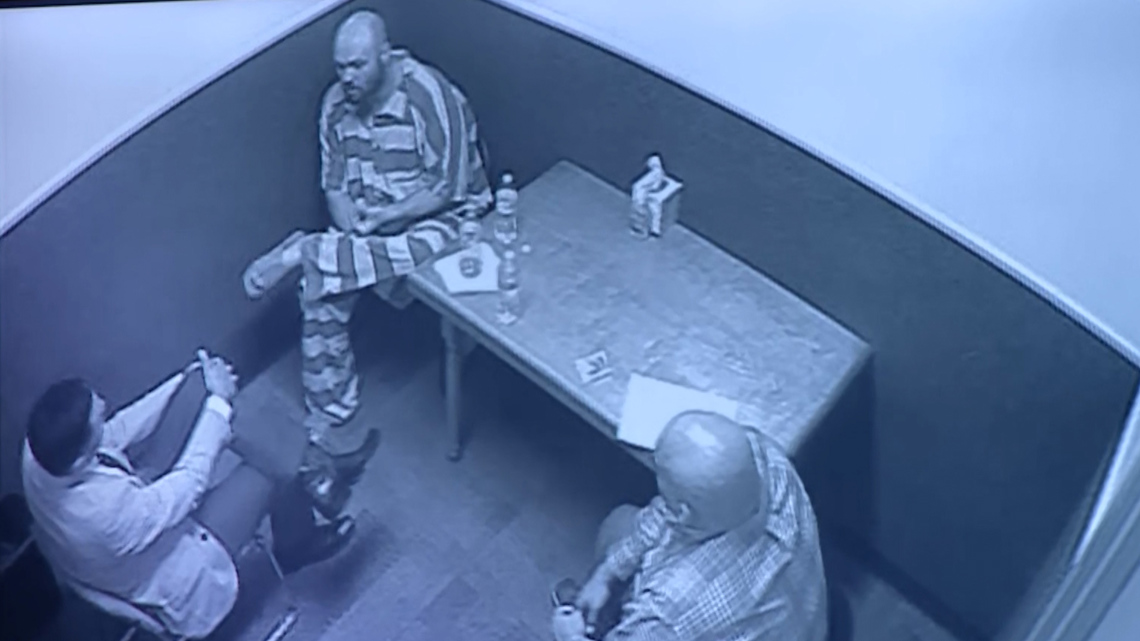
Horner has been talking in an occasionally profane stream of consciousness with minimal prompting from investigators for nearly a half hour — about literally ever aspect of his life for the past decade — when he begins to describe his life as a delivery man first for Amazon and then for FedEx. At this point he is working to support his 1-year-old child.
He delivered in Azle, where he attended high school for a time. He described having “a mental breakdown” caused relationship troubles and parental pressure. “I got really suicidal. From that point, it was getting really bad.” He checked into Millwood Hospital in Arlington for help.
It was then that he started hearing “Zero” in his head. He described it “like a little devil on my shoulder.”
He eventually got on outpatient treatment and was able to go back to work. But his routes kept changing, which caused him additional stress.
“I have a kid so I have to keep providing,” Horner told investigators. “It was kind of frustrating.”
He said his fiancée was not working steady at the time, which created more stress for him. They ended up living in “a shed” infested with spiders. They sent their son to live with her parents.
By now, “Zero” was a frequent voice in his head, Horner said. They eventually moved into a cramped RV. Both his and his fiancée’s cars break down. He has to drive his work truck home. His fiancée finally got a job as a package handler, so they could go to work together. They eventually bought a 10-year-old car, but he said life was still tough.
“It started getting a lot better, and then, the last four months, Zero becomes a little more prominent.” Horner said. “He’s coming out more. He’s taking over a lot more. At the time, I didn’t mind.” It kept him company while driving his routes for work, he said.
He said his alter-ego had varying levels of control over him. At times, he shared control with Zero, but at other times, he claims he was completely out of control.
He claims that the killing of Athena was a “bad dream” to him.
Investigators press him to elaborate. He said he found some of her clothes in his backpack and it was only then did he claim to recall what happened.
10:15 a.m.
Prosecutors play the recording of this follow-up interview with investigators Horner sought. He’s dressed in a striped jail jumpsuit.
On the recording, Horner asks Espinoza for “a month” on a a leg monitor so that he can spend Christmas with his family. He also suggests they put cameras up at his house to further monitor him. “I just want to be a dad for one Christmas.”
Espinoza tells him he can make no promises, but says they want to know why he killed Athena. “I just want to see my son,” Horner says.
“Are you remorseful for what you did?” Espinoza asks. “I’m a father,” Horner says and appears to get emotional. “All I want is to spend one last Christmas with my son.”
“As a parent, if Athena’s parents were here, put yourself in their shoes, what would you say to them?” Espinoza asks Horner. “I don’t know. I’d be speechless,” Horner answers.
Espinoza thanks Horner for helping them find Athena, and says he can sense some remorse in Horner. He then asks Horner, again, to explain why he did what he did. Horner considers the question for several minutes, then says “Would you be able to talk to a judge?”
Espinoza reiterates that they want to know they motive for the crime so that they can convey it to the family. Horner – again – says his only priority is giving his son a Christmas memory “with presents under the tree.” He says he would give up “everything,” including pleading “no contest,” in order to see his son again.
Espinoza tells him that he will talk to his higher-ups, but that request is likely not possible.
What do you want to say to the community? “They never deserved any of this,” Horner says.
Espinoza then switches gears and begins asking Horner about his past. He asks Horner if he’s ever killed anyone before and Horner says no. “I’ve cried over a squirrel before,” Horner says.
“I’m not a bad person,” Horner said. “I’ve always done the right thing.”
“I’m not some deranged psychopath, I’m not some criminal. I’m autistic, weird. I was in a Christian pop band at one point. I’m not gong to lie, the vocals weren’t the best.”
“If I were a cold blooded killer, I’d have been killing people for years. I have a conscience. I’m just a person.”
Espinoza: “You made a decision, panicked?”
Horner: “It wasn’t my decision. ‘He’ didn’t want to let her go,” apparently referring to his alter-ego “Zero.”
Horner than asks investigators to look up the side effects of a number of prescription drugs to see what effect they were having on him.
Espinoza then asks him to go over his personal background.
Horner says his dad “is a fucking crackhead.” He said he was born and raised in Fort Worth, but has family in Parker County. He also lived in Azle and other places. Most of his life he was raised by his grandmother and her husband. He said his dad and mom were in jail on and off. He said he was raised to know right from wrong — he says he feeds homeless people.
In his 20s, he said he was in bands, including that Christian pop band. He describes meeting a girl. “Oh my God!” he says, recalling his feelings for her. “Funny story…” Horner says, launching into a narrative about about Dragon Ball Z and this girl he liked, who he called “dumb as a brick” and describing how she cheated on him. He says he became suicidal. He tells investigators that he was overweight and got on a keto diet, which apparently worked for him.
“It’s insane.”
Horner is now chattering happily, as if he’s in a bar with his friends, instead of in an interrogation room with two investigators who are gathering evidence of the grisly murder he’s committed.
Prosecutors then switch to playing a recording that picks up where the body cam recording left off. Horner is now back in the interrogation room to answer more questions.
On the recording, Horner now says that he’s back to himself, and that he’s “flabbergasted” by events that have transpired. Espinoza and another investigator leave Horner alone in the interrogation room so that he can “process” everything that’s happened. When they leave, Horner puts his head on the table in front of him, and sits in silence.
When investigators return, they ask Horner for the code to open his cell phone. They then take him to his cell, and the recording ends.
On the witness stand, Espinoza tells jurors that Athena’s clothing was found at Tanner Horner’s house, and that Horner did not throw the clothes out along the highway.
Prosecutors then ask Espinoza about a follow-up interview he did with Horner a week after the killing. Horner himself asked for this meeting, and indicated he “wanted to cut a deal,” Espinoza testified. He said Horner wanted to be freed with an ankle monitor so that he could spend Christmas with his family, and in exchange he would continue to cooperate with him. Espinoza said he told Horner that was not going to happen.
Texas Ranger Job Espinoza is back on the witness stand this morning. He is talking about how, after Horner helped them find Athena’s body on Dec. 2, 2022, Horner sits for another interview with authorities.
The prosecutor again brings up “Zero,” Tanner’s alter-ego, and asks Espinoza who Horner blames for Athena’s death. “Everybody but himself.”
Jurors are then shown the last 15 minutes of the body cam recording they started watching yesterday when Horner showed them where Athena’s body was hidden in the Trinity River. The video picks up when Horner and the investigators arrive back at the sheriff’s department.
On the recording, Horner is still answering questions as “Zero.” He tells investigators he threw Athena’s clothes out along State Highway 114. Much of what he tells investigators is inaudible as he smokes a cigarette out back of the police station, chatting and answering questions from investigators. They then bring Horner inside, and he gives investigators a weird smile before they lead him down a long hallway. The video then concludes.
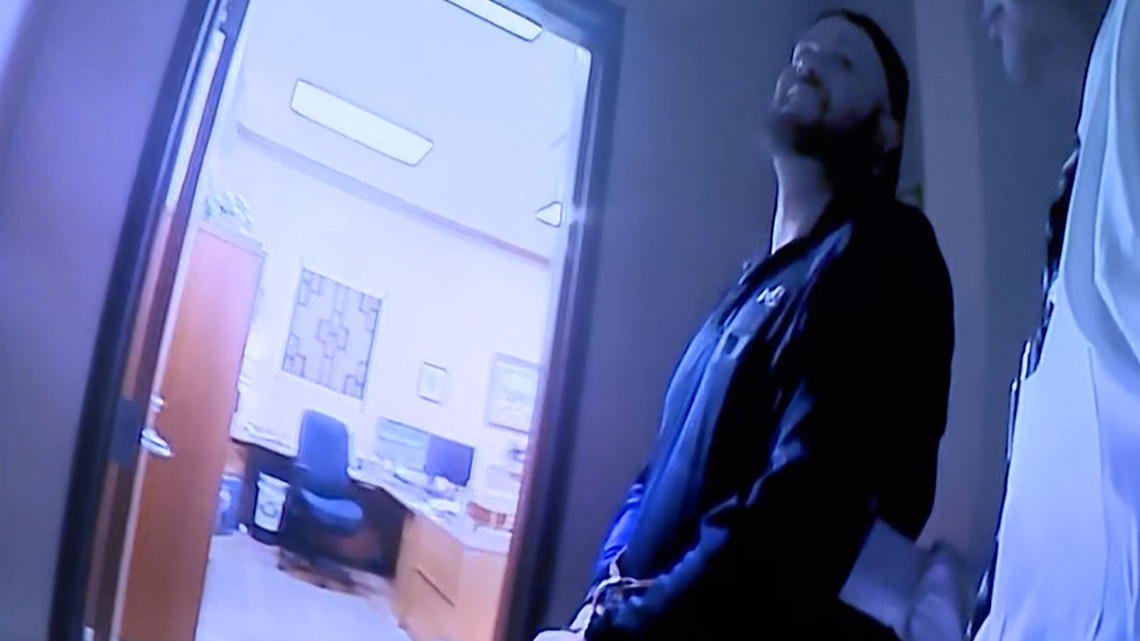
Updates for Wednesday, April 8
The judge adjourned for the day.
Espinoza resumes his testimony after a break.
He describes them leaving the interrogation room with Horner and taking him back out to look for Athena’s body. He takes them back to the bamboo thicket, and still they can’t find her. Espinoza then switches tactics and decides to talk to “Zero,” Horner’s alter-ego. He told jurors that Horner’s eyes rolled back into his head and he began to tell them exactly where Athena’s body was at Bobo’s Crossing off County Road 4668 where it crosses the West Fork of the Trinity River in Wise County just south of Boyd, Texas. It’s about a 15 minute drive from the bamboo site.
(Google Maps shows the memorial for Athena at the water’s edge)
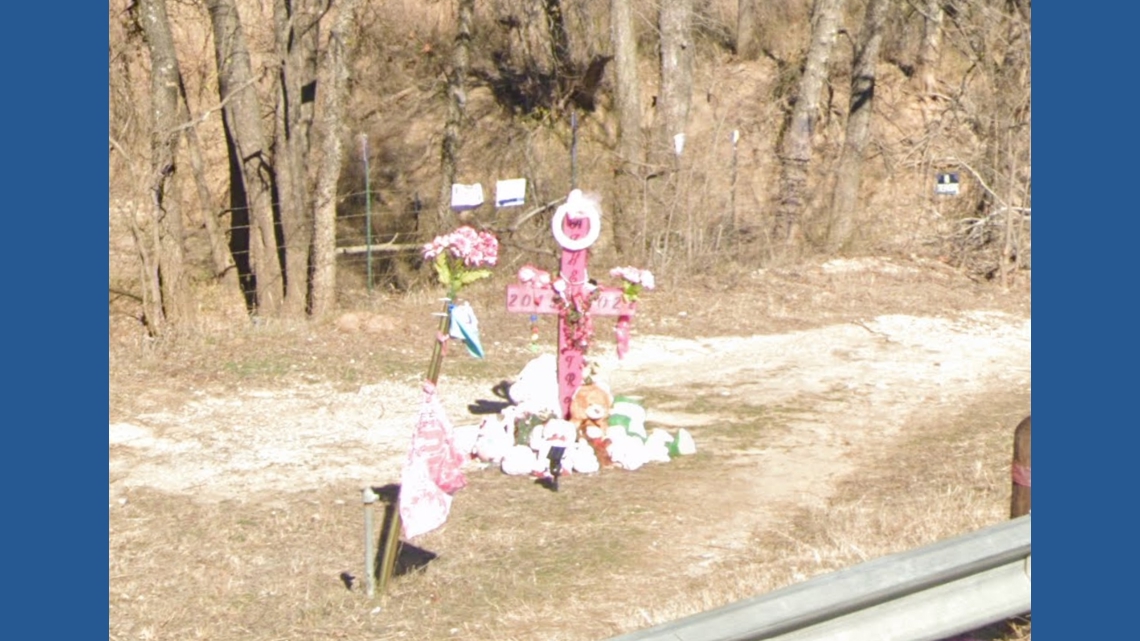
Espinoza told jurors that Horner told them he dragged Athena out of the delivery van to the river. Espinoza said Athena was face down floating in the water near the shore when they finally located her. She was nude.
Prosecutors then began playing a 90-minute body cam video of them taking Horner out, once again, to find Athena’s body. It’s about 6 p.m. on Dec. 2, 2022, and the sun is going down. Before they get in the vehicle, investigators give Horner a cigarette and he smokes, leaning against the SUV. He talks breezily about what his favorite foods are, mixing casual talk with talk about whether he needs a lawyer. “The last time I was in handcuffs was four years ago,” he mentions to an investigator, adding that he tried to kill himself.
He notes that he was unsuccessful.
“Nice truck,” Horner says to the investigator as he climbs inside. At this point, investigators have built a solid rapport with Horner, who appears completely relaxed in the hands of the police officers desperate to find the body of Athena. As they drive, Horner talks casually about work schedules, the weather, and occasionally directs them to the body of the 7-year-old girl he murdered two days earlier.
Or so they think.
Driving at night now, the investigators end back up near the bamboo thicket they had been to earlier in the day. When they — again — can’t find Athena, the investigator asks: “Is there any way you could be confused?” “No, sir.” They let Horner smoke another cigarette, and maintain their patience while talking to him, continuing to trade small talk like old friends.
“I’m going to be honest with you, it doesn’t look like she’s here,” an investigator tells him.
“Is it Zero that’s fucking with me?” an investigator, possible Espinoza, suddenly asks. “Zero, tell me where she’s at.”
The video image is dark, and Horner is not immediately visible, but investigators follow him into the truck. Horner then talks quietly, barely audible as they begin driving. “Left?” “Yes.” The vehicle’s engine roars as they speed down the road.
There is no more small talk, just an occasional one or two word directions punctuated by the roaring engine.
“We’re getting close. Slow down.”
The vehicle slow to a stop.
“Where those trucks are.”
“Where did you park?” “Right here.”
The video goes dark here, at the direction of the judge.
“You put her in the water?”
“I tossed her in,” Horner says, barely audible.
“Did she sink?” the investigator asks him. “Did you tie something to her?”
Then: “There she is.”
“Thank you Zero.”
The video them comes back into view as investigators and Horner walk back up the slight grade to the shoulder where they left the truck as crime scene personnel begin arriving.
“What… what happened? How?” Horner says on the video, appearing to “revert” back to himself briefly. The investigators ask to speak to Zero one last time, and thank “him” for leading them to Athena.
“You did the right thing,” an investigator says. “We needed to get her home.”
An investigator asks “Zero” why he “found” Horner.
“He wanted to die,” he replied. “So I took over.”
“Zero” then talks about why Horner initially told investigators about seeing a green van in the area of the abduction, to deflect attention from himself.
Investigators asked “Zero” if he had ever done this before, and he said no.
In the courtroom, while this section of the video is playing, Tanner Horner sits with his elbows on the defense table, his chin on his fists, his expression blank,
At one point, on the video, “Zero,” who is still talking to investigators on the ride back to the station, admits that him, and Horner, are “fans” of the “white stuff,” aka cocaine.
As they arrived at the station, “Zero” became less talkative.
Prosecutors stopped the video with about 15 minutes left on the recording.
Prosecutors resume playing the interrogation video. Investigators re-enter the room and encourage Horner to give them more detail. He is now despondent and slow to answer their questions.
They asked him why he turned off his phone for about a half hour during the abduction and attack, and he said he was hiding the body during that time.
Horner then goes over the facts again with investigators.
“I killed her,” Horner said. He said he “tossed her” into the woods on the side of a rural road.
Investigators pressed him on how far in the woods he hid her. Not far, he told them. “I tried to make it to where somebody would find her. Because I’m a parent. I would want to know.”
Investigators asked Horner why he lied to authorities for days leading up to these admissions of guilt. “That wasn’t me,” Horner told them, apparently referring to his alter-ego.
Horner then laments how he will be missing time with his own child, including Christmases, because he will be going to jail. “All because I listened to some stupid voice!”
Investigators continue to press Horner on where Athena is. He then asks about a lawyer again.
“Also, I need to pee.”
Investigators cuff Horner again and take him out of the interrogation room. The video ends.
During the roughly 90 minute interrogation video, Horner, who is seated at a table, said that he hit Athena with the rear of his truck, and brought her inside. At some point, he began listening to a “little voice.”
“I tried breaking her neck as painless as possible, but she started crying,” Horner told investigators. So, he told them, he strangled her with both hands.
“I was panicking and didn’t know what to do,” Horner said. He described having what felt like an “out of body” experience during the incident, and he said he had those episodes at other times of his life.
He said at some point, Athena told him her name. “I actually thought that was pretty cool because of mythology and stuff,” Horner said.
Investigators then have Horner stand up and show them on a map where he hid her body. While describing the location, Horner is animated, cheerful and easygoing. Investigators listen to him patiently, encouraging him to be specific and trying to make him feel comfortable so he will continue sharing information with them.
“I’m not exactly the dumbest person in the world,” Horner tells investigators at one point as they continue to ask him questions about how he disposed of her body. He also tells them he’s not a psychopath before he describes stopping at a truck stop for supplies to clean up vomit in the delivery truck.
Horner mentions that Athena soiled herself while he choked her, and at that point, the investigator tells him to make sure and tell them everything that happened.
He told investigators that he did think about letting her go, but the “voices” told him not to.
“To hurt a kid, a fucking child,” Horner says at one point, trailing off. “I just want to be with my family.”
“How’s the attorney thing work?” Horner asks.
At some point, investigators leave Horner in the interrogation room by himself. He gets up, without saying anything, and begins to write something off camera on a board on a wall. He then takes his seat and puts his head in his hands.
Prosecutors then stopped the video and asked Espinoza what Horner wrote on the board. “‘He’s going to hurt me please help,'” Espinoza testified Horner wrote. Horner was referring to his alter-ego Zero, Espinoza said.
Ranger Espinoza is back on the witness stand after lunch. He told jurors they drove around the area with Horner for about two hours looking in various parts of the bamboo thicket, but couldn’t find her. Horner told police he “tossed” Athena into the bamboo, according to Espinoza. The ranger recalled Horner, during the search, told them he was worried about what would happen to his own child, and that he could lose his job.
After two hours of searching, authorities took Horner back to the Wise County sheriff’s office to question him further. They recorded the interview, and before showing it to the jury, prosecutors had Espinoza summarize what Horner told them. Initially, Horner told police Athena had died when he hit her with his delivery truck, but he later told them she was alive when she got into his truck. Horner also claimed Athena told him her name, “and asked him if he was a kidnapper,” Espinoza recalled Horner telling them.
Espinoza said Horner eventually told them that he first attempted to break her neck and when that didn’t work, he strangled her.
During the course of these interviews, Tanner told police he had an alter-ego named Zero, named apparently for a band that Horner used to be in. During the interview, Espinoza sometimes “talked” to Zero, who answered questions about what happened to Athena. Espinoza said he believed Horner was toying with investigators with respect to Zero, but they played along in order to find Athena.
Espinoza says Horner is calm during the interrogation, and occasionally makes inappropriate jokes.
12:00 p.m.
Jurors are on their lunch break. Testimony resumes at 1 p.m.
10:30 a.m.
After a mid-morning break, Espinoza resumes his testimony, describing how investigators questioned Horner after leaving the bamboo thicket. He said Horner told them that Athena had bruises on her body, and that she was not clothed when he hid her body.
Jurors then saw a body camera video showing investigators and Horner on the afternoon of Dec. 2, 2022 — two days after Athena was abducted — riding to the bamboo location Espinoza testified about earlier this morning. When they arrive, Horner, still in his FedEx shirt and handcuffed behind his back, stands on the roadside with investigators as they plunge into the thick reeds looking for Athena. After they find nothing, they read Horner his rights and, after a long interval of driving to other locations, they take him back for more questioning.
Texas Ranger Job Espinoza is now testifying. In 2022, he was assigned to Wise County. He helped search for Athena. Initially, they were looking for a green van, based on Horner telling them he had seen one in the area around the time he delivered the Walmart package to the Strand house on the evening of Nov. 30, 2022. Suspicion quickly shifted to Horner, particularly after investigators began getting and reviewing video from the inside of his FedEx delivery van. The video showed Athena was alive, which initially gave investigators hope they could rescue her. After arresting Horner, investigators pressed Horner, who told them Athena was not alive when he put her in the truck because he backed over her. Espinoza said he knew that was a lie because he had seen the video. When they asked Horner where Athena’s body was, he said he would show them.
Espinoza said Horner rode with them and directed them to the site, which was a heavy bamboo thicket just off a roadway in Wise County. Investigators could not find the body. “I felt like I was being lied to and she was not there,” Espinoza testified. After about 45 minutes, Espinoza said he decided to take Horner back and question him more.
Horner has taken his seat at the defense table.
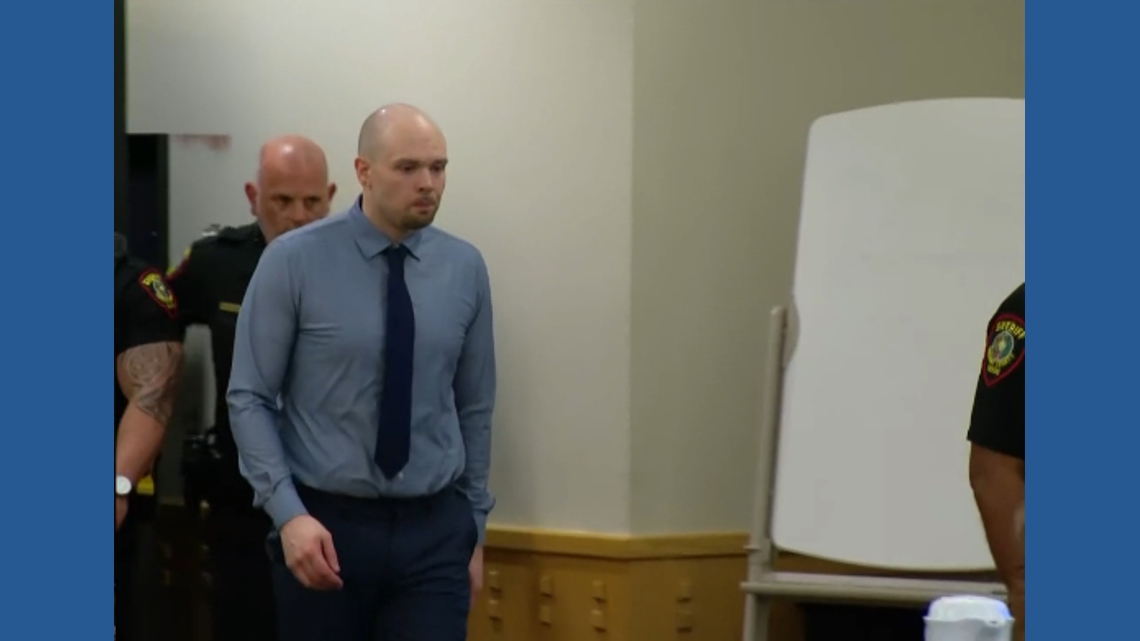
Joshua Espinoza, a Texas game warden, has taken the witness stand. He was involved in the arrest of Horner, and he gave his body cam to his brother, who is a Texas Ranger. Prosecutors played that body camera video of Horner’s arrest next to his FedEx truck.
Warden Espinoza testified that he helped search for Athena’s body.
Our live stream is up with Tanya Eiserer and her legal guest attorney Mike Howard. We’re awaiting court to resume for day two of testimony in the punishment phase of the trial. We were told yesterday that prosecutors will play approximately four hours of videos today depicting Horner talking to authorities, culminating in him showing them where he hid the body of Athena. Jurors will see it all, but the court has issued a notice alerting the pool cameraman not to show graphic images on the video feed the public will see — although it’s possible there will be disturbing audio of the attack played at some point in the case.
Updates for Tuesday, April 7
The judge ended the day of testimony with no explanation. It’s unclear why the trial ended early today.
After a lunch break, Patrick McGuire, a FBI special agent, took the witness stand. He testified he was tasked with tracking down who delivered the FedEx package to Athena’s house. They tracked it to the Alliance Airport location. From there, they identified the contractor whose truck made the delivery. A supervisor got Horner on speakerphone in front of the FBI, and he claimed to not remember making that delivery. McGuire testified he then caught up with Horner along his delivery route.
McGuire said when they walked up to the delivery truck, they startled Horner, who dropped a package as he was getting out. Horner then claimed to remember the delivery. Horner told McGuire that he saw a suspicious green van in the area, and investigators began looking for it. During the interview, McGuire recalled that Horner got emotional and said he couldn’t believe something like this could happen to a child.
McGuire said he went back to the command post, but noted that he still had questions for Horner, even as the investigation turned to locating the green vehicle Horner had told them about. McGuire said they called Horner on the phone to ask him about a stretch of time where Horner was unaccounted for on his route. Horner told McGuire he had not been felling well and pulled over to throw up near a Love’s truck stop to explain the delay.
McGuire said Horner never admitted to him having any role in Athena’s disappearance or slaying. McGuire said they were able to get recordings from the camera showing the inside of the delivery van, and they could see Horner putting Athena in the van.
The next witness is former Wise County Sheriff Lake Akin. He led the investigation into Athena’s death in 2022. He served 16 years with the Texas Rangers. He was elected sheriff in 2016.
He drove from Llano to Wise County to help supervise the search for Athena. He testified that the area around the Paradise community is rural, heavily wooded and not easy to search — but the community turned up in droves to help.
“Citizens came from all parts of Wise County to help us find that child,” the former sheriff testified. “It was shoulder to shoulder,” he said, estimating 300 people showed up. “They brought their four-wheelers, some brought horses, some brought dogs. It was…” the sheriff began, and paused, his lip trembling with emotion. “I appreciate the fact that so many people came out to help us that day.”
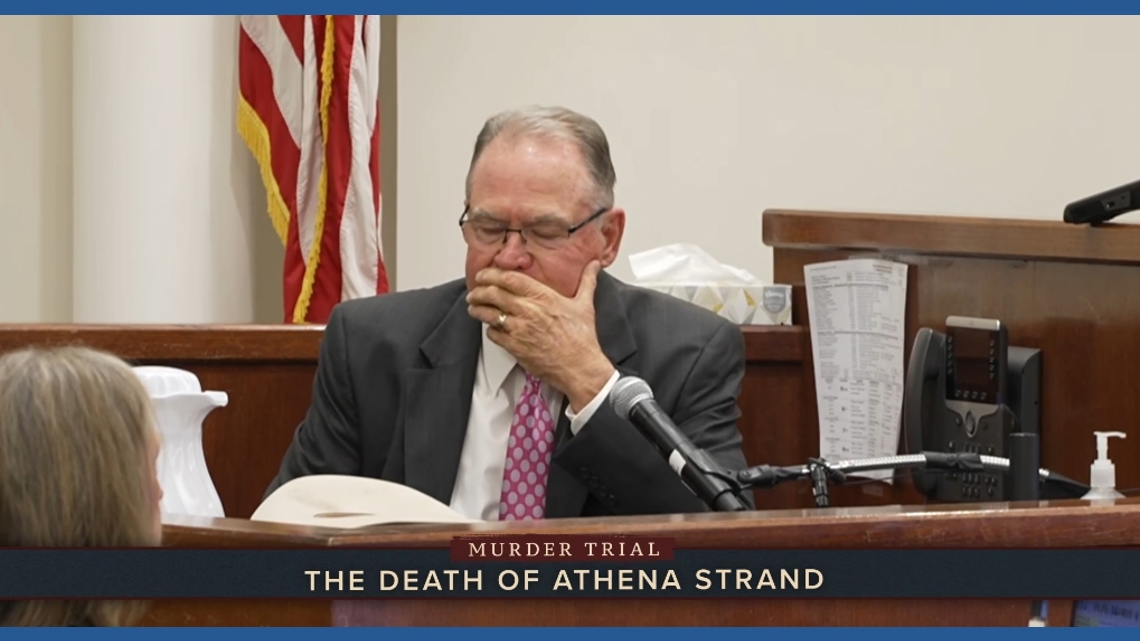
He told jurors that as the hours passed, law enforcement began to focus on Horner. Investigators determined that the FedEx delivery van was in the area at the time Athena was last seen and they eventually identified Horner as the driver. Horner was taken into custody, and on Friday, they found her body in the Trinity River, about 400 yards off a county road next to a bridge, about 10 miles from her house. The sheriff recalled going to see the girl’s body so he could inform the family Athena had indeed been found.
“It was heartbreaking. They were just devastated,” the sheriff recalled, growing emotional at the memory. “We were hoping she was alive and well. The information I brought back was not what they wanted to hear.”
Elizabeth Ashley Strand (who goes by Ashley), Athena’s stepmother, has taken the stand to testify. She told jurors that Athena’s mother, who was living in Oklahoma, had been sick and that Athena was living when them in Paradise in Wise County beginning in the summer of 2022. Athena extended her stay with them when school started in August 2022. She testified she’s known Athena since 2017.
Ashley described the day Athena was abducted Nov. 30, 2022. It was a Wednesday. She told jurors that after school, Athena was supposed to be sorting her laundry while she cooked dinner, but Athena didn’t want to and played instead on the 10-acre property they shared with other family members. “Just being kids in the country,” Ashley testified. After Athena got home from school, Athena’s dad left for a hunting trip out of town. When dinner was ready about 6:30 p.m., Ashley noticed that Athena was missing.
Relatives also hadn’t seen Athena, so Ashley called the police. “We were everywhere all over the property looking for her,” Ashley testified. “I thought maybe she was just hiding somewhere, playing hide and seek.” She said Athena loved living in the country and fondly described her “wild” and “feral” and happiest when she was playing outside.
Ashley testified that as many as 50 people, including law enforcement, eventually showed up to search for Athena that evening. At one point, Ashley told jurors she found a blue Walmart box that FedEx had delivered outside an abandoned dwelling on the property. It was just off the driveway from where several police SUVs were parked. Ashley said she had been expecting the box, which contained a collection of six Barbie dolls she had ordered for Athena for Christmas.
Athena wasn’t found until that Friday, two days later. Ashley testified that Athena had no bruises or injuries when she went missing.
Jurors were shown what appeared to be a still image from the delivery van’s interior camera showing Horner driving and Athena standing behind him. She does not appear to be injured. Horner had told police when he was first questioned that he had accidentally backed into her.
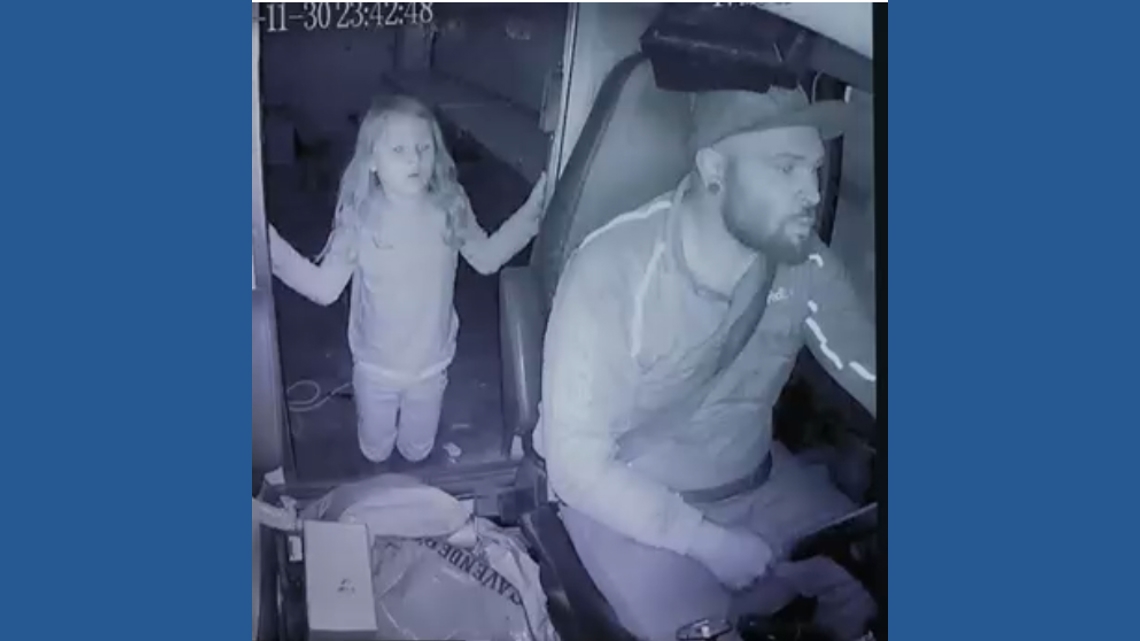
10:07 a.m.
Athena’s first grade teacher Lindsey Thompson is the first witness to testify. She told jurors about how hard it was losing Athena, and how school counselors and volunteers came in to support her classmates as they dealt with the grief of the loss.
The defense lawyer begins his opening statement by saying that, unlike sports injuries, some brain injuries aren’t obvious when looking at someone, suggesting that his client is in some way disabled. He also told jurors that Horner’s mother was a stripper who drank when he was in her womb, and that he was also exposed to lead poisoning in his youth. “Life without parole is a terrible punishment,” he told jurors.
“Don’t scream, or I’ll hurt you,” DA Stainton tells the jury that Horner told Athena when he kidnapped her in his delivery truck. He tells the jury that “she fought with the strength of 100 men” to stay alive when Horner abducted her. Stainton says they have video evidence of part of the crime, apparently from the delivery truck camera, but Horner covered up the camera pens during parts of the attack — however, there is audio of her struggle, he tells jurors.
Stainton says that investigators found DNA on Athena’s body, suggesting sexual assault occurred.
Jurors are being brought into the courtroom. The judge formally took Horner’s guilty plea, and instructed the jury that they now will have to hear evidence so that they can decide punishment. Wise County District Attorney James Stainton is now delivering his opening statement to the jury.
The judge called for a break while the jurors are brought in. It’s unclear at this point how much evidence both sides will put forth, or how long that will take, but the question at this point is whether Horner deserved life in prison or the death penalty.
As soon as the court feed went live, the judge was heard talking to the defense team, and Horner, about his apparent decision to plead guilty. That would mean that the guilt-innocence phase of the trial would be skipped over, and the question about whether he received the death penalty or life in prison would begin.
All this is happening before the jurors are brought into the courtroom.