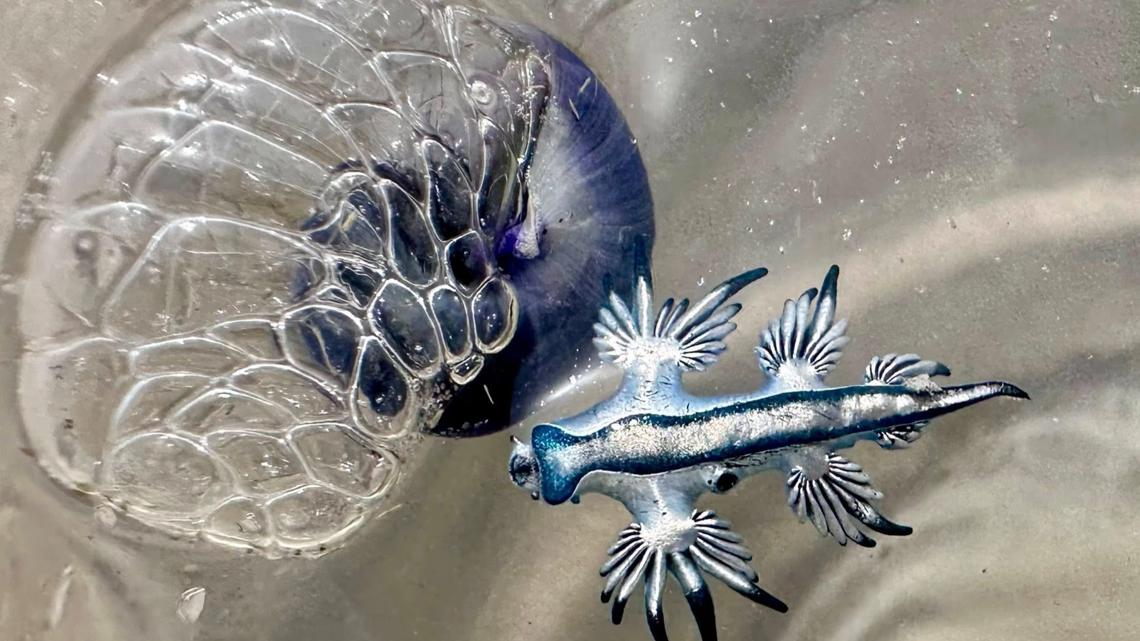
Rare blue dragon sea slugs are washing up on Texas beaches. Researchers warn the tiny creatures may be beautiful, but they can deliver a powerful sting.
CORPUS CHRISTI, Texas — A rare and striking ocean creature nicknamed the “blue dragon” is washing up on parts of the Texas coast, and researchers say beachgoers should admire it from a distance.
The Harte Research Institute said they recently found about 20 blue dragons along a short stretch of beach.
The tiny creatures — known scientifically as Glaucus atlanticus — are small sea slugs that float in the open ocean. They are rarely seen onshore but can wash up when strong winds push floating marine life toward the coast.
“They’re absolutely stunning — but do NOT touch them,” researchers wrote in a Facebook post on Tuesday.
Despite their beauty, blue dragons can deliver a painful sting.
The animals feed on Portuguese man-o-war, storing the jellyfish’s stinging cells inside their own bodies. Scientists say the slugs concentrate those cells, meaning their sting can be even more painful than the man-o-war itself.
Even when they are washed up on the sand, the animals can still sting.
Researchers say the blue dragons were found mixed in with several other open-ocean drifters pushed toward shore by onshore winds.
Oceanographers sometimes call this group the “Blue Wave.”

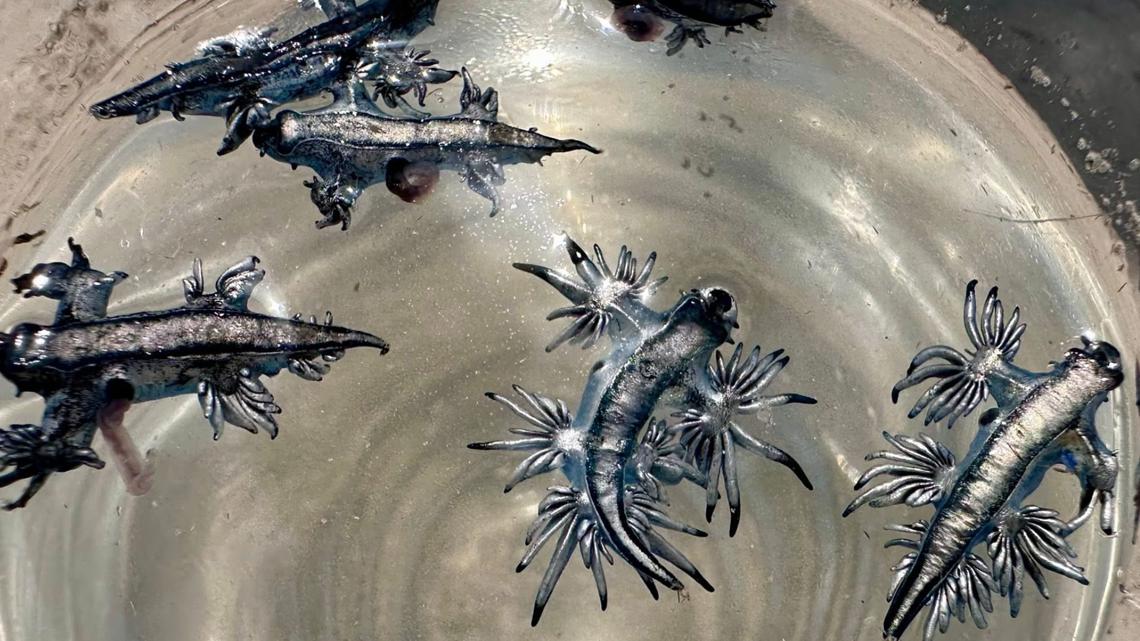
Along with the blue dragons, researchers reported seeing:
-
Portuguese man-o-war
-
Blue buttons
-
By-the-wind sailors
-
Purple sea snails
All of these creatures spend their lives drifting on the surface of the open ocean.
Blue dragons are extremely small — typically only about 1 to 3 centimeters long — making them easy to overlook among shells, seaweed and other washed-up marine life.
Researchers say if beachgoers spot one, the safest thing to do is simply take a photo and leave it alone.
“The ocean is amazing,” the Institute said. “But sometimes the most beautiful creatures come with a sting.”