
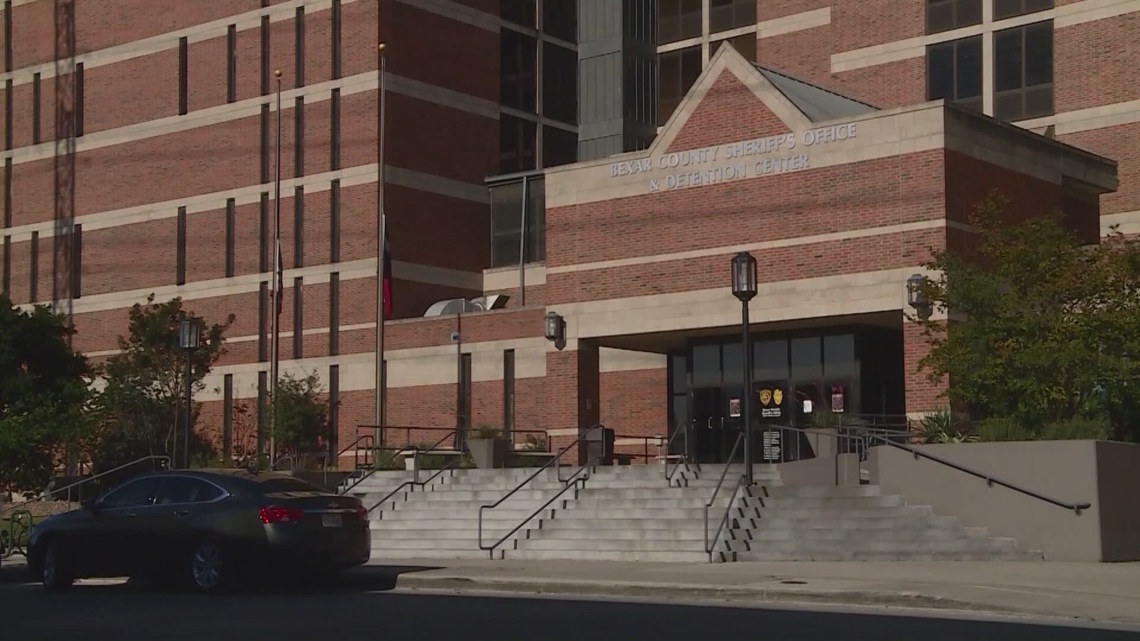
The diversion center would shift low-level offenders from jail to treatment, aiming to reduce overcrowding and in turn, providing relief to taxpayers.
SAN ANTONIO — San Antonio leaders are pushing for a more comprehensive local approach to addressing overcrowded jails and mental health struggles among low-level offenders.
During Wednesday’s B Session city council meeting, the Center for Health Care Services (CHCS) will go over the current state of diversionary mental health resources in the Alamo City. The organization will also provide an overview of a request for proposal on a feasibility study for a potential jail diversion center.
District 5 City Councilwoman Teri Castillo filed a council consideration request in October, calling for the creation of a joint city-county ad hoc committee to explore establishing a Centralized System for Diversion and Recovery. Some of the committee members include San Antonio Police Chief William McManus, Bexar County Sheriff Javier Salazar, District Attorney Joe Gonzales and Centro San Antonio President and CEO Trish DeBerry.
Castillo noted overcrowded jails and repeat offenses highlight the need for such a facility, arguing the program could save taxpayers money while at the same time helping people in need.
“We do not want people to reoffend and what that takes is connecting them to the appropriate detox and mental health services,” Castillo said. “What’s important to highlight is with unhoused individuals that are finding themselves with a class B misdemeanor, being unhoused in a vacant lot or a vacant structure is sending an individual to the county jail costs Bexar County taxpayers about $1,250 a day versus rehabilitation costs roughly $500 a day.”
Doug Beach, executive director of NAMI San Antonio, stressed how vital a diversion center would be for the community. Other major Texas counties currently have jail diversion centers.
“Tarrant, Dallas, Harris, but also for example they have a diversion center in Georgetown, Texas,” Beach said. “When we put somebody into a jail situation where they’re not getting treatment, they get worse, they don’t get better.”
Beach hopes the diversion center becomes a reality in San Antonio and can change countless lives for the better.
“We want to help advocate for a jail diversion center,” Beach said. “They’re [low-level offenders] more quickly able to come back into the community, join their families, be productive members of their community and live their best life that they’re able to live.”
Meantime many questions remain, such as where the funding would come and location of a potential diversion center.
“I believe when it comes to these situations, there is a shared responsibility between the city, county and state as well,” Castillo said. “With models like Harris County for example, their state senator earmarked funding for this pilot program, so it’s going to take every level of government to prioritize and invest, to create a model like this in Bexar County.”