
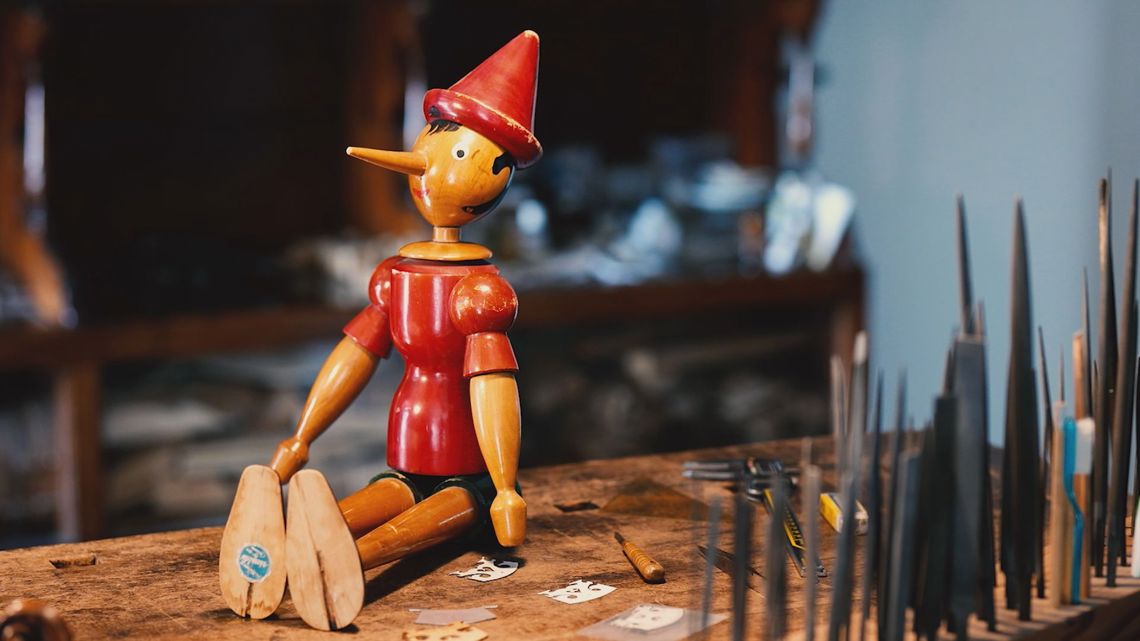
Collodi, Italy, birthplace of the beloved wooden puppet, honors its literary roots with parks, art and global recognition.
COLLODI, Province of Pistoia — In the hills of Tuscany, a small village continues to celebrate one of the world’s most famous fictional characters: Pinocchio.
Collodi, with its terracotta rooftops and terraced gardens, inspired author Carlo Lorenzini, who adopted the pen name Carlo Collodi to honor his hometown. His story of a wooden puppet who longs to become a real boy was first published July 7, 1881.
“That’s the story of a wooden puppet that wants to become a real boy,” said Roberto Vezzani, librarian at the National Collodi Foundation. He added that the foundation’s most prized book remains The Adventures of Pinocchio.
Today, Collodi embraces its literary heritage with a Pinocchio theme park, traditional puppet shows, art installations and even the world’s tallest Pinocchio statue. Visitors can explore attractions that recreate scenes from the book. “We go through all the adventures that he lived in the book. It makes you feel like you’re part of the story,” said Riccardo Bosci of Fattoria San Donato.
The tale, which teaches lessons about honesty and family values, has become a global phenomenon. Pinocchio is the second most translated book in the world, behind only the Bible, with nearly 700 translations in about 200 languages, according to Vezzani.
Long before Disney’s adaptation, Pinocchio was woven into Italian culture. Artisans across Italy still craft marionettes and preserve traditions tied to the story. “Many people tell me I look like Pinocchio’s father, Geppetto,” said Venetian puppet maker Roberto Conin.
As the Milan-Cortina Winter Olympics approach, Collodi stands as a reminder of imagination’s enduring power — and of a little wooden boy who taught the world what it means to be real.