
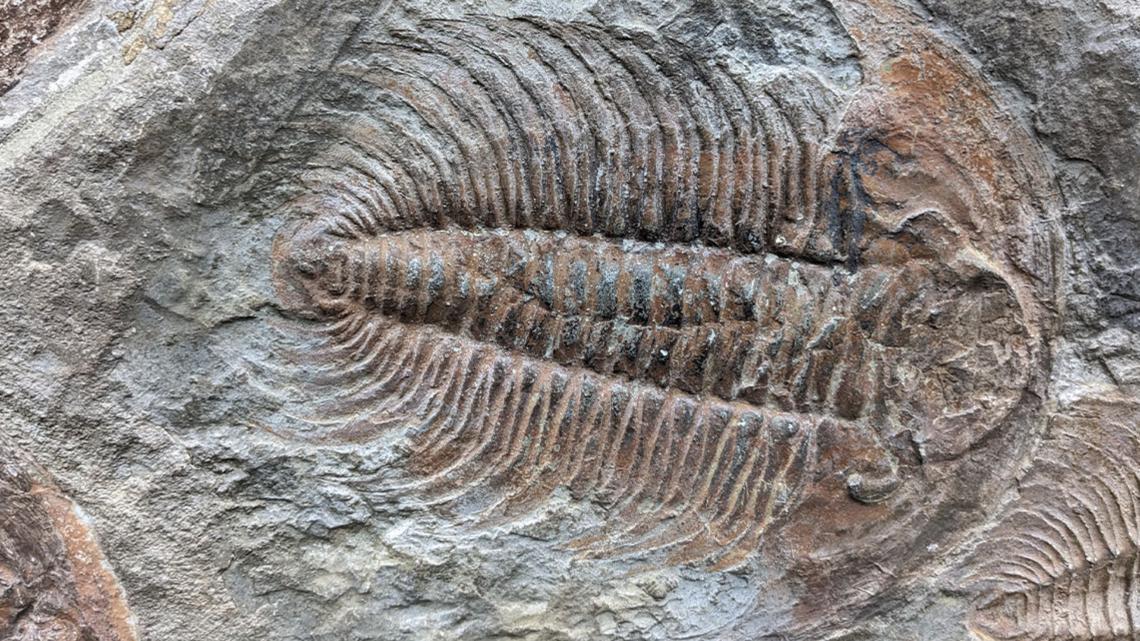
SAN ANTONIO — An international research team at UT San Antonio has made a discovery straight out of a science museum exhibit. Traces of chitin, the same material found in modern crab shells and insect exoskeletons, were discovered inside trilobite fossils that are more than 500 million-years-old.
UT San Antonio officials said it’s the first confirmed detection of chitin in trilobites, an extinct group of marine animals that lived hundreds of millions of years ago.
The research was led by Elizabeth Bailey, an assistant professor of earth and planetary sciences at UT San Antonio. The discovery offers new insight into how fossils are preserved and how Earth naturally stores carbon over long periods of time.
Chitin is one of the most common organic materials produced by life on Earth, second only to cellulose, according to researchers. Scientists once believed it broke down quickly after an organism died.
“This study adds to growing evidence that chitin survives far longer in the geologic record than originally realized,” Bailey said.
She added that the findings go beyond paleontology and could help scientists better understand how organic carbon is stored in Earth’s crust over hundreds of millions of years.
UT San Antonio said the research also has potential relevance for modern climate conversations.
“When people think about carbon sequestration, they tend to think about trees,” Bailey said. “But after cellulose, chitin is Earth’s second most abundant naturally occurring polymer. Evidence that chitin can survive for hundreds of millions of years shows that limestones are part of long-term carbon storage.”
The findings were recently published in PALAIOS, a scientific journal focused on Earth’s history and fossil records, according to UT San Antonio.
Although the work began before Bailey joined UT San Antonio, officials said the discovery is expected to open new opportunities for student research through the university’s Early Earth Lab, which studies ancient rocks and planetary materials.