
Development of the museum is a central component of the $550 Alamo Plan re-envisioning the downtown San Antonio landmark.
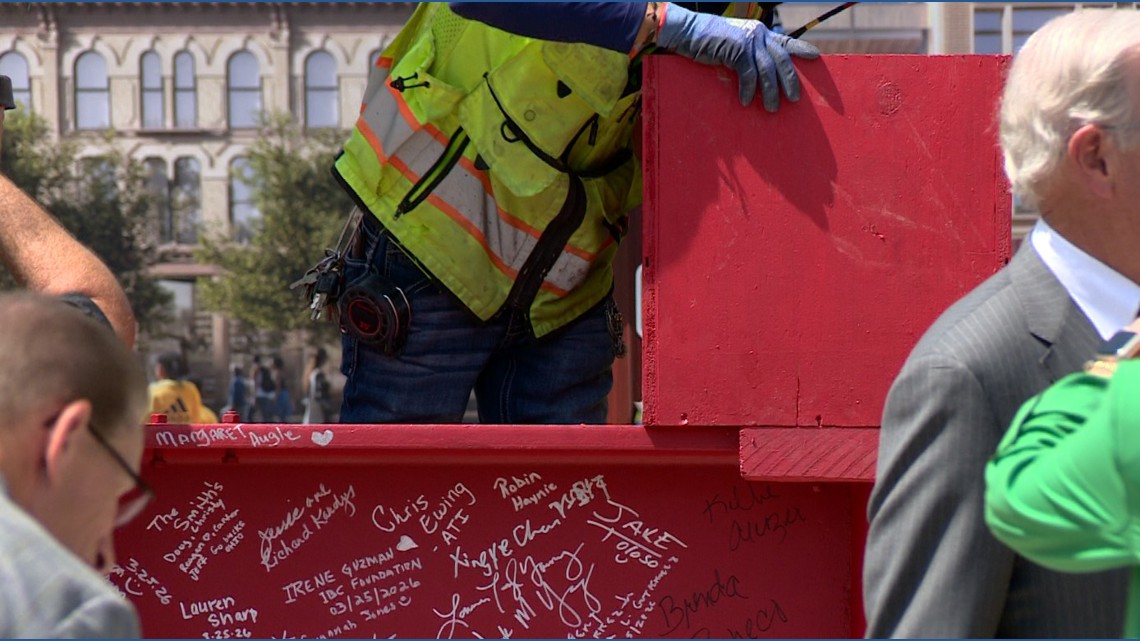
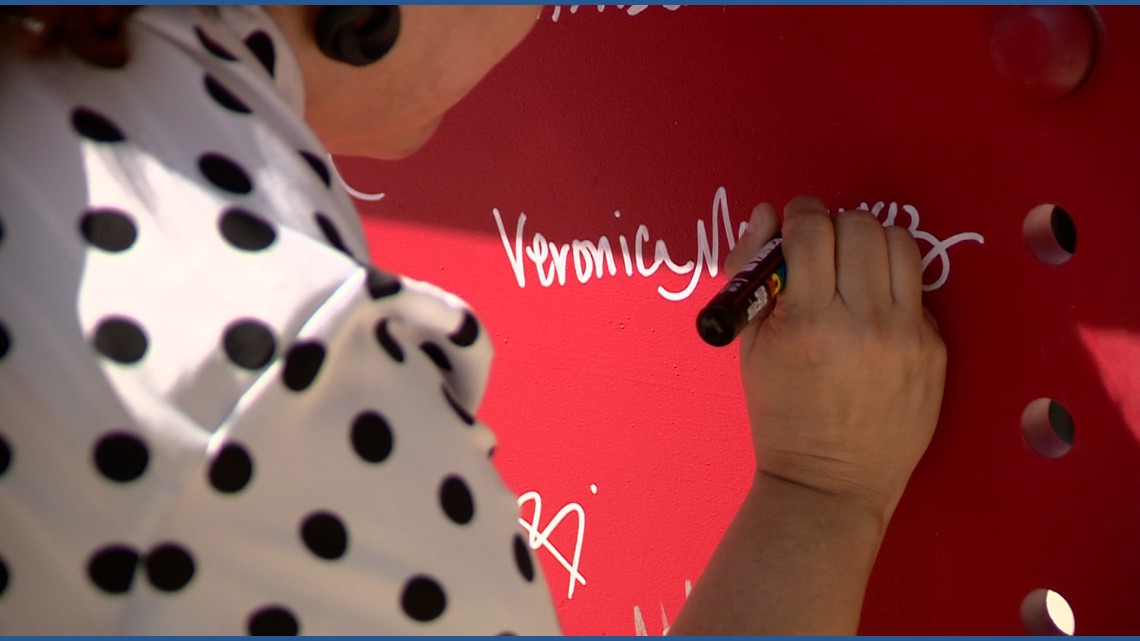
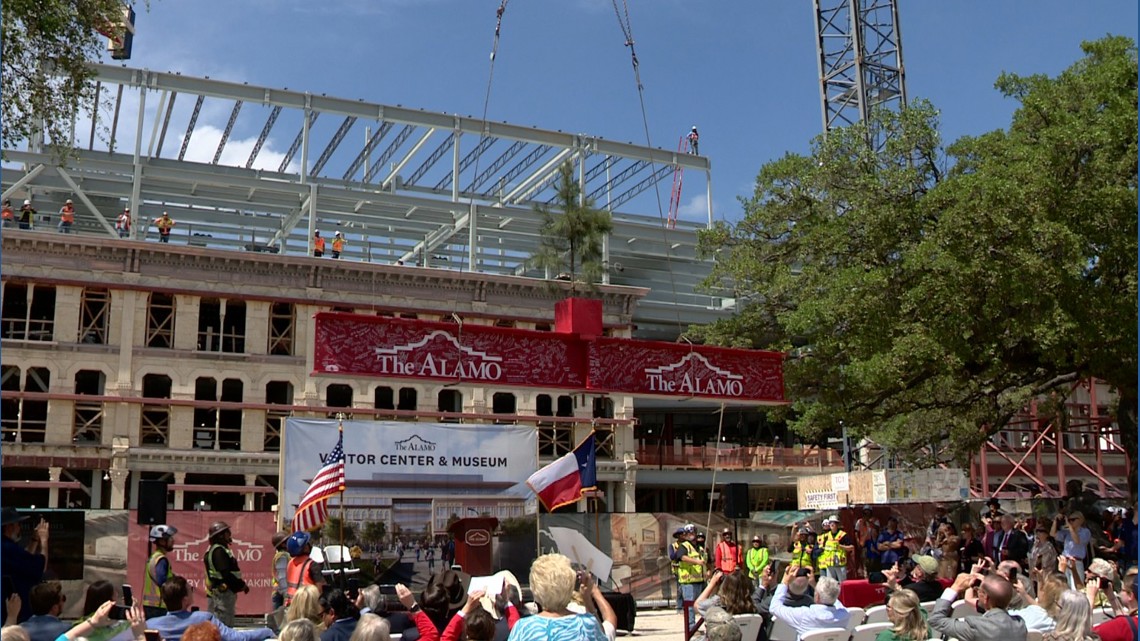
SAN ANTONIO — The ascent of a red construction beam smothered in white signatures signaled a major checkpoint in the Alamo’s efforts to realize what leaders have touted as a world-class new visitor center and museum.
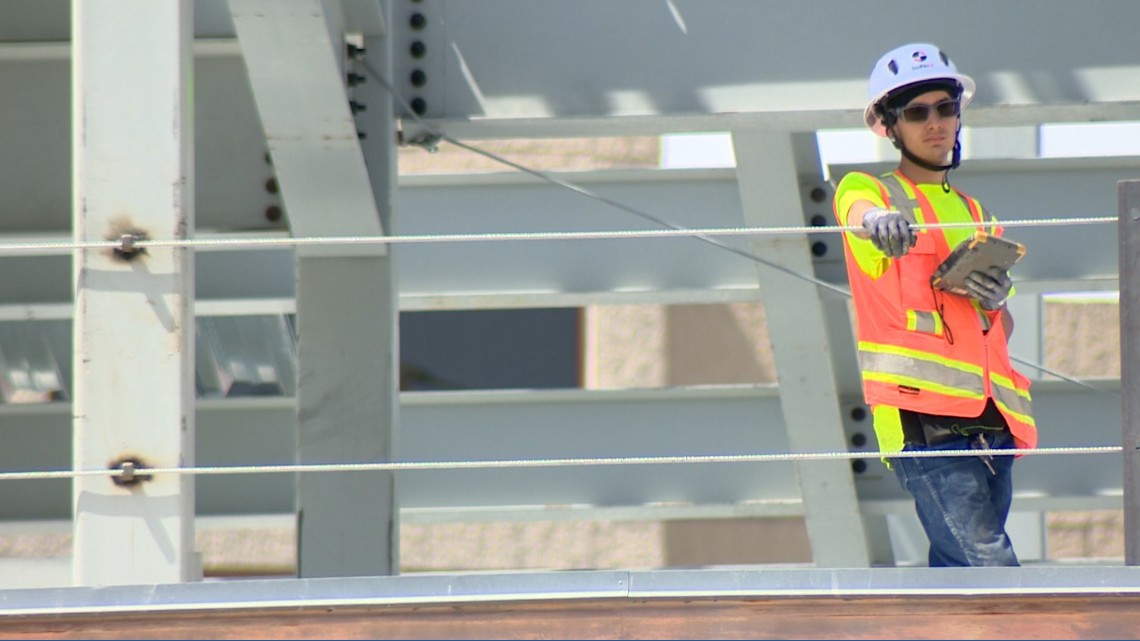
The facility – a central component of the overarching $550 million Alamo Plan – isn’t expected to fully debut until 2028. But final touches of its literal and metaphorical framework were installed on a sunny Wednesday afternoon in downtown San Antonio, where the last beam was lowered into place.
Before a crane raised it off the ground, San Antonians and stakeholders involved in the Alamo Plan effort had a chance to sign their name in white sharpie—a reflection of what Alamo staff called an ongoing community effort to create the museum.
“Being able to allow people that were here, that have helped in every way possible, to be able to leave their mark is very important,” said Ernesto Rodriguez, a senior curator, historian and lecturer at the Alamo. “Because this is our Alamo, your Alamo. It’s really important for us to allow people to understand that this is their Alamo.”
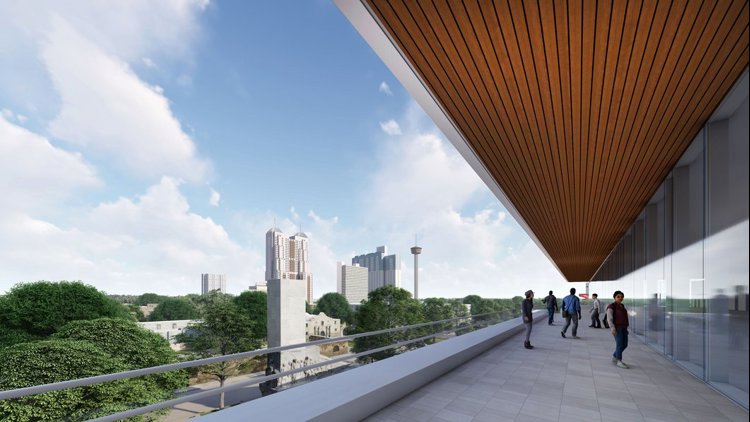
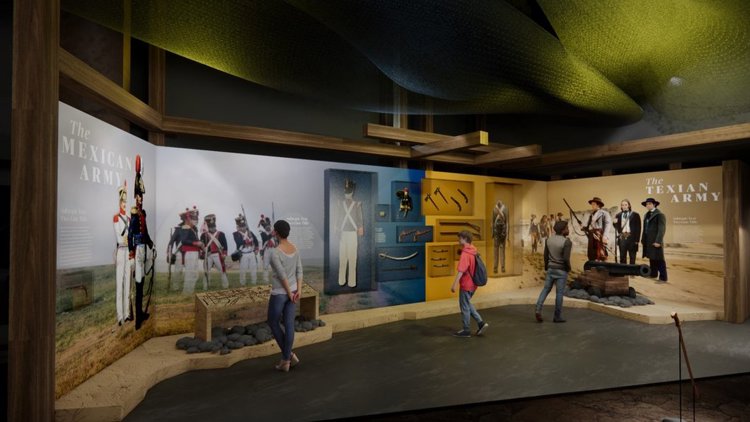
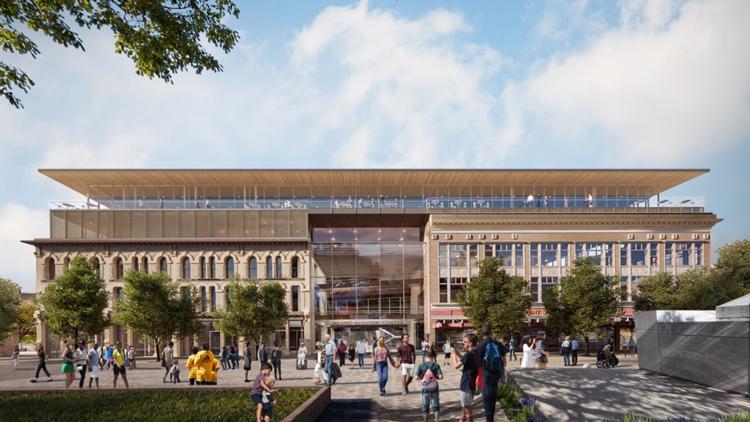
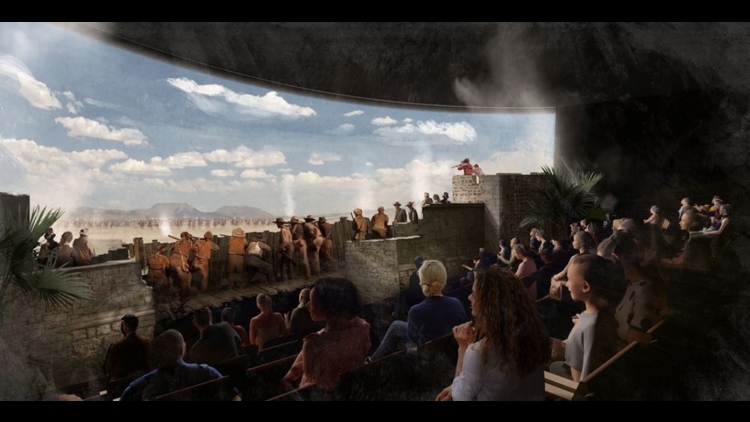
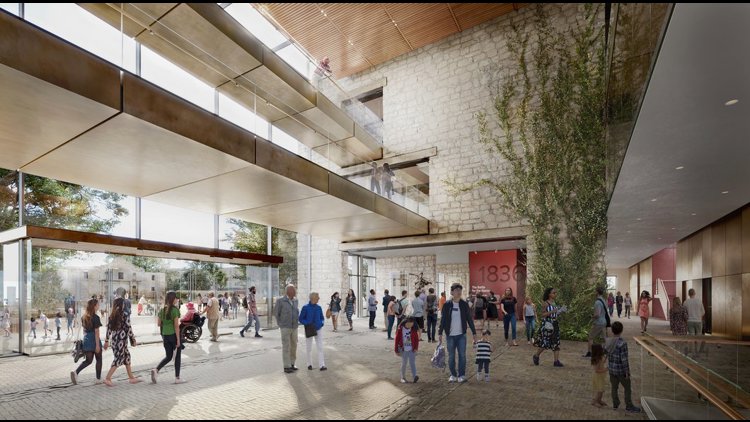
The Alamo Visitor Center and Museum will comprise 160,000 square feet and is being established out of an effort to repurpose the historic Crockett and Woolworth buildings, just steps away from the landmark. Construction began in October 2024 on the facility that will feature a 4-D theater, galleries, focused curatorial efforts and an upper-floor event space with a view of the Alamo church.
Previously released renderings teased a facility of modern, sleek spaces featuring an upper-level terrace and detailed exhibits sharing 300 years’ worth of history.
PHOTOS: Renderings for the upcoming Alamo Museum and Visitor Center
-
1/5
-
2/5
-
3/5
-
4/5
-
5/5
/
It will also serve as the permanent home and display space for the Travis Letter, the document that the Texian Army officer William B. Travis wrote during the siege of the Alamo, punctuating it with “Victory or death.” It was loaned to Alamo staff by the Texas State Library and Archives Commission in 2024, having not been at the landmark for 11 years.
Rodriguez, who has been with the Alamo for more than 25 years, said seeing the museum being realized was a dream come true.
“For many years, we’ve been hoping for something better,” he said. “We will be able to talk to our guests that come, tell them about the story of the Alamo and impart the knowledge and love of history that we have.”
“The main focus is to be able to educate the public in a way we’ve never been able to before,” he said.
Hope Andrade, the president and CEO of the Alamo Trust, said envisioning the museum for one of the state’s most iconic locales began as a mission to share its history “fully, thoughtfully and with the dignity that it commands.”
“Today, that vision is taking shape before us,” Andrade said. “Visitors will do more than learn history; they will step into it.”
Among those in attendance for Wednesday’s beam-signing and installation, which adopted a ceremonial atmosphere, were state lawmakers, City of San Antonio representatives and Texas Land Commissioner Dawn Buckingham.
“If you’re in Texas, all roads lead to the Alamo,” Buckingham said. “The story of the Alamo is each and every one of our stories.”
The Alamo Trust has said the museum is projected to generate $11.3 billion in economic benefits over the first five years of construction and operation. It’s just one part of the Alamo Plan; the Alamo Collections Center opened in spring 2023 and leaders referred to the debut of the new Alamo Promenade in November as the halfway point of the larger blueprint.
Officials had previously hoped for a museum debut in 2025 and then late 2027. But the Alamo Trust said in February that the new goal was to welcome the public sometime in the spring of 2028, “as it will take time to prepare the galleries and exhibits that will tell the Alamo’s full 300-year story.”
At one point, there were also plans to move the Cenotaph as part of the Alamo grounds facelift. But those bids failed when the Texas Historical Commission overwhelmingly voted to keep it in place, despite the city’s desire to relocate it.