
Families are no longer reimbursed for stolen benefits and are going into more debt to put food on the table.
AUSTIN, Texas — A KVUE investigation found Texas continues to rely on outdated technology and has no current timeline to adopt industry-standard security protections for Electronic Benefit Transfer (EBT) cards, also known as Lone Star Cards.
More than $21 million in SNAP benefits have been stolen from Texas families. Even though fraud cases have increased, the state has not upgraded card security protections that experts say could dramatically reduce fraud and protect taxpayer dollars.
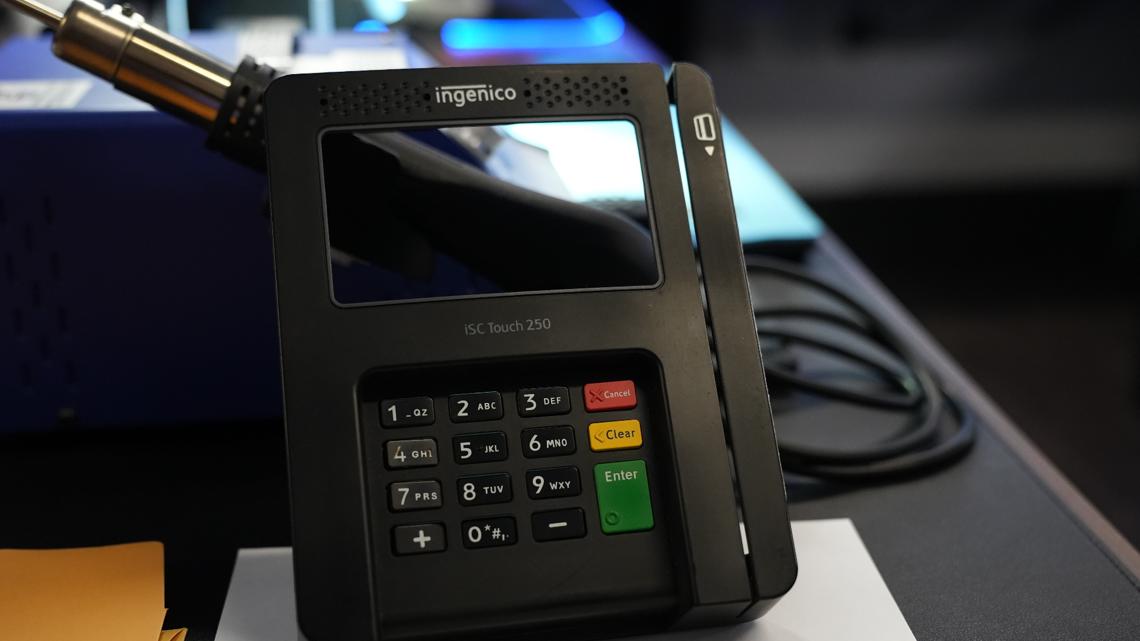
Texas issues EBT cards without embedded microchips, a safeguard widely used in commercial debit and credit cards to prevent cloning and unauthorized transactions. Instead, Texas EBT cards only use magnetic stripes that are vulnerable to common scam tactics such as credit card “skimming.”
The lack of security measures are compounded by the 2024 expiration of federal reimbursement protections for stolen benefits. Without these protections, thousands of Texas families no longer have a guaranteed safety net when they are victims of fraud.
How the scam works and how victims are hurt
Thieves steal SNAP benefits in several ways, including phishing and automated bot attacks, but experts say the most common method is card skimming.
Card skimming is when criminals place hidden devices over legitimate retail card readers. These devices can appear everywhere. They’re designed to resemble part of the original machine and are difficult for the average person to detect.
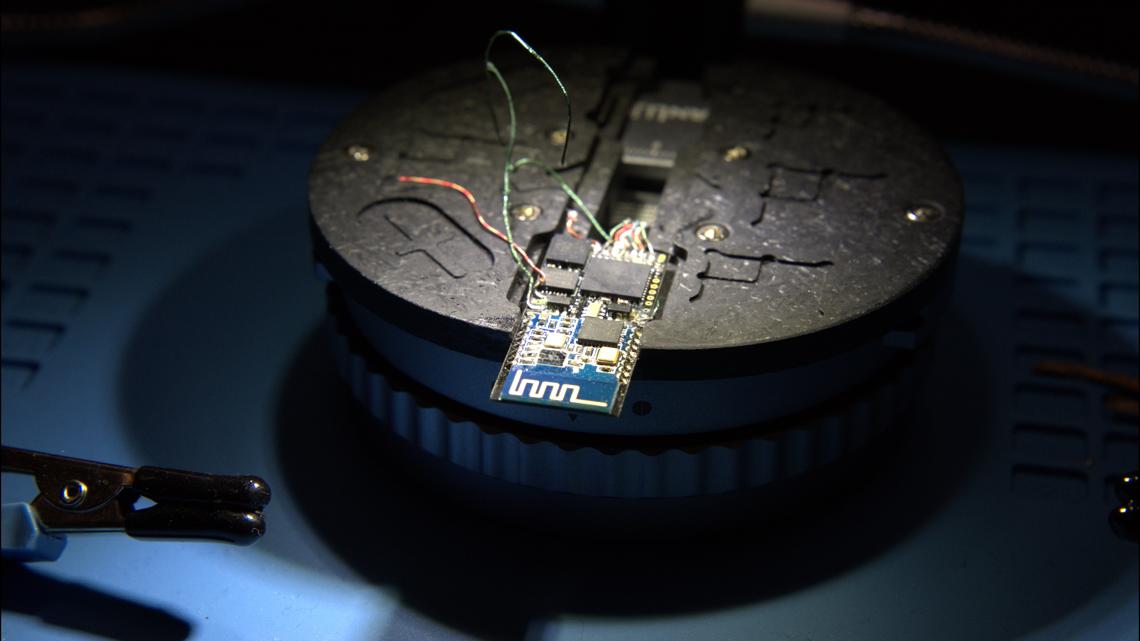
When a customer swipes a magnetic stripe EBT card, the skimmer captures and stores the card’s data. Some devices use Bluetooth technology, allowing criminals to download stolen information wirelessly in seconds without removing the device.
“It takes them more time to remove them than to install them,” Adam Colby, chief investigator at the Texas Financial Crimes Intelligence Center said. “It happens in seconds, three to four seconds at the most.”
Colby said customers are unlikely to detect a skimmer without specialized knowledge. Consumers can try to wiggle the card reader or check for loose attachments, but most skimmers are professionally installed and difficult to spot.
The stolen data is transferred onto blank cards and used to make fraudulent purchases to resell.
The SNAP benefits of these skimming victims can disappear within minutes of being deposited, often through transactions hundreds or thousands of miles away.
Esmeralda Morales experienced that firsthand.
Her $497 monthly SNAP benefit was deposited at 12 a.m. Forty-five minutes later, her balance was $0.
Two transactions were processed: one at a Walmart and one at a Target, both in Phillipsburg, New Jersey, more than 1,600 miles from her Austin apartment.
“I checked my purse. I have my card,” Morales said. “When I saw the full amount at Walmart in New Jersey, I’m like, how were they able to?”
Colby said stolen benefits are frequently spent out of state immediately after deposits post.
“When the money hits those cards, they already have people in place in another state to cash those cards out,” Colby said. “It’s very common for Lone Star Cards to be used in other states. It’s very common for EBT cards from other states to be cashed out in Texas. But make no mistake, it’s the same criminal network.”
Morales supports six people, including her senior father and two grandchildren. She said that to make up for the stolen funds she had to take out a $200 loan and turned to gig work.
“I was just upset. I was crying,” she said. “I was thinking about how am I going to get groceries for the two weeks, three weeks that they last?”

Fraud surged nationwide, including Texas
Congress directed the U.S. Government Accountability Office to investigate electronic benefit theft.
A 2025 report found more than $320 million in SNAP benefits were stolen from nearly 679,000 households nationwide between Oct. 1, 2022, and Dec. 20, 2024.
Texas, which has nearly 3.5 million SNAP recipients, is among the hardest-hit states.
The first EBT card skimming incident in Texas was reported to the Health and Human Services Office of Inspector General in February 2022.
The state began processing reimbursement claims in May 2023.
According to Texas data, $5.6 million in theft claims were reported and $5.1 million reimbursed in 2023. In 2024, those numbers rose to $21.4 million in claims, and $16 million reimbursed. Colby said that money is never recovered.
Since May 2023, nearly 40,000 Texas households had their benefits stolen.
Congress did not extend the federal reimbursement program in its December 2024 government funding bill.
More than $6.7 million in reimbursement claims filed in Texas in 2025 were not reimbursed. States may choose to replace stolen benefits using their own funds. Texas has not announced plans to do so.
Lack of protections
Colby said the lack of chip technology makes EBT cards especially vulnerable.
“The major reason that it’s so easy to steal the information off of these EBT cards is that there’s no chips in these cards,” Colby said. “Your credit card or debit card and mine, we have a chip in it.”
Magnetic stripe cards transmit static data that can be duplicated. Chip-enabled cards generate unique transaction codes, making cloning significantly more difficult.
Adding chips is not a new suggestion.
A 2023 report from the Texas Health and Human Services Office of Inspector General recommended removing magnetic stripes and transitioning to chip-enabled EBT cards.
“It’s not the be-all to end-all. You’ll still have fraud,” Colby said. “But I think that it would slow it down dramatically.”
According to U.S. Department of Agriculture, only California and Alabama currently use chip-enabled EBT cards. At least seven states have projects underway.
The U.S. Government Accountability Office said other ways states can improve card security is enabling mobile payment options and blocking suspicious out-of-state transactions.
Texas does not currently provide those protections.

State response
KVUE asked the Texas Health and Human Services Commission why it has not increased EBT card security measures.
The agency declined an on-camera interview and said in a written statement that security and program integrity are top priorities and that the agency continues to evaluate potential EBT technology changes. HHSC said funding and guidance from the Texas Legislature would be necessary to implement additional security measures.
During the 89th Texas Legislative Session (2025), the primary focus regarding EBT/SNAP was on eligibility and usage restrictions rather than direct card security upgrades like chip technology. The only EBT-related security bill filed was Senate Bill 1183, which would have required photographs on EBT cards. The bill was left pending in committee.
Kathryn Larin, a director at the GAO, said transitioning to chip-enabled cards can be costly and may require retailers to upgrade equipment.
“It’s a big undertaking to switch to chip cards, and there’s a cost involved,” Larin said.
The USDA has advised SNAP retailers in bordering states to prepare to accept chip-enabled EBT cards as usage increases. Oklahoma and Arkansas, which borders Texas, have chip projects in progress.
California began rolling out chip cards in early 2025. By November 2025, the state reported an 83% drop in theft, reducing monthly losses from roughly $20 million to below $4 million.
Who are the thieves?
Colby said the crimes involve organized criminal networks with multiple participants.
“We’re talking about organized groups attacking our financial system and exploiting our open system,” he said.
Under Texas law, possession of a skimmer can result in a second-degree felony charge. If three or more people are involved, prosecutors can pursue engaging in organized criminal activity, a first-degree felony punishable by up to 99 years in prison.
How protect your SNAP benefits and what to do if it’s stolen
HHSC said cardholders can freeze and unfreeze their EBT cards using the Your Texas Benefits mobile app or by calling the Lone Star Help Desk at the phone number listed on the back of their card and selecting the appropriate interactive voice response options.
Cardholders can also view real-time card activity and are encouraged to monitor for unusual or unauthorized purchases. Recipients should also check balances regularly, change their PIN at least once a month and inspect card readers for loose parts or unusual attachments before swiping.
If recipients believe their SNAP benefits have been stolen, HHSC recommend taking immediate action:
-
Call the Lone Star Help Desk at 800-777-7328 to change the PIN and cancel the card.
-
Report the fraud to the Office of Inspector General by calling 211. After selecting a language, choose option 3.
-
Request a new EBT card.
-
Review transaction history for unauthorized charges.
-
File a replacement claim if the theft occurred before Dec. 21, 2024.
Contact your local food banks to help supplement for the loss of funds.
Experts caution that while these steps may reduce risk, individual vigilance cannot fully prevent organized fraud networks from exploiting outdated systems.
Families left exposed
When Morales reported the theft, she said she was told she would receive a new card but was not informed about card-lock features.
“They didn’t give me no detail, no information,” she said.
Stronger security measures are not in place, and reimbursement is no longer guaranteed. Families remain vulnerable to repeat losses.
“The consequences are very dire for families,” Larin said.
For Morales, the impact is immediate. She must find a way to keep food in the kitchen and ensure her family does not go without a meal.