
Victor Wembanyama suggested he wasn’t thoroughly pleased about league-level decisions when he was trying to return to the court after his concussion.
SAN ANTONIO — Anyone who watched the Spurs mount their biggest playoffs comeback in 12 years to beat the Portland Trail Blazers on Sunday might have noticed Victor Wembanyama – already an MVP contender, the newly minted Defensive Player of the Year and potentially the face of the league – balling out like he had something to prove.
You could, in fact, deduce that just by looking at his stat line: 27 points, 12 rebounds, three assists, four steals and seven blocks in his return from a concussion suffered in Game 2.
Wembanyama may very well have been playing a bit angry when the Spurs won Game 4 to take a commanding 3-1 first-round series lead over the Blazers. He suggested as much in speaking about navigating the NBA’s concussion protocol after the game.
“It was a very weird feeling, without getting into too many details, getting concussed like that,” Wembanyama said of his hard Game 2 fall. “But everything was very controlled and they’ve taken great care of me. Been trying to get back to the court and use all that energy I had on the court.”
But the 22-year-old All-Star’s tone shifted when asked specifically about the process with the league. Wembanyama, typically very considered with the words he chooses, again started being careful with his answer.
“I won’t wanna get into details, I don’t want it to become a distraction. Ask me again after the end of the season,” he said, before adding: “But, again, all the doctors, especially on the Spurs, the doctors all around, they were great. Took great care of me.”
“But the way the situation was handled was very disappointing. Not on the Spurs, again. I’m not saying that not playing was a good or bad decision. It was a decision… But the way the situation was handled, very disappointing.”
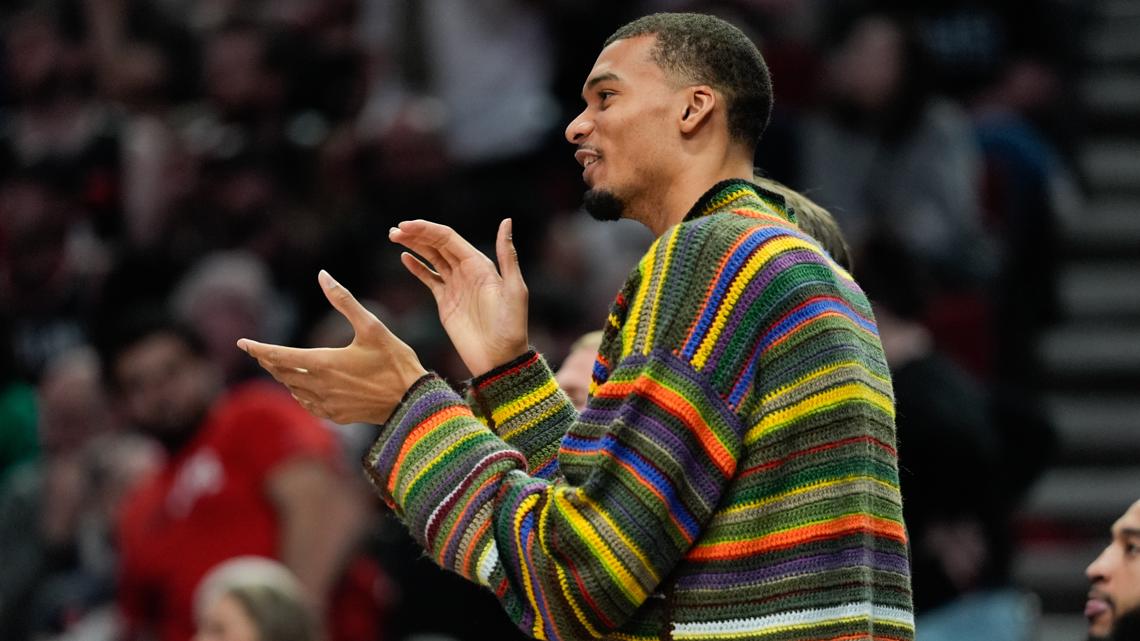
The league’s concussion protocol involves several checkboxes to ensure athletes are ready to return to play, including an initial rest period of 48 hours before returning to full participation and clearing multiple stages of energy exertion.
To be fully cleared for play, an NBA player must get the green light not only from his team’s medical staff, but from NBA officials. Wembanyama, who missed Game 3 and wasn’t officially listed as available for Game 4 unless about 45 minutes before tipoff, suggested his disappointment was about that later requirement when a reporter asked to clarify that he wasn’t frustrated with Spurs staff.
“It’s the NBA,” he responded. “The doctors on either side were great.”
The on-court effects of Wemby sitting out on Friday are ultimately moot, and arguably beneficial for a team trying to mount a deep playoff run: San Antonio won Game 3 and their most important player got some extra rest.
But the implication of one of the NBA’s young superstars airing his grievances against league officials is notable nonetheless—particularly if he ends up expanding on them at season’s end, whenever that may be.
The Spurs will look to close out the first-round series and send the Trail Blazers packing at Tuesday’s Game 5, which tips off at 8:30 p.m. CT at the Frost Bank Center. If they seal the deal, they will face either the Minnesota Timberwolves or Denver Nuggets in the Wester Conference Semifinals.