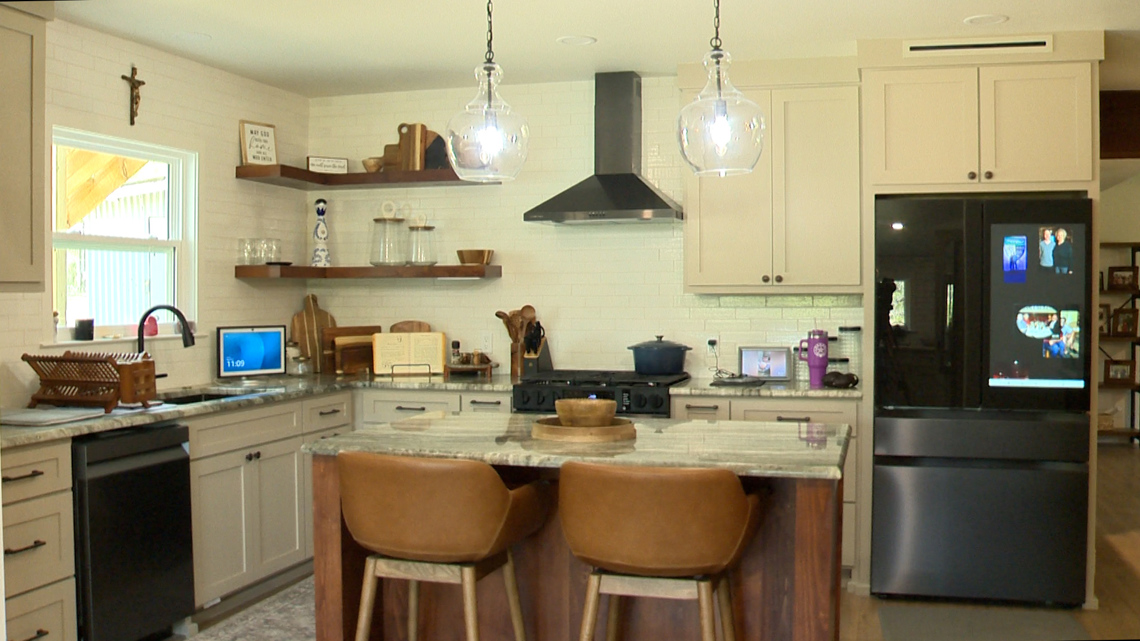
After losing everything in the July Fourth flood, an Ingram couple rebuilds and returns home — without paying a dime, thanks to community support.
INGRAM, Texas — In the early hours of July 4, 2025, Mike Trolinger and Brenda Espinoza watched floodwaters swallow everything they had — their home, their belongings and nearly a century of family history.
Months later, the Hill Country couple is back — rebuilding their lives along the Guadalupe River without paying a dime out of pocket, thanks to an outpouring of community support.
“It was nice to put your feet up in your own house again,” Trolinger said.
The couple’s home in Ingram had deep roots. Trolinger’s great-grandfather first settled the property around 100 years ago, with the family home later built closer to the river in the 1970s. Just weeks before the flood, the couple had finished remodeling — even investing in a new bed.
Then, overnight, it was gone.
“You really think about it, you have nothing. Nothing,” Espinoza said.
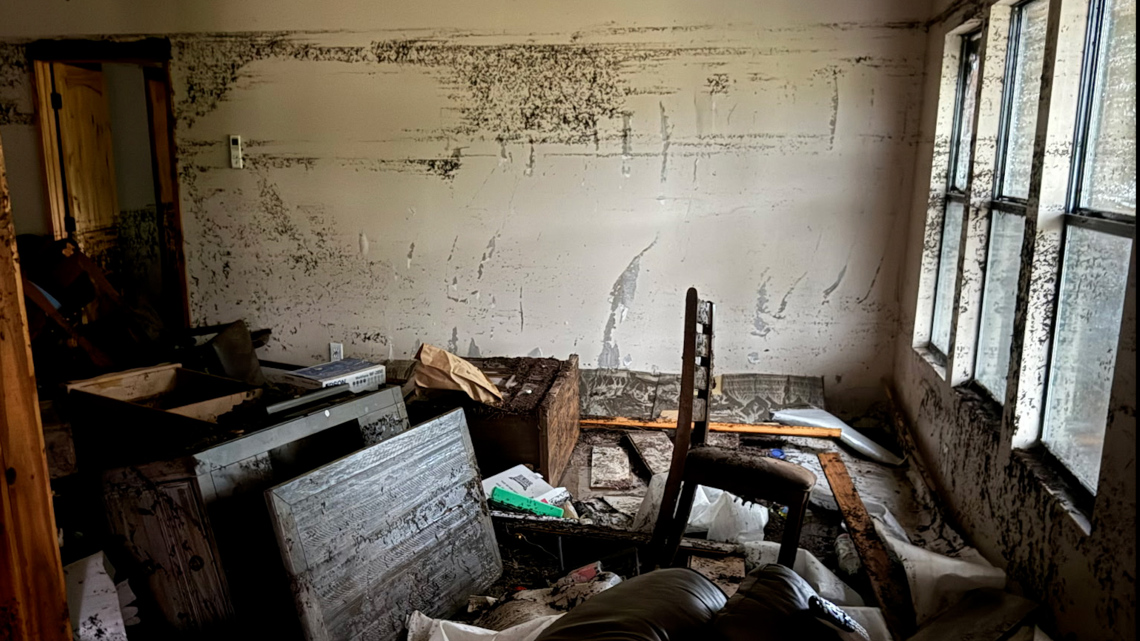
The floodwaters left behind debris and silence — their home stripped to the studs, its walls reduced to the wooden frame. Nearly everything inside was lost, from family heirlooms to everyday essentials.
Even after moving back in, the couple said the small losses were some of the most surprising.
“We wanted to make a pizza … but we didn’t even have a pizza pan,” Trolinger said.
By late August, rebuilding was underway. The couple stayed at a nearby property during construction, making daily trips to watch their home take shape again.
“It made it real nice just to be able to drive down here every day and watch the progress,” Trolinger said.
While the flood erased heirlooms meant for future generations, the couple said rebuilding ensures the land can still be passed down, along with the memories made on the river.
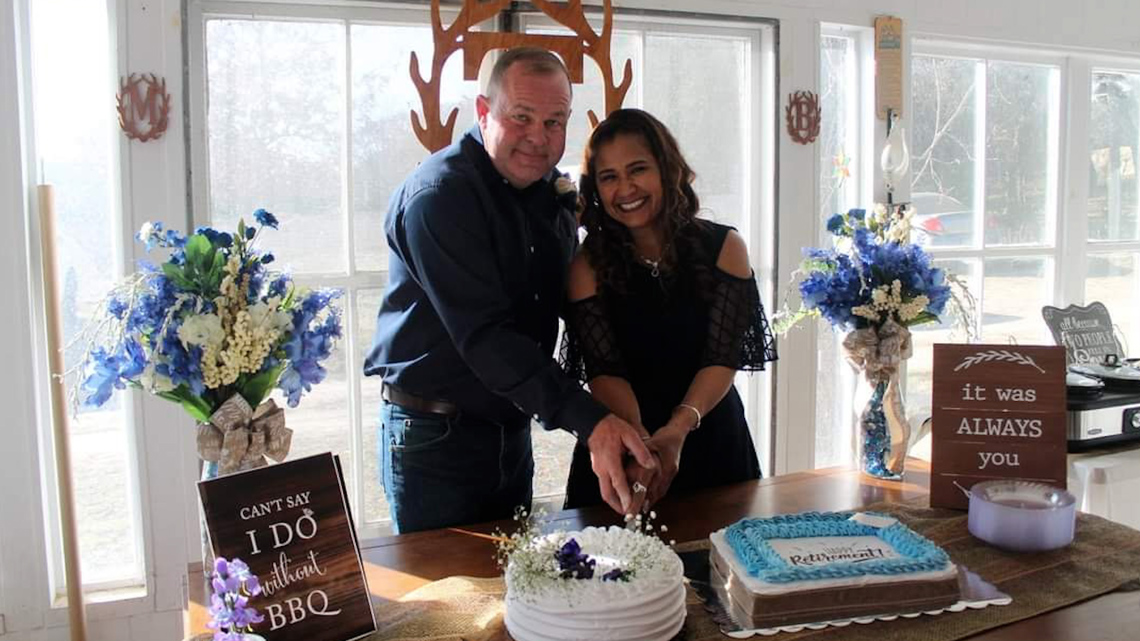
“I learned to swim in that river, my kids learned to swim in that river,” said Trolinger. “I remember coming out here in the summer, spending it with my grandfather and the river was his bathtub.”
By mid-January, their new home was complete — with more open space, a larger kitchen and a sense of calm they hadn’t felt in months.
The rebuild was made possible through donations and volunteer labor coordinated by Kerrville Design Build, the Community Foundation of the Texas Hill Country and others. Even strangers across the country stepped in — including donors who helped fund materials like sheetrock — allowing the couple to return home without financial burden.
“It took that load off us so we could use the money we had to furnish it,” Trolinger said.
Still, the road back was far from easy.
In the days after the flood, the couple said they encountered potential scammers and inflated cleanup estimates, at one point nearly agreeing to pay $20,000 for debris removal out of desperation.
“We almost signed that contract … because we didn’t know what to do,” Espinoza said.
They also faced a confusing aid system that required them to repeatedly recount their experience.
“You have to relive the story everywhere you go,” said Trolinger. “We don’t mind telling the story, but when you have to sit there and tell it five times in a day just to get a little bit of help, that’s hard.”
Despite the challenges, their homecoming comes as a broader recovery effort continues across Kerr County — where many families are still waiting to rebuild.
A key step in that process is something many homeowners had never heard of before the flood: elevation studies.
So far, 75 elevation studies have been completed across the county for homes located within the floodplain. These studies — which include elevation certificates and engineering assessments — determine whether a home can be rebuilt as it was, or if it must be raised above the floodplain to meet safety regulations.
Without them, homeowners cannot obtain permits to rebuild.
Local nonprofit Annie’s Helping Hands Foundation is leading the effort, helping families navigate the technical and financial challenges of rebuilding safely.
“Helping families secure elevation certificates and raise homes above the floodplain isn’t just about construction — it’s about giving people a future and security,” said co-founder Michelle Bruninga in a press release.
For some, that process includes physically lifting their homes.
In nearby Center Point, one property became a model for what recovery can look like. After engineers determined the home needed to be elevated, crews raised it three feet above the floodplain — allowing it to qualify for rebuilding and marking one of the first full recovery projects from assessment to move-in.
More than 100 additional elevation studies are expected to be completed by the end of April, helping guide funding, construction and volunteer efforts as recovery continues.
The work is part of a broader collaboration through the Kerr Together Long-Term Recovery Group, a network of nonprofits, government agencies and community partners focused on rebuilding safer and strengthening resilience ahead of future floods.
For Trolinger and Espinoza, that future is already taking shape — inside a home rebuilt not just with materials, but with support from a community that refused to let them fall.
“It feels calming … we feel so comfortable,” Espinoza said. “That’s taken a lot of the fear away — just the beauty of the house.”
And while the fear hasn’t fully faded, the couple says they are moving forward.
“It’s still gonna trigger me when it rains, but all I know is we’ve got to put it in God’s hands. We’re here,” said Espinoza. “I feel very blessed that we still have each other — and we’re home.”