
Some San Antonio leaders emphasized that cuts would have to come from somewhere should the city opt to boost funding for more patrol officers for 2027.
SAN ANTONIO — Seven weeks before a scheduled meeting to discuss budget goals for 2027, three San Antonio City Council members made their case for why adding more police officers should be a priority.
Leaders ultimately didn’t vote on the resolution pushed by Council members Marina Alderete Gavito, Misty Spears and Marc Whyte, who want council to stick to a 2023 external study’s recommendation that 360 officers be hired over the following five years. That resolution, which would “reaffirm” council commitment to that framework, was instead tabled to be discussed at a Public Safety Committee meeting in May—closer to the start of budget season.
But in discussing the resolution on Thursday, the early stages of a potential summer debate over what falls under the umbrella of public safety took shape.
“SAPD is a crucial part of public safety here in our community. It’s easy to pigeonhole the concept of public safety into just that,” said Councilman Ric Galvan. “What’s difficult is ensuring that we have holistic public safety investments to address all aspects of public safety.”
Galvan’s comments came moments after Councilman Jalen McKee-Rodriguez challenged fellow leaders to consider what cuts they would be willing to make in order to add more officers through next year’s budget. Both referred to other city initiatives that they didn’t want to fall by the wayside, such as Vision Zero, the city’s effort to cut down on roadway deaths, and SA Forward, a strategic plan focused on community health.
They also mentioned needs for the San Antonio Fire Department and Animal Control Services.
Councilwoman Teri Castillo pointed to the possibility that City Council might have to shore up funding for community violence prevention services if federal grant dollars are cut, responding directly to her colleagues’ assertion that the matter of funding more SAPD officers doesn’t have to be an “either-or” issue.
SAPD was allocated $632 million, the biggest slice of the $4 billion FY2027 budget.
Whyte, Alderete Gavito and Spears took turns saying that growing SAPD’s ranks is a priority of theirs, pointing to the necessity of keeping pace with a growing San Antonio population.
The trio’s joint push to get the resolution onto the agenda in the first place (via a three-signature memo submitted in March) goes back to an outside study the city paid for in 2023 to evaluate police staffing levels and needs.
That study recommended that 360 officers be added over a period of five years, starting with 100 in the 2024 budget and 65 in each of the four years thereafter. The city initially followed that framework, funding the requisite cohorts in 2024 and 2025.
But the 2026 budget finalized last September included funding for just 40 new officers—25 fewer than recommended in 2023. City staff initially recommended adding just 25 new patrol officers before leaders amended the plan and increased that target.
District 10 Councilman Marc Whyte, who has consistently kept public safety and police funding at the top of his priority list while on council, called the budget allocation “nothing short of government malpractice” last fall. He again deployed that sentiment on Thursday, saying that budgeting should “begin with public safety and then you do everything else around it.”
“To not do so would be government malpractice,” Whyte said.
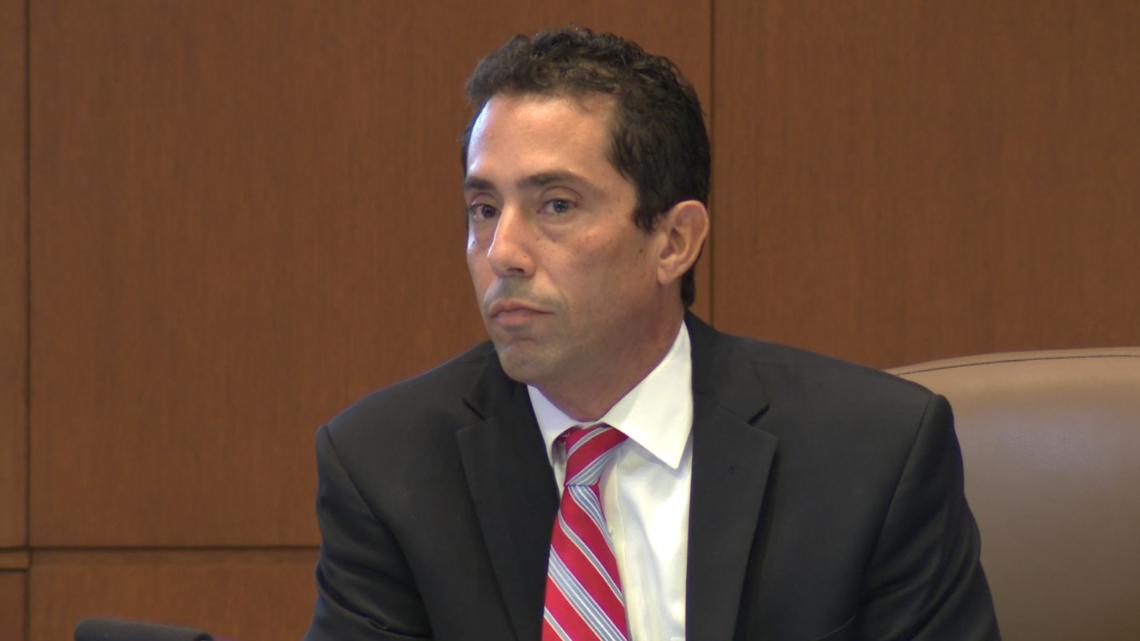
Spears said her imperative to support growing SAPD’s ranks were a reflection of what she has heard from her District 9 constituents, whom she says reported feeling less safe than five years ago.
“This is me listening to my residents talking about this… I think this is an appropriate time to talk about this as we approach the budget (season),” Spears said, before suggesting she may push for funding 100 officers or more in next year’s budget. “This is my top priority.”
Alderete Gavito said it “does not make sense” for the city not to follow the recommendations of a consultant whose services it paid before, adding that even the possibility of a budget deficit shouldn’t pressure leaders away from funding more officers. Bianca Maldonado, a constituent of Alderete Gavito’s, said the Monticello Park Neighborhood Association, which she presides over as president, unanimously passed a resolution supporting the hiring of more SAPD officers in 2027.
“SAPD call response times are inconsistent or at times does not exist,” Maldonado said, reporting that residents in the neighborhood have waited anywhere from 15 minutes to over two hours for an officer to respond.
Other than the trio of leaders behind the resolution, Councilwoman Ivalis Meza Gonzalez was the most directly supportive of funding at least 65 officers next year.
Others on council, including Mayor Gina Ortiz Jones, said the conversation was best suited for a time and place when they would know the full context of how many budget dollars they would be working with and where they might be forced to cut.
“This is an issue of the fact we don’t have endless resources, and that we lack a lot of the information that (City Manager) Erik (Walsh) and the team would provide to ensure we’re balancing needs across our community,” Jones said.
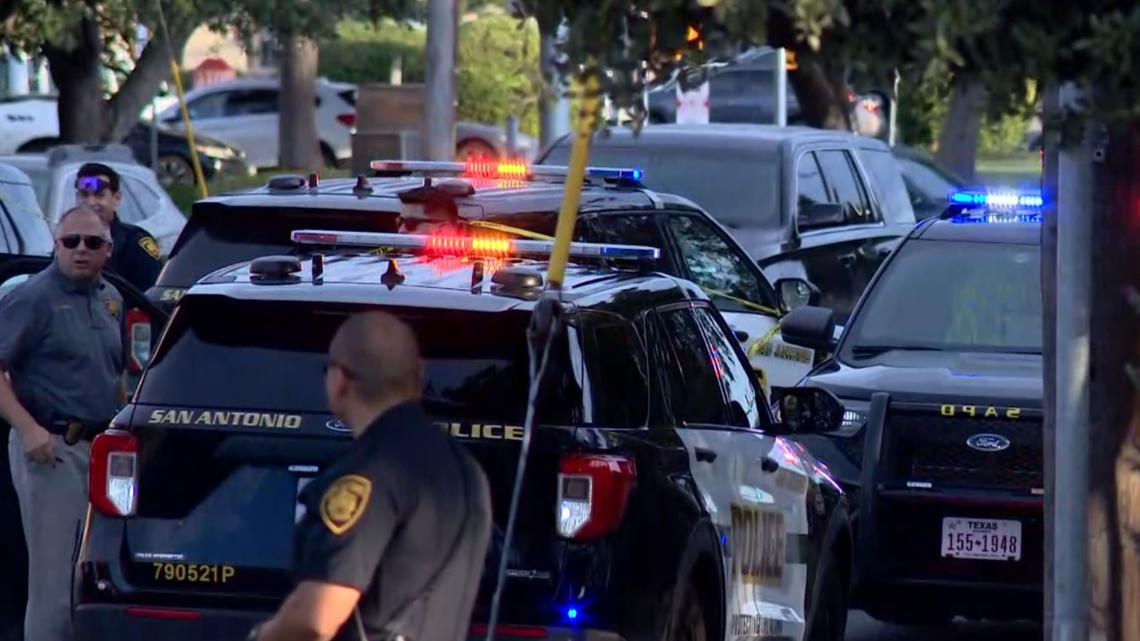
Council unanimously voted to bring the resolution up for further review at the committee level in May, agreeing that it would be beneficial for the conversation to unfold on a more parallel track with early budget talks.
City staff are expected to present a trial budget to council in mid-June, ahead of work sessions. They have until the end of September to approve the Fiscal Year 2027 budget.
In the public comment portion of the discussion, ACT 4 SA Executive Director Ananda Tomas – whose organization works to create more transparency and SAPD accountability – said she opposed the resolution, pushing for it to be either rejected or delayed until budget season. She also said there should be an audit of SAPD finances, pointing to recent overspending on personnel overtime.
“Prevention and response (to crime) are two different things, and we have to fund both of them,” Tomas said.
Another factor in the conversation: the city’s goal of reaching a 60%-40% split between proactive and reactive policing, respectively, that Police Chief William McManus said last year would be more easily attainable with bigger patrol ranks.
“It is our duty to put money in the 2027 budget to add police personnel to our SAPD,” Whyte said. “Our community wants it. It’s the right thing to do. And it will make San Antonio safer.”