
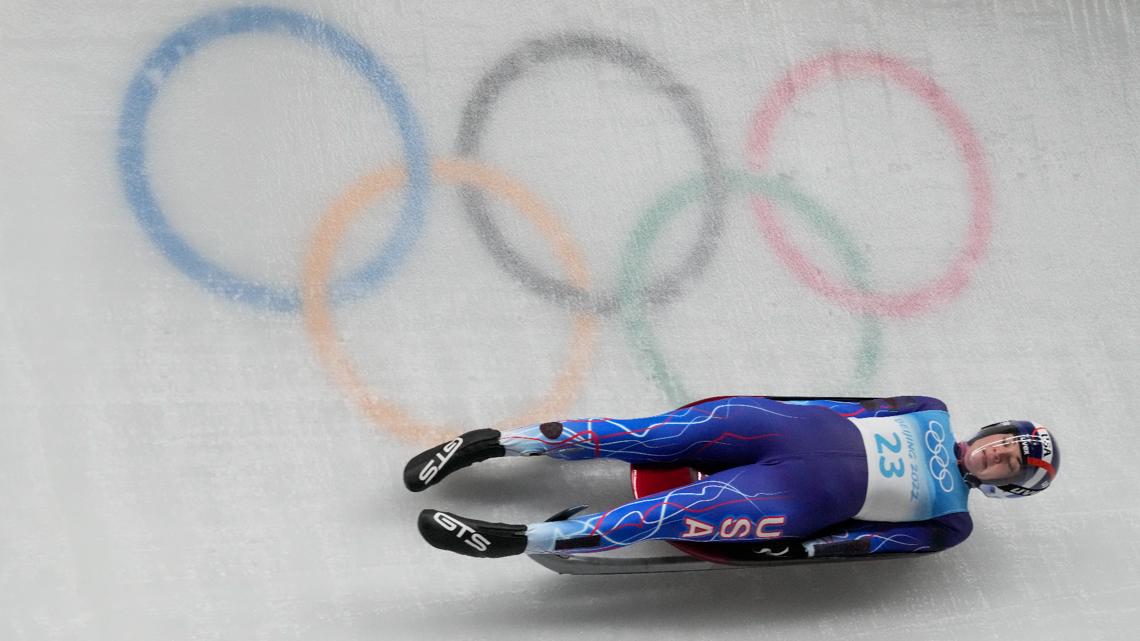
Luge, bobsled and skeleton are some of the most dangerous sports at the Winter Olympics. But which one is the fastest?
WASHINGTON — Luge, bobsledding and skeleton events are some of the most dangerous sports at the Winter Olympics.
While at a glance they may appear similar, the three sliding events have distinct differences. The three events will take place on the same track, the Cortina Sliding Centre, for the upcoming Winter Olympics in Milan and Cortina d’Ampezzo, Italy.
How fast do sliding athletes go?
Luge, bobsled and skeleton are among the fastest sports at the Games.
Bobsled offers some of the most speed, but luge and skeleton are much more treacherous. The events are often nail-biters as sliders maneuver their way around the track at high speeds.
How fast is luge?
This event begins with athletes in a seated position as they propel themselves forward by pushing their hands on the ice. The athletes will ride down the track on a sled, feet first and flat on their backs. The course requires athletes to navigate by shifting weight and angle to turn corners in the fastest time possible, while also maintaining speed and momentum.
Luge athletes average speeds of 75 mph and 90 mph.
At the Milan Cortina 2026 Games, there will be men’s singles, women’s singles and mixed team relay events.
What are the differences between skeleton and luge?
Skeleton events differ from luge as athletes must begin their races with a standing start. They build up speed by running around for 40 meters (131 feet) before assuming a head-first position as they slide down the icy course.
Skeleton athletes reach speeds of more than 130 kph (81 mph).
How fast does a bobsled go?
Bobsledding, one of the longest Olympic traditions, has been featured in almost every Winter Olympics schedule since the start of the Games, according to the Olympics website.
The event is traditionally a team sport, with 2-woman, 2-man and 4-man events planned for 2026. The women’s monobob, which got its Olympic debut in the 2022 Winter Games, will make a return for the 2026 Winter Olympics.
Athletes slide down the course in a seated position in a high-sided sled, after they build speed over the first 50 meters (164 feet). In the bobsled, athletes steer using ropes inside the sleigh. The athlete in the back also uses brakes to slow the descent, which is rarely used during Olympic competitions.
According to the International Bobsleigh and Skeleton Federation, bobsleds can reach speeds up to 150 kph (93 mph.) When the bobsleigh reaches the finish line, the brake person slows the sled down to a stop.