
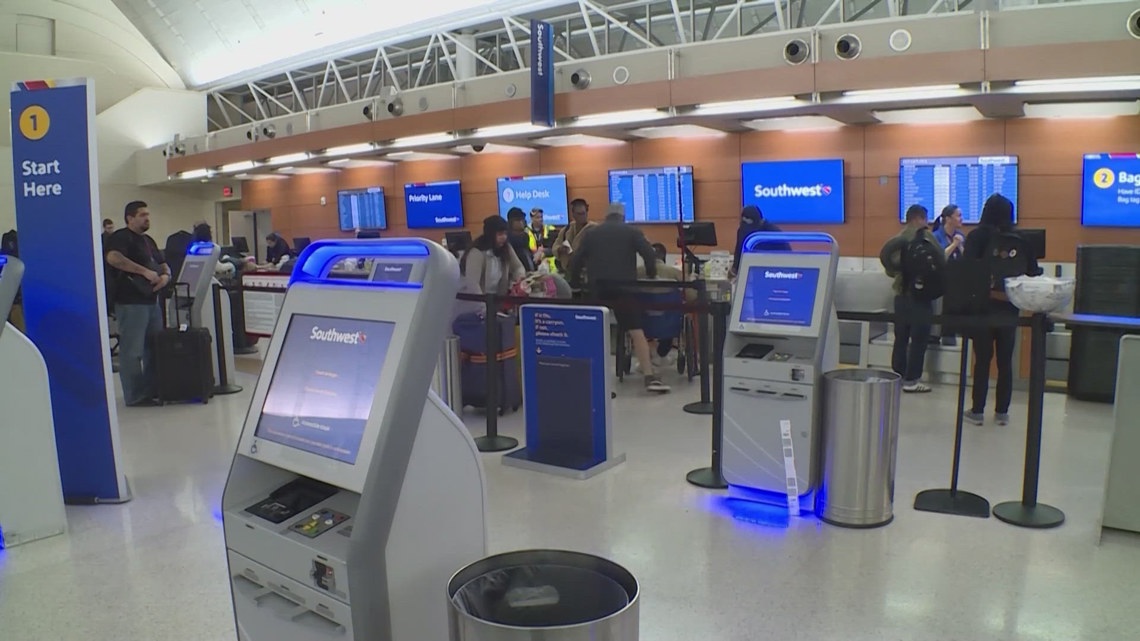
A winter storm has caused widespread flight disruptions, with dozens of cancellations at SAT and more than 70 flights affected in the past 24 hours.
SAN ANTONIO — Overnight travel troubles are continuing for thousands of passengers after a powerful winter storm grounded flights across the country.
Here in San Antonio, cancellations were still stacking up Monday morning at San Antonio International Airport, impacting travelers across multiple airlines and destinations.
Airport officials reported dozens of canceled flights, including a Southwest Airlines flight from Dallas Love Field that was scheduled to arrive at 8:20 a.m. Monday. While that flight was canceled, other flights from the same airport were still scheduled to depart on time.
An American Airlines flight to Dallas–Fort Worth International Airport (DFW) scheduled for 6:15 a.m. was also canceled, though several other departures to DFW remained on schedule.
According to the Federal Aviation Administration, DFW experienced a ground delay Sunday from 1 p.m. to 9:59 p.m., contributing to widespread disruptions throughout the region.
By Sunday afternoon, San Antonio International Airport had already announced 14 cancellations for Monday. Since then, the numbers have continued to climb. Flight tracking website FlightAware reports that 76 flights at the airport have been canceled within the past 24 hours.
The impact is not limited to Texas. Several major East Coast hubs — including Baltimore, New York’s JFK Airport, and Charlotte — have also reported multiple cancellations as the storm system continues to move east.
San Antonio International Airport is advising travelers to check the status of their flights directly with their airline or by visiting flysanantonio.com, and to allow extra time when heading to the airport due to potential delays and changing conditions.
Airport officials say they will continue monitoring conditions as airlines work to recover from the widespread disruptions.