
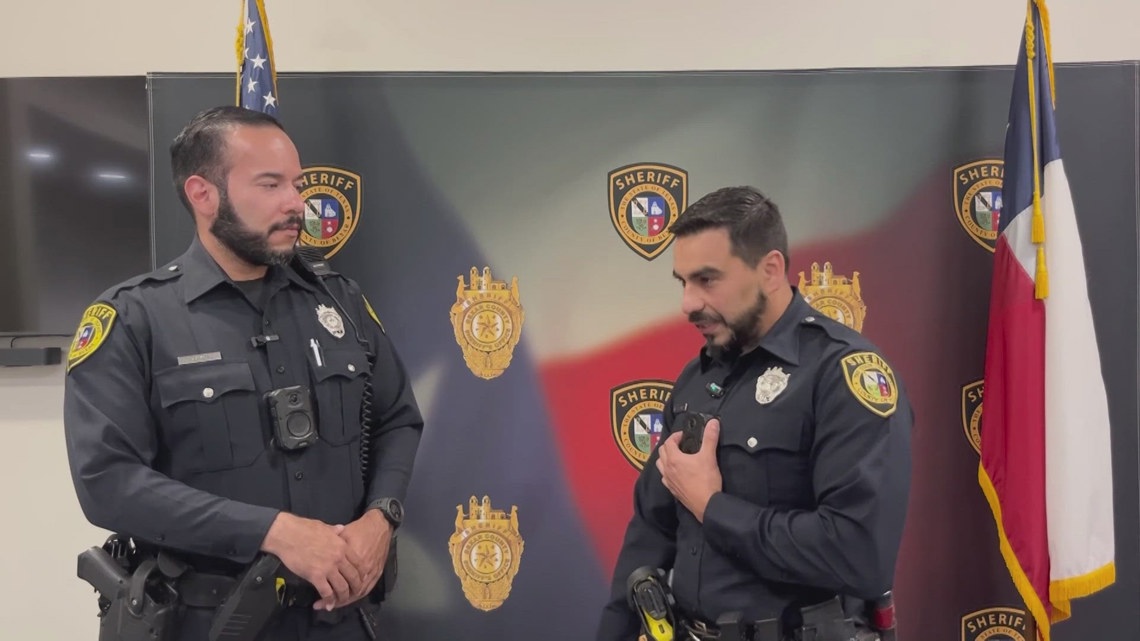
The Bexar County Sheriff’s Office has introduced new tech that translates conversations in real-time, aiming to improve communication during critical events.
SAN ANTONIO — In a city where language can change from block to block, the Bexar County Sheriff’s Office is rolling out new body camera technology designed to help deputies communicate in moments where words can become a barrier.
The new feature, built into the department’s Axon body-worn camera system, allows deputies to translate conversations in near real time. The goal is simple: cut down delays when a deputy and a resident do not speak the same language.
Officials say that matters in everyday situations like traffic stops, but also in more chaotic moments — especially during big San Antonio events like Fiesta, when deputies may come into contact with visitors from around the country and around the world. One BCSO official said the system could help in a crowded event if someone approaches a deputy in a panic and the deputy cannot immediately identify the language being spoken.
In one demonstration, Deputy Jose Flores shows how the process works. He tells a driver he will use his body camera to help translate, explaining that he will speak into the device and it will translate back and forth.
BCSO says the technology can recognize and translate dozens of languages, helping deputies move faster in situations where waiting for another officer or interpreter could cost valuable time. In one example, officials described how that delay could matter if a frantic parent in a large crowd is trying to report a missing child.
But the tool is not being pitched as perfect.
Officials acknowledge the system still has limitations, especially in noisy environments or places where connectivity may affect performance. They say deputies are still learning what the technology does well — and where it may fall short.
And translation is only part of what the technology can do.
BCSO says deputies can also ask the system questions about department policy in real time. That could include guidance on how to handle a burglary case, when to take fingerprints, or what the policy is on shutting off a body camera while speaking with an investigative unit. Instead of stopping to go back to a patrol car and search through a manual, the answer could come through the camera itself.
Officials say the system may also help deputies gather details for reports, like estimating the replacement value of damaged property while they are still on scene.
That means this technology could do more than help deputies talk to the community. It could also shape how they make decisions in the field.
For some, that may sound like a practical upgrade. For others, it raises harder questions about how much officers should rely on AI in high-stress situations — not just to translate what someone is saying, but to help guide what happens next.
For now, BCSO says the system is still a work in progress. Deputies are being trained, the technology is being tested in real situations, and the agency expects a broader rollout by this summer.
In the end, the real test may not be how it works in a demonstration.
It will be how it holds up on the street, when someone is scared, trying to explain what happened and just needs to be understood.