
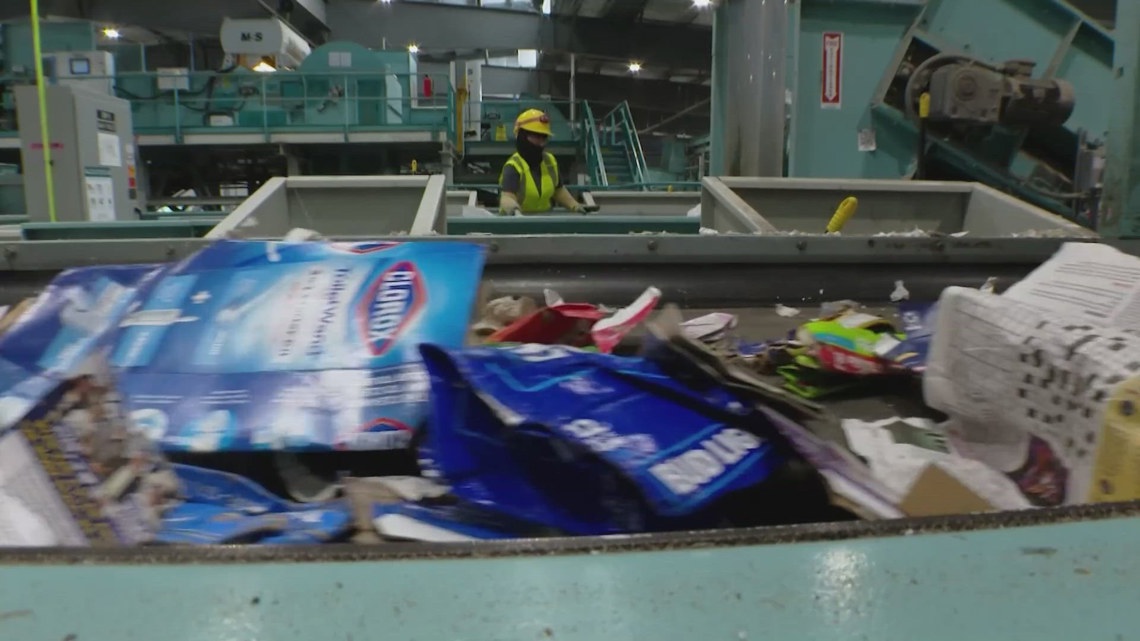
Confusion over what can be recycled is continuing to complicate San Antonio’s efforts, despite 267,000 tons picked up every year.
SAN ANTONIO — For many San Antonio residents, recycling has become part of the weekly routine.
Blue and brown bins are rolled to the curb, waiting to be emptied by trucks collecting what many see as “trash treasures.” But while recycling may seem straightforward, industry experts say one major problem continues to complicate the process: confusion over what can actually be recycled.
San Antonio launched its recycling program more than 30 years ago. Today, the city collects roughly 267,000 tons of recyclable material each year.
Even so, workers at recycling facilities regularly find items mixed in that do not belong.
“Do they go in there or don’t they?” asked one resident while sorting recyclables.
That uncertainty is common, according to John Harris, who runs the Circular Services Recycling Center in San Antonio.
“Most of what we want in here are things that are generated from the household that contain something,” Harris said. “So, a bottle, a jug, a can, a jar or a box.”
Some items are easier to identify than others. Milk jugs, plastic bottles marked with recycling symbols, aluminum cans and cardboard boxes are all commonly accepted. But garden hoses, heavily soiled materials and certain plastics can create problems in the recycling stream.
Workers say aluminum cans remain among the most valuable items collected.
“A bale of that aluminum is probably close to worth $2,000 today,” Harris said.
By comparison, a bale of cardboard is worth about $40, while office paper can bring between $60 and $100.
Still, sustainability advocates say recycling is about more than profit.
“We want to make sure it remains here for our future generations,” said Rose Flores, director of sustainability at San Antonio College.
Flores said many recyclable materials, especially plastics, can remain in landfills for decades or longer if not properly processed.
“If it’s not properly recycled, it just gets thrown into a landfill,” Flores said. “It stays for a hundred years or more.”
Residents like Chad Becker say they recycle as much as possible, especially with the amount of cardboard arriving from online shopping deliveries.
“Amazon — the wife loves Amazon,” Becker joked. “So having to recycle those boxes…”
Experts acknowledge that even recyclable materials eventually reach the end of their usable lifespan. But Harris says the bigger concern is making sure people participate rather than worrying excessively about mistakes.
“Worry less about what not to send,” Harris said. “Worry more about what to send.”