
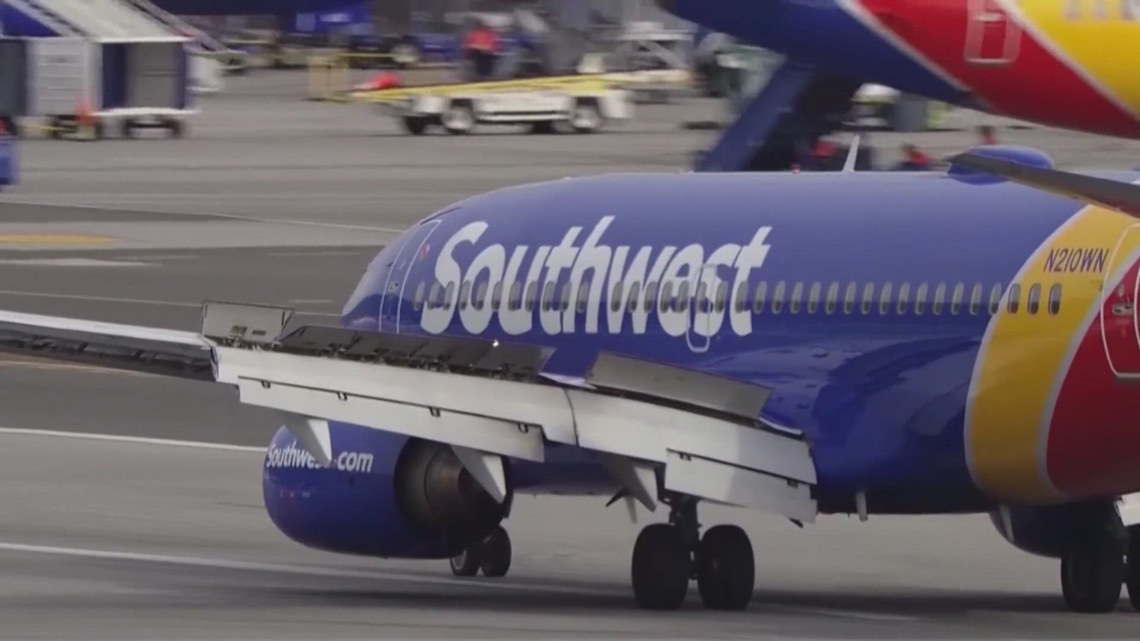
Their new agreement ends litigation, locking in six gates spread between the new Terminal C and the renovated Terminal B.
SAN ANTONIO — Southwest Airlines and San Antonio International Airport have reached a settlement that ends a protracted dispute over gate assignments, lease terms and the airport’s massive terminal expansion, clearing the way for both sides to move forward after nearly two years of legal and public wrangling.
Under the agreement announced Thursday, Southwest signed a new Airline Use and Lease Agreement that guarantees the carrier no fewer than six gates at San Antonio International Airport, according to a joint statement released by the airport and the airline. Southwest is the airport’s largest carrier.
Once the airport’s new terminal is completed, three of those gates will be located in the new Terminal C, while three others will be housed in the renovated Terminal B, according to the statement. The settlement also resolves all outstanding issues related to airport rates and charges dating back to October 2024.
As part of the deal, Southwest will withdraw its remaining litigation against the airport, including cases pending in federal court and before the Federal Aviation Administration, according to the joint statement. The move brings a formal end to a dispute that had raised questions about how the airport would allocate space as it undertakes the largest construction project in its history.
“Together, Southwest and SAT look forward to a continued partnership that benefits San Antonio and supports the Airport’s mission of providing travelers with an exceptional travel experience,” the two entities said in the statement.
The settlement marks a sharp turn from the adversarial posture that dominated much of 2024 and 2025, when Southwest accused the city and airport leadership of unfairly sidelining the airline in planning for Terminal C. The new terminal, now under construction, is expected to more than double the size of the airport’s existing facilities and add 17 gates.
Southwest’s legal fight culminated in August 2025, when a federal district judge dismissed the airline’s lawsuit over gate assignments with prejudice, meaning the claims could not be refiled. The judge found that Southwest failed to present a plausible case that the city discriminated against the airline in how it allocated space, according to the court ruling cited at the time.
In that decision, the court rejected Southwest’s argument that San Antonio improperly favored airlines offering premium lounges and other amenities in Terminal C, noting that the city’s approach was rooted in business considerations tied to revenue and passenger experience. City and airport officials had maintained that they acted within their legal authority and sought to balance the needs of multiple carriers.
The lawsuit grew out of negotiations that broke down in 2024, when Southwest said the city reneged on earlier expectations about how many gates the airline would receive in the new terminal. Airport leaders countered that they never made binding promises and that space in Terminal C was limited.
The settlement not only fixes Southwest’s gate footprint but also provides clarity on where the airline will operate once the new terminal opens, splitting its presence between Terminal C and Terminal B.
The agreement also removes a potential obstacle to the airport’s broader expansion plans. Terminal C is the centerpiece of a multibillion-dollar redevelopment that includes a new parking garage and ground transportation improvements and is expected to significantly increase the airport’s capacity once completed.
For Southwest, the deal secures a long-term presence at one of its key Texas markets while ending uncertainty over leases, rates and pending regulatory complaints. For the airport and the city, it closes the book on a dispute that had drawn national attention and allows officials to refocus on delivering the new terminal.
The joint statement emphasized that the settlement allows “all parties to move forward with a shared focus on progress and growth.”