
Robert Hall served 12 years with the National Transportation Safety Board, issuing more than 500 safety recommendations.
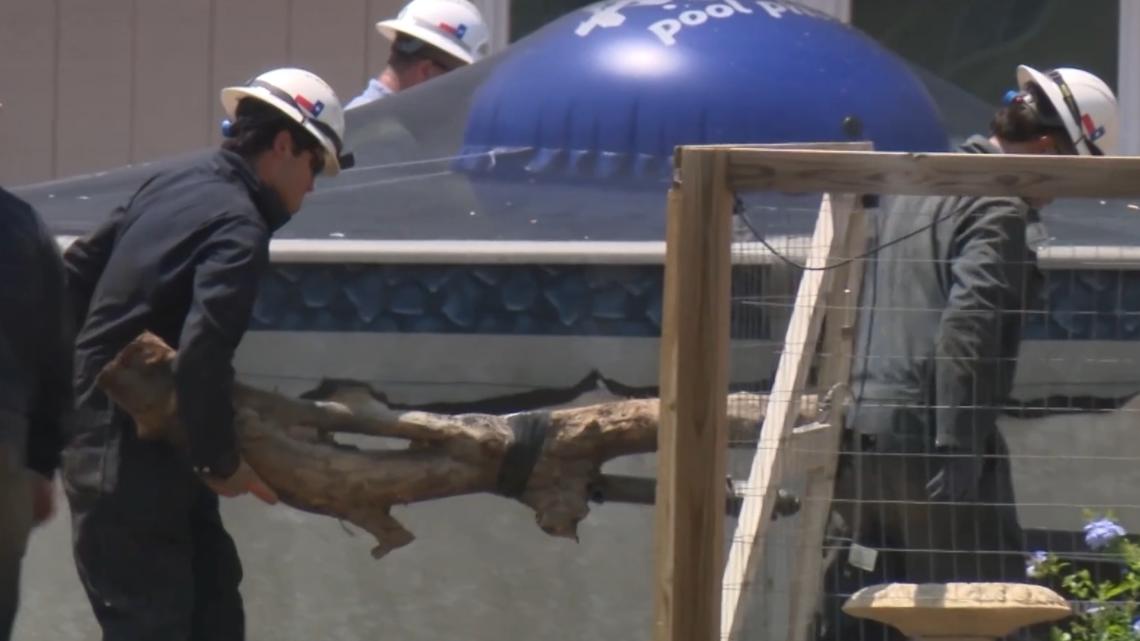
SAN ANTONIO — As the investigation continues into the Preston Hollow house explosions, a former director with the National Transportation Safety Board is weighing in on the incident, focusing much of his attention on the tree that was removed from the house caught in between the blasts.
Robert Hall served as the NTSB’s director of the Office of Railroad, Pipeline and Hazardous Materials Investigations. He was with the federal agency for 12 years, leading 171 investigation reports and issuing more than 500 safety recommendations. Hall now works as a senior technical advisor for the Pipeline Safety Trust.
As it relates to the house explosions in San Antonio, Hall said video from the scene appeared to show a section of pipe entangled in tree roots.
The April 21 explosions resulted in the injuries of five people, including a family of three in the first one and two people in the second impacted house.
“If it was a plastic pipe and we don’t know the material yet, could lead to a phenomenon known as slow crack growth in the plastic where plastic under certain stress conditions will slowly crack until you get a thorough wall crack,” Hall said.
He explained once natural gas escapes underground, it can travel through soil and into homes, which may indicate why the house in the middle of the two blasts didn’t explode.
“It may be that the house that didn’t explode that the ground was more compacted or there was more clay or the basement was better sealed if there was a basement or the crawlspace, which is why you did not see an explosion closest to the leak,” Hall said.
Hall said the chemical that gives natural gas its distinctive odor can be stripped away as the gas moves through the ground. He adds residents may never have smelled the impending danger.
“Dating back to the 1970s, the NTSB has been asking for methane detectors in homes. Like a smoke detector but it detects the odorless gas. They are lifesavers for people that have gas services,” Hall said.
Meantime, the family from the second home that exploded is suing CPS Energy, accusing the company of being aware of dangerous conditions that existed leading up to the blasts. Hall said based on past incidents investigated by the NTSB, there’s the potential for liability to exist.
“A lot of gas distribution systems do leak and they’re supposed to classify the leaks, one, two or three based on severity. The most severe are supposed to be repaired immediately,” Hall said.
In a similar case cited by Hall, a natural gas explosion in Dallas killed one person and injured four others in February 2018.
According to the NTSB report, the explosion happened at a home on Espanola Drive and caused major structural damage to the residence. Investigators later discovered a crack in a 71-year-old natural gas main serving the home, along with evidence showing gas had traveled from the damaged pipe to the house.
The deadly blast was not the first incident in the neighborhood.
In the two days leading up to the explosion, two other homes on the same block experienced separate gas-related fires and explosions linked to the same gas main. Both incidents caused significant structural damage and left residents with second-degree burns.
Investigators later determined the three incidents were connected to the same underground natural gas system.
The NTSB wrapped up their on-site portion of the investigation in the Preston Hollow neighborhood. A preliminary report into the gas-fueled explosions is expected to be released by the end of May.