
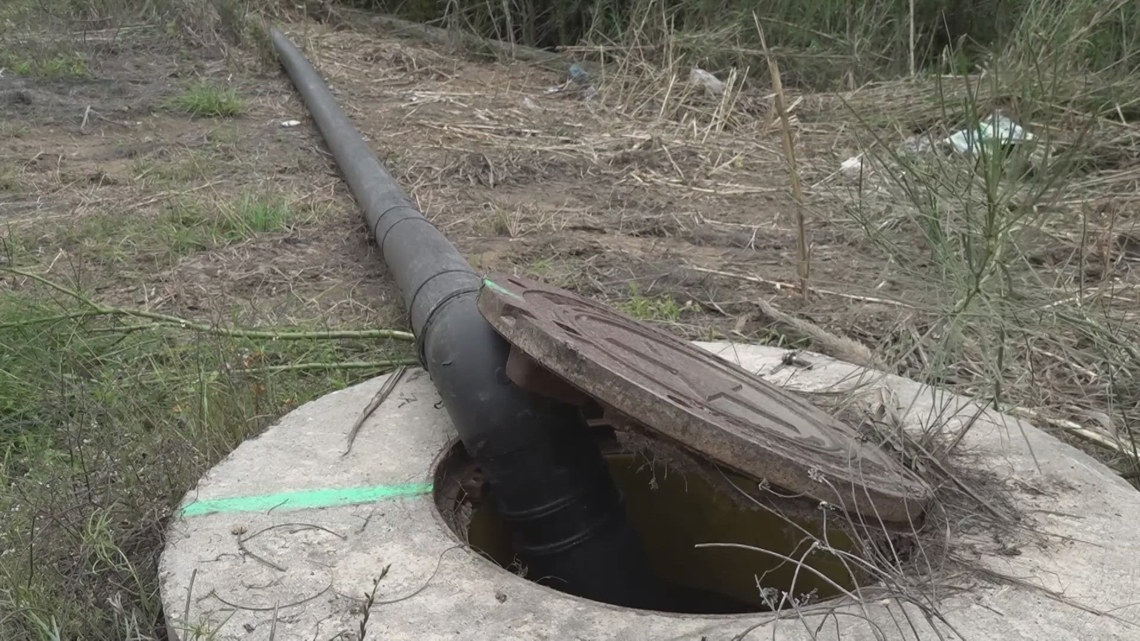
A contained spill in San Antonio has released over 100,000 gallons into Rosillo Creek, prompting safety warnings by San Antonio Water System as repairs continue.
SAN ANTONIO — A few minnows are still swimming in Rosillo Creek under I 10 in east San Antonio, but the stench of sewage still fills the air, days after a spill of more than 100,000 gallons was reported.
There are tracks in the smelly mud made by raccoons, and one lone musk turtle was seen at water’s edge as brackish water continued to flow through the area.
The wastewater is now being diverted through a temporary pipeline that bypasses the break, while repair work continues by the San Antonio Water System (SAWS).
The manager of an equipment company at the corner of the freeway and Bicentennial Street said workers noticed a foul smell when they arrived at work Monday morning.
When they went looking for the source, the manager said they found a sinkhole that turned out to be caused by a collapsed section of an underground 24-inch concrete sewer main.
It’s unclear when the break happened or how much material may have made its way into the creek, but the legal notice posted by SAWS noted that it exceeded 100,000 gallons.
SAWS spokesperson Anne Hayden said there are about 6,000 miles of sewer mains in their service area, and many of them are in isolated areas like this one, where the problem wasn’t noticed for an unknown amount of time.
Hayden said it’s important for people to be aware of their surroundings and report any issues that come up.
“A lot of the lines are in valleys or in parks. They may not be running right down the middle of the road where people would see them, so it’s really important that if you smell a sewer smell, and most of us know what that smells like, to give us a call at 210-704-SAWS.”
Hayden said this reach of pipe failed when it was inundated by recent heavy rains that weakened the structure. With the possibility of more rain in the forecast, vigilance is key, Hayden said.
“Especially when we’re getting these odd gushing rainstorms that can overwhelm our sewer system, if they get into the sewer, they just further override it and create huge problems,” Hayden said, adding “We work very hard to try to waterproof or rainproof our sewer system, but in areas that happen to be in a valley, there may be somewhere, someplace where water gets in and they call it infiltration.”
When that happens, Hayden said it can cause manholes to pop from the lines.
“When that happens it’s a problem because then the sewage is getting out and that’s what happened in this place,” Hayden said.
Working to upgrade the system is a large part of the mission at SAWS, Hayden said, ever since San Antonio entered into an EPA consent decree years ago. Hayden said SAWS has invested $1.2 billion in infrastructure improvements over the last 12 years.
“We’ve done millions and millions of work already to replace large lines that needed to be done,” Hayden said, adding “We also need to spend money on our wastewater treatment plants, and some of those places are 80 years old or more and those also need work.”
Hayden said a possible rate hike is on the horizon to help fix the aging issues. “We’ve come to the public and we’re asking for funds, so that’s what you will be seeing in these upcoming months and it shouldn’t affect the average person, the average water user, more than about $5 per month.”
Keeping the system healthy and working well is crucial, Hayden said.
“We notice when the water turns off or doesn’t work and we all expect our water to flow, but even more, we all expect our toilet to flush or something to go down the drain to be gone and what happens with this is suddenly that sewer spill is backing up into a house or flowing down a street or going down a creek bed, and nobody wants that. It creates huge problems,” Hayden said.
While nature works to recover, SAWS issued the following personal precautions, including: don’t swim in the affected area and wash hands thoroughly if exposed. Their notice reads “Private well owners may wish to treat their well water, have their well water tested and inspect their wells for proper siting, construction and maintenance.”
The SAWS website has resources that explain the history of the upgrade efforts and more information about how to report problems.