
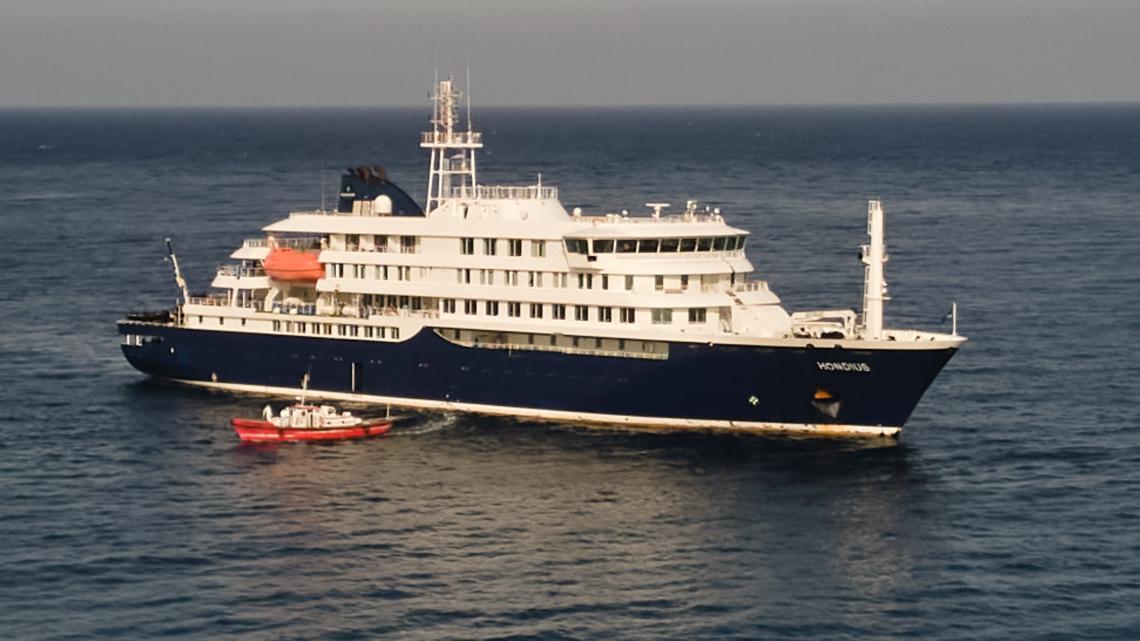
Three people who were on the MV Hondius have died. The two Texans onboard are back in the U.S. and haven’t shown any symptoms, according to health officials.
AUSTIN, Texas — We’ve been reporting about a deadly outbreak of hantavirus on a ship in the Atlantic. Now, we’ve learned there were two Texans on the ship.
Texas Health and Human Services released a statement Thursday, saying they were contacted by the Centers for Disease Control and Prevention about the two residents from Texas on the MV Hondius, though it didn’t specify what part of the state the two people were from.
The two passengers had left the ship and were back in the U.S. before the outbreak was found, according to state health officials. Both residents have been contacted by the health department. Neither is experiencing symptoms of hantavirus. They also didn’t have contact with anyone who was sick aboard the ship.
The two people from Texas have agreed to monitor themselves for any symptoms and do regular temperature checks.
How the deadly hantavirus outbreak unfolded for weeks before it was identified
The deadly outbreak of the rare hantavirus unfolded over the course of weeks on a cruise ship that sailed from Argentina toward Antarctica and then across the Atlantic Ocean, stopping at or near remote islands on the way as passengers and crew members fell sick, according to information from the cruise operator, the World Health Organization and ship tracking data.
It shows nearly a month passed between when an elderly Dutch man fell sick and died in the South Atlantic and laboratory tests in South Africa — more than 2,174 miles away — first confirmed hantavirus infections.
Three passengers have died, one is in intensive care in a South African hospital, and three others were evacuated from the ship Wednesday. Another man who left the ship earlier in the voyage tested positive in Switzerland.
More than 140 passengers and crew members were still on the MV Hondius ship as it departed the West African island nation of Cape Verde for Spain’s Canary Islands.
Tests on patients in South Africa and Switzerland showed it was a hantavirus found in South America, called the Andes virus, officials said.
Hantavirus usually spreads by inhaling contaminated rodent droppings and can spread person-to-person, though that is rare, according to the WHO, whose top epidemic expert said the risk to the public is low.
As the number of confirmed infections increased to five, health authorities in three continents were investigating the source and tracing dozens of people who might have come in contact with passengers who left the ship earlier.
Oceanwide Expeditions, the Dutch company that operates the MV Hondius, offers “expedition cruises” that involve trips to the Antarctic and several islands in the South Atlantic to see some of the remotest places on Earth.
The cruises can last a month or more and cost between $6,000 and $25,000, depending on the cabin.
The Hondius set off from southern Argentina on April 1.
On April 6, the 70-year-old Dutch man fell ill with fever, headache and diarrhea, WHO said.
He died on board April 11, after developing respiratory distress. The ship was between the British island territories of South Georgia and St. Helena in the middle of the South Atlantic, according to data from the ship tracking website MarineTraffic. The cause of death could not be determined, according to Oceanwide Expeditions.
The ship sailed on for nearly two weeks, stopping near the island of Tristan da Cunha before reaching St. Helena, where the Dutch man’s body was removed on April 24. His 69-year-old wife disembarked.
The woman, who already had symptoms, became sicker during an April 25 flight to South Africa and collapsed at an airport there. She died at a hospital on April 26, the WHO said.
The patient in Switzerland also disembarked in St. Helena, according to Swiss authorities, though his movements after that are not clear.
Another passenger, a British man, became sick on the ship after it left St. Helena and sailed to tiny Ascension Island, about 800 miles north. He had a high fever, shortness of breath and signs of pneumonia, according to the WHO, and was evacuated from Ascension Island to South Africa on April 27. He is in intensive care in South Africa.
The third fatality, a German woman, died on the ship on Saturday, again after it had set sail for a new destination — this time Cape Verde. She died four days after falling ill and also had signs of pneumonia, WHO said, which can be caused by hantavirus. Her body is still on the ship.
When authorities first learned that hantavirus was on the ship
Health officials in South Africa tested the British man in intensive care for hantavirus after tests for other ailments were negative. They received a positive result for hantavirus on Saturday, 21 days after the first passenger died.
On Sunday, WHO announced it was investigating a suspected hantavirus outbreak on the ship, which had by that time reached Cape Verde waters.
The British man’s positive test prompted South African health authorities to test the Dutch woman’s body. That test came back positive on Monday.
Swiss authorities announced the positive test on the man there on Wednesday.
Contact tracing was underway.
The plan for the people still on board
After waiting off Cape Verde for three days, the ship headed to the Canary Islands, where Spain said it would accept it. People on board are from Britain, the United States, Spain, Netherlands, Germany and more than a dozen other countries.
Passengers and crew have been isolated in cabins with “physical distancing,” WHO said, in a lockdown reminiscent of the COVID-19 pandemic.
WHO said it is investigating how a virus that is relatively rare in people got aboard a cruise ship.
Hantavirus starts with flu-like symptoms
An infection can rapidly progress and become life-threatening. Experts say it can start with symptoms that include a fever, chills, muscle aches and maybe a headache.
“Early in the illness, you really may not be able to tell the difference between hantavirus and having the flu,” said Dr. Sonja Bartolome of UT Southwestern Medical Center in Dallas.
Symptoms of hantavirus pulmonary syndrome usually show between one to eight weeks after contact with an infected rodent. As the infection progresses, patients might experience tightness in the chest, as the lungs fill with fluid.
The other syndrome caused by hantavirus — hemorrhagic fever with renal syndrome — usually develops within a week or two after exposure.
Death rates vary depending on which hantavirus causes the illness. Hantavirus pulmonary syndrome is fatal in about 35% of people infected, while the death rate for hemorrhagic fever with renal syndrome varies from 1% to 15% of patients, according to the CDC.
A lot of unknowns about the illness and treatment
There is no specific treatment or cure, but early medical attention can increase the chance of survival.
Despite years of research, Harkins said many questions have yet to be answered, including why it can be mild for some people and very severe for others and how antibodies are developed. She and other researchers have been following patients over long periods of time in hopes of finding a treatment.
There are “a lot of mysteries,” she said, noting that what researchers do know is that rodent exposure is key.
The best way to avoid the germ is to minimize contact with rodents and their droppings. Use protective gloves and a bleach solution for cleaning up rodent droppings. Public health experts caution against sweeping or vacuuming, which can cause virus particles to get into the air.
The Associated Press contributed to this report
Copyright 2025 Associated Press. All rights reserved. This material may not be published, broadcast, rewritten, or redistributed.